The Complete Guide to Solar Inverters
This comprehensive technical guide analyzes solar inverter technology through the lens of industrial manufacturing and global B2B procurement. Designed for EPCs, large-scale distributors, and OEM partners, we explore how factory-direct R&D in MPPT algorithms, thermal management, and grid-compliance (UL/CE/TUV) maximizes ROI and system longevity.
Table of contents
What is a Solar Inverter?
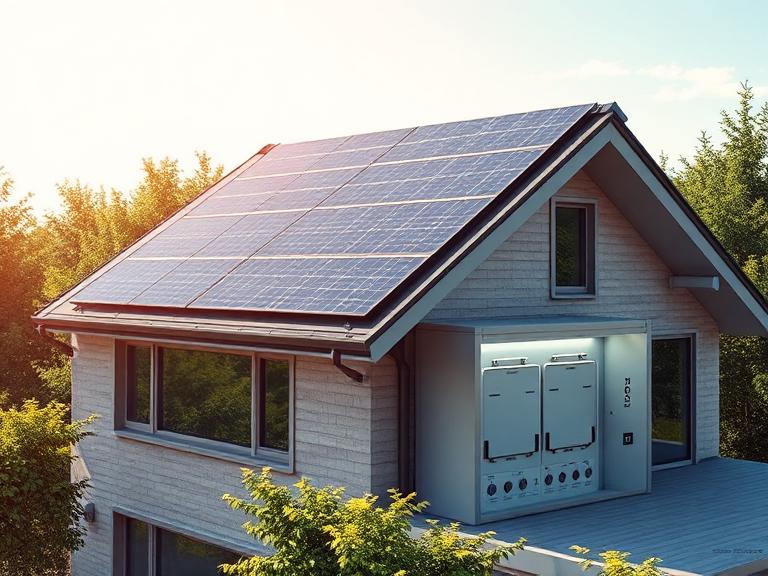
In the modern photovoltaic (PV) ecosystem, the solar inverter serves as the critical intelligence hub, far transcending its historical role as a simple power converter. It functions as the gateway between the raw Direct Current (DC) generated by solar modules and the complex Alternating Current (AC) requirements of the global electrical grid. For B2B stakeholders—including large-scale distributors and EPC firms—the inverter represents the most sophisticated component of the balance-of-system (BOS). Its performance directly dictates the system’s uptime, safety profile, and cumulative energy yield.
Why Is a Solar Inverter Essential for Solar Panels?
In the solar ecosystem, the inverter is the “intelligent gateway.” While PV modules harvest photons, they generate Direct Current (DC), which is incompatible with the global AC-dominated electrical infrastructure. A high-grade inverter is essential because it manages the Power Quality, ensures Grid Synchronization, and provides the Safety Protocols (such as AFCI and Ground Fault Protection) required by international compliance standards like UL 1741 and IEC 62109. Without a robust inverter, a solar array is merely a collection of glass and silicon; with one, it is a bankable power plant.
What Is the Role of MPPT in Solar Inverters?
Maximum Power Point Tracking (MPPT) is a sophisticated DC-to-DC conversion logic. Environmental variables—specifically irradiance and temperature—constantly shift the “knee” of the IV curve. Our factory-developed MPPT algorithms utilize high-speed digital signal processing (DSP) to scan the voltage range in milliseconds. By maintaining the system at its maximum power point ($P = V \times I$), we achieve a Static Tracking Efficiency of 99.9%, ensuring that even in partial shading or low-light conditions, energy harvest is maximized.
Do Solar Inverters Make Noise?
For commercial and industrial (C&I) installations, noise pollution is a critical site-planning factor. Inverters generate noise primarily from high-frequency switching and active cooling fans. To address this, we utilize Natural Convection Cooling for units up to 20kW, resulting in 0dB operation. For larger utility-scale units, we employ Smart Variable Speed Fans that adjust based on thermal load, keeping the acoustic output below 45dB—well within the limits for commercial office environments and residential zones.
How Does a Solar Inverter Work?
The internal conversion logic of a solar inverter is a masterpiece of high-speed power electronics and digital control. For technical procurement officers, understanding this process is essential to vetting the harmonic quality and grid-synchronization capabilities of a supplier’s hardware. Modern inverters must do more than just convert power; they must maintain a low Total Harmonic Distortion (THDi), manage reactive power, and communicate real-time data to the cloud.
What is the Function of a Solar Inverter?
Beyond simple conversion, the modern inverter functions as a Grid-Supportive Device. Its primary functions include:
- DC-AC Conversion: Transforming variable DC into a stable pure sine wave.
- System Monitoring: Transmitting performance data via RS485, WiFi, or 4G to an EMS (Energy Management System).
- Active Safety: Rapid shutdown and arc-fault detection to protect assets and personnel.
How Do Solar Inverters Convert DC to AC?
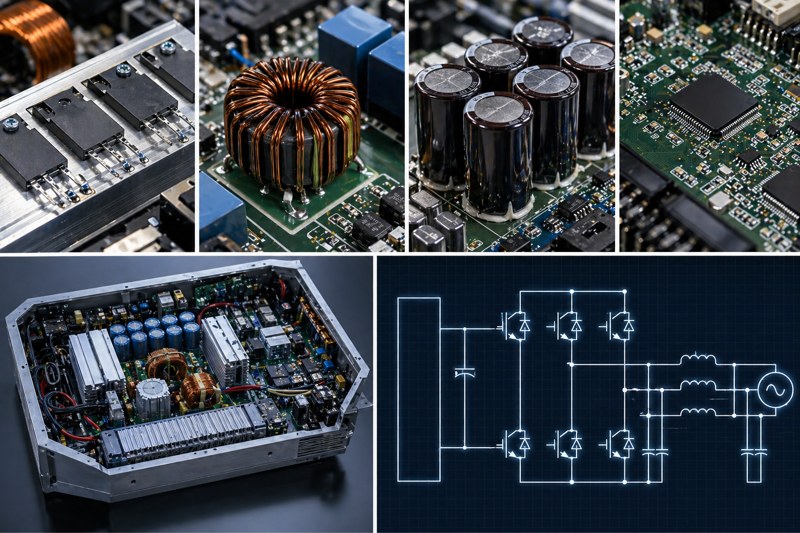
The conversion process relies on Power Electronics. China Moneypro Energy uses industrial-grade IGBTs (Insulated Gate Bipolar Transistors) or SiC MOSFETs arranged in an H-bridge configuration. By utilizing Pulse Width Modulation (PWM), the inverter switches these components on and off thousands of times per second. By varying the width of these pulses, it filters the DC into a smooth, 50/60Hz AC waveform that perfectly mimics the utility grid’s sine wave.
Does Solar Inverter Work at Night?
A standard grid-tied inverter enters “Sleep Mode” once the DC input voltage falls below the start-up threshold. However, for B2B clients looking at Energy Storage Systems (ESS), our Hybrid Inverters remain active 24/7. At night, the inverter switches to “Discharge Mode,” drawing power from the Lithium Battery Pack to serve the load or participate in Peak-Shaving to reduce demand charges for commercial facilities.
How Many Solar Panels Do I Need for an Inverter?
This is determined by the Inverter Sizing Guide. To maximize the “Capacity Factor,” we typically recommend a DC/AC Ratio of 1.3 to 1.5.
Technical Example: For a 100kW AC inverter, installing 130kW–150kW of PV panels ensures the inverter operates at peak efficiency for a longer duration of the day, compensating for system losses and atmospheric attenuation.
What are the Different Types of Solar Inverters?
Selecting the appropriate inverter architecture is a strategic decision that impacts the installation’s complexity, cost, and future scalability. From small-scale residential systems to utility-scale desert power plants, each application demands a different engineering approach. As a full-service manufacturer, we provide a portfolio that addresses these varying needs.
String Inverters: The Most Common Solar Inverter Type
String inverters are the global standard for Commercial and Industrial (C&I) installations due to their modularity and cost-efficiency. In this configuration, multiple solar panels are connected in a series “string,” and several strings are connected to a single inverter. The primary advantage is the ease of maintenance; because string inverters are usually mounted at eye level, they are easily accessible for troubleshooting without disturbing the PV array.
Furthermore, our string inverters feature up to 10 independent MPPTs, which significantly reduces “mismatch losses” caused by partial shading. In addition, the modular design provides high system availability; if one inverter fails in a large plant, only a small portion of the power is lost. This reliability, combined with IP66-rated protection, makes string inverters the preferred choice for distributors and EPCs who prioritize a balance between performance and straightforward O&M (Operations and Maintenance).
Microinverters: Panel-Level Power Optimization
Microinverters represent a decentralized approach where a small inverter is attached to each individual solar panel. This Panel-Level Power Electronics (MLPE) architecture is ideal for complex residential roofs with significant shading. Because each panel operates independently, a single shaded module will not affect the performance of the rest of the string—maximizing total energy harvest.
For the B2B sector, microinverters offer an unparalleled safety benefit: they keep DC voltages low (typically <60V), which simplifies compliance with strict “Rapid Shutdown” regulations. Additionally, microinverters provide granular monitoring, allowing O&M teams to identify specific underperforming panels remotely. While the initial cost per watt is higher, the increased yield in challenging conditions and the long 25-year warranty make them a high-value proposition for premium residential projects where maximum energy density is required.
Hybrid Solar Inverters: Designed for Battery Storage
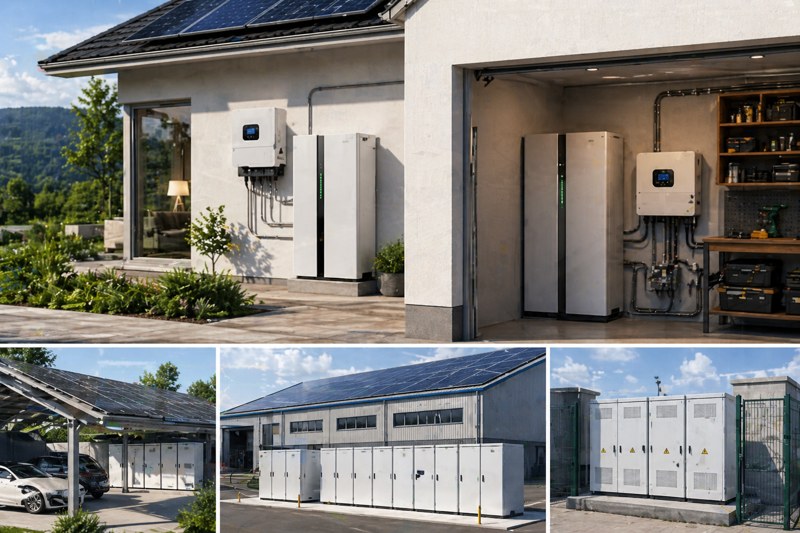
Hybrid inverters are the cornerstone of the modern Energy Storage System (ESS). These units manage energy from both the PV array and a Lithium Battery bank simultaneously. Our hybrid series is engineered for high-growth B2B markets focused on “Energy Independence.” They feature integrated Battery Management System (BMS) communications and can switch from grid-tied to backup mode in less than 10ms during a power outage.
In addition, these hybrid inverters are “VPP (Virtual Power Plant) Ready,” allowing distributors to offer grid-service capabilities to their clients. By storing excess solar energy during the day and discharging it at night, hybrid inverters allow commercial users to avoid high peak electricity rates (Peak-Shaving). This versatility makes the hybrid inverter the most strategic investment for future-proofing any solar installation.
Off-Grid Inverters: Power for Remote Locations
Off-grid inverters are designed for systems that are completely isolated from the utility grid, essential for remote telecommunications towers, mining sites, and rural electrification. Unlike grid-tied units, an off-grid inverter must “create” its own AC sine wave and manage the battery as the primary energy reservoir.
Our off-grid solutions feature massive “Surge Capacity”—often up to 300% of their rated power—to handle the high inrush currents of industrial motors and water pumps. Furthermore, they integrate sophisticated AC-charging capabilities to allow for backup from diesel generators. For B2B clients in developing regions, the reliability of the off-grid inverter is mission-critical. China Moneypro Energy uses heavy-duty toroidal transformers in our off-grid line to provide superior heat dissipation and electrical isolation, ensuring 24/7 power in the most extreme environmental conditions.
Central Inverters for Utility-Scale Solar Farms
For projects exceeding 10MW, central inverters offer the lowest LCOE (Levelized Cost of Energy). We provide containerized 1500V DC solutions that reduce BOS (Balance of System) costs significantly.
Grid-Tied vs. Off-Grid vs. Hybrid: Key Differences
Understanding the differences between these three architectures is vital for correct project planning.
Grid-Tied inverters are cost-effective but lack battery backup. Off-Grid inverters are independent but require significant battery sizing. Hybrid inverters bridge this gap, offering the ability to export solar power while maintaining backup capabilities through an integrated battery interface.
For B2B stakeholders, the “Hybrid” model is increasingly the default choice for residential and light-commercial projects because it offers the greatest flexibility. It allows users to capitalize on net-metering benefits while also providing backup power. Our hybrid units are compatible with both lead-acid and modern LFP battery chemistries, providing distributors with a wide range of system configurations to meet diverse customer budgets.
- Grid-Tied: No batteries; most affordable; shuts down during grid failure.
- Off-Grid: Operates in “island mode”; requires substantial battery backing.
- Hybrid: The best of both worlds; provides backup power and maximizes self-consumption.
Which Type of Solar Inverter Is Best for Your System?
Choosing the “best” inverter is a balance of CAPEX, site constraints, and the desired ROI.
For a standard commercial warehouse with a flat roof, a String Inverter is typically the best choice due to its high efficiency and low maintenance costs.
For a residential project with complex roof angles, Microinverters provide the best energy density.
For any site prioritizing energy independence, a Hybrid Inverter is mandatory.
Procurement managers should also consider “Future-Proofing”; for example, installing a hybrid-ready string inverter allows a client to add batteries later without replacing the unit.
Our factory technical team provides “Product Match Surveys” for our partners, helping them select the hardware that minimizes the Total Cost of Ownership (TCO) while maximizing project bankability.
Photovoltaic Inverter Efficiency Explained
Inverter efficiency is a direct driver of the financial Internal Rate of Return (IRR) for any PV project. A 1% increase in efficiency can translate to thousands of dollars in additional revenue over a project’s 25-year lifespan.
What Is Solar Inverter Efficiency?
Solar inverter efficiency is the ratio of AC power output to DC power input, representing how much energy is “lost” as heat during conversion.
Our factory-direct inverters utilize advanced “Three-Level Topology” to minimize switching losses. Furthermore, efficiency is not a static number; it varies based on the load percentage and input voltage.
We design our units to maintain a “Flat Efficiency Curve,” meaning they operate at high efficiency even during the low-light hours of the early morning. This ensures that the total daily energy yield (kWh) is maximized, providing the end-user with the highest possible financial return and proving technical superiority over budget-tier alternatives.
Why Inverter Efficiency Matters
For B2B stakeholders, inverter efficiency is synonymous with “Bankability.” In a 1MW plant, a 0.5% gain in efficiency produces an extra 7,500 kWh per year.
Over 25 years, that extra energy is worth significant revenue. In addition, higher efficiency means less heat is generated within the enclosure. Heat is the enemy of electrolytic capacitors and semiconductors; therefore, a high-efficiency inverter is inherently more reliable.
Choosing a high-efficiency model reduces long-term OPEX by lowering the frequency of repairs. High-efficiency inverters also require less active cooling, which reduces internal parasitic power consumption and further boosts the net energy delivered to the client’s facility.
How Do Solar Inverters Improve Energy Efficiency?
Our inverters utilize Three-Level Topology and high-speed switching to minimize conversion losses. Advanced software also minimizes “tare losses” (the energy the inverter consumes to stay powered on).
Types of Efficiency Ratings
- Peak Efficiency: The absolute maximum efficiency under ideal conditions.
- Euro Efficiency: A weighted average tailored to the irradiance levels of Central Europe.
- CEC Efficiency: The California Energy Commission’s standard, focused on North American climate conditions.
- What Affects Solar Inverter Efficiency?
Thermal Throttling: If an inverter’s internal temperature exceeds 60°C, it will “de-rate” or reduce its power output. Our factory uses premium aluminum heatsinks and industrial-grade fans to prevent this.
Voltage Window: Inverters are most efficient when the DC string voltage is close to the rated DC voltage. Proper inverter sizing is crucial here.
How to Choose the Right Solar Inverter
The selection of a solar inverter is a high-stakes decision that requires balancing initial CAPEX against long-term performance and grid compliance. A poorly chosen inverter can lead to excessive downtime and an extended payback period.
How to Size a Solar Inverter for Your Energy Needs
Sizing an inverter involves more than matching nameplate ratings; it requires analyzing site irradiance and the “DC/AC Ratio.” We typically recommend a DC/AC Ratio of 1.2 to 1.5. This “Overclocking” ensures the inverter operates at full rated capacity even on cloudy days. In addition, procurement managers must evaluate the Max Input Current (Idc) per MPPT to ensure compatibility with modern 600W+ bifacial modules. Furthermore, sizing must account for future expansion; choosing an inverter with extra MPPT inputs can simplify adding more panels later. By correctly sizing the inverter, you avoid “Clipping” too much energy or under-utilizing the power electronics.
How to Calculate Solar Inverter Capacity for Home
For residential OEM partners, calculating capacity starts with the homeowner’s peak demand and roof space. A standard calculation involves totaling the wattage of essential appliances that must run during a power outage—this determines the “Backup Capacity.” The inverter must also handle the maximum output of the PV array. For instance, a 6kW solar array usually pairs best with a 5kW or 6kW hybrid inverter. Furthermore, if the home utilizes a heat pump or EV charger, the inverter must support high continuous AC output and potentially Three-Phase power to avoid phase imbalance. We provide “All-in-One” ESS solutions that pre-match inverter and battery capacity, simplifying the sales process for distributors.
Single-Phase vs. Three-Phase: Which Should You Choose?
The choice between single-phase and three-phase is dictated by the existing electrical service.
Single-Phase inverters are standard for residential properties up to 10kW. However, for Commercial or Industrial (C&I) applications, Three-Phase is mandatory. Three-phase systems provide more balanced power delivery, which is why utilities often limit single-phase solar export to 5kW. Industrial equipment—like large motors and HVAC systems—requires three-phase power to operate correctly. Three-phase inverters are also more efficient at higher power levels and use thinner cables for the same power, reducing BOS costs. Our factory offers three-phase string inverters up to 250kW, providing a scalable solution for large-scale manufacturing facilities.
- Single-Phase: Standard for residential (up to 10kW).
- Three-Phase: Mandatory for industrial/commercial applications to maintain phase balance and grid stability.
Solar Inverter Lifespan
The lifespan of a solar inverter is a critical factor in the LCOE calculation. While panels last 25+ years, inverters contain active semiconductors and capacitors subject to thermal cycling. A high-quality string inverter has a typical design life of 12 to 15 years.
As a manufacturer, we extend this by utilizing industrial-grade Film Capacitors which have a significantly longer life than cheaper electrolytic versions. Furthermore, our enclosures feature “Isolated Cooling Channels” to keep dust away from sensitive electronics.
We offer extended warranty programs up to 20 years. Understanding the replacement cycle and choosing a partner with a robust spare-parts supply chain is essential for ensuring the system remains profitable.
How to Maintain Solar Inverters
Maintaining a solar inverter is about proactive management to prevent downtime. For B2B stakeholders, a robust maintenance schedule is the best insurance for a PV investment.
How to Protect Solar Inverter from Lightning
Lightning and transient surges are major causes of catastrophic inverter failure. We integrate Type II DC and AC Surge Protective Devices (SPD) as a standard feature. These SPDs divert excess voltage to the ground before it can damage internal IGBTs. For projects in high-lightning areas, we recommend a multi-layered approach: ensuring a high-quality grounding system (< 10 ohms) and installing additional external Type I+II SPDs. Furthermore, our inverters include “SPD Status Monitoring,” alerting the O&M team via the cloud app if a surge has compromised the protection. Investing in proper surge protection ensures the plant remains operational after every storm.
How to Protect Solar Inverter from Sun
Although our inverters are IP66-rated, direct exposure to intense sunlight can lead to “Thermal De-rating.” When the internal temperature exceeds design limits, the unit reduces output to protect electronics, resulting in lost revenue. We recommend installing inverters on the northern side of buildings or utilizing a dedicated sunshield. Furthermore, UV exposure can degrade LCD screens and external connectors over time. Providing a “Shaded Environment” ensures heatsinks dissipate heat effectively, allowing the inverter to run at 100% capacity even during hot summer days. Proper placement is a cost-effective way to boost annual yield and extend component lifespan.
How to Reset My Solar Inverter
Many common inverter “Faults” are temporary grid fluctuations that do not indicate hardware failure. Most of our units support a “Remote Reset” via our cloud platform, allowing O&M teams to clear non-critical errors from the office. For a manual reset, follow the “Power Cycle” procedure: turn off the AC breaker, then the DC switch, wait 5 minutes for internal capacitors to discharge, and then reverse the steps. This process allows the microprocessor to re-initialize grid-synchronization protocols. Our inverters also feature an “Auto-Restart” function that re-connects once grid conditions stabilize. Training your team on these procedures maintains a high “Performance Ratio” and minimizes unnecessary O&M costs.
ROI Considerations
When evaluating the ROI of a solar inverter, focus on the Total Cost of Ownership (TCO). A cheaper, low-efficiency inverter might save CAPEX but cost thousands in lost revenue and premature replacement.
Our factory-direct model provides the best ROI by offering Tier-1 technical specifications at a manufacturer-direct price. Key ROI drivers include MPPT tracking speed, thermal de-rating thresholds, and compatibility with high-power bifacial modules.
Furthermore, our integrated monitoring platform reduces O&M costs by enabling remote diagnostics. Investing in our solutions minimizes the payback period and maximizes the IRR for your commercial projects.
| Factor | Impact on ROI |
| MPPT Efficiency | Higher annual energy yield (kWh). |
| Warranty Support | Lower long-term OPEX. |
| Compliance (UL/CE) | Ease of financing and insurance. |
Looking for a high-volume manufacturing partner?