Battery Energy Storage Systems (BESS): Architecture, Design, and Engineering Challenges
Introduction: Why BESS Is More Than Just Batteries
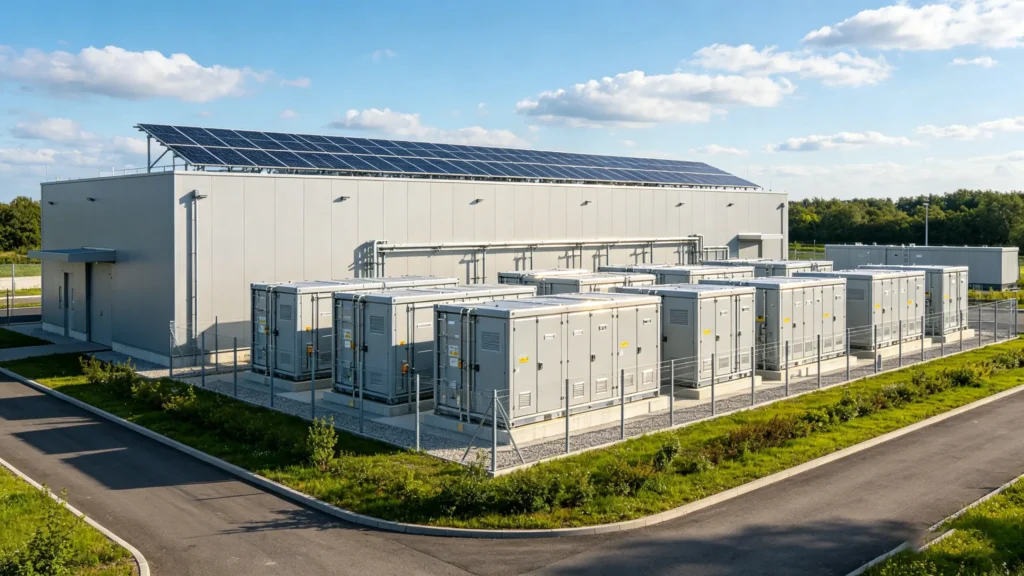
Battery Energy Storage Systems (BESS) are often simplified as “battery packs connected to the grid.”
In reality, a BESS is a highly engineered system that integrates electrochemistry, power electronics, real-time control, and safety mechanisms into a unified architecture.
Understanding BESS requires looking beyond the battery itself —
and focusing on how the entire system operates as a coordinated energy platform.
What Is a Battery Energy Storage System (BESS)?
A Battery Energy Storage System (BESS) is a system designed to store electrical energy in batteries and release it when needed.
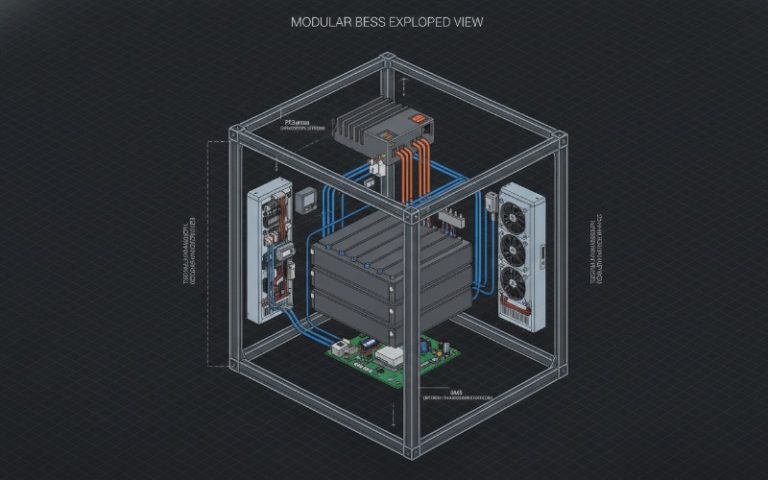
However, from an engineering perspective, a BESS includes multiple layers:
- Energy storage layer (battery cells and modules)
- Power conversion layer (PCS)
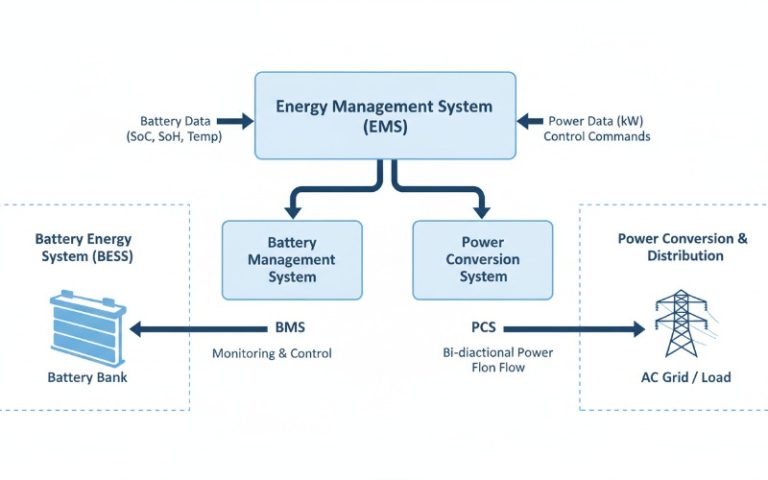
- Control layer (BMS and EMS)
- Thermal and safety systems
The battery is only one part — the system defines performance.
BESS System Architecture (Engineering Breakdown)
1. Battery Pack Layer
This is where energy is physically stored.
Engineering considerations:
- Cell chemistry selection (LFP vs NMC)
- Energy density vs safety trade-offs
- Cycle life and degradation
2. Battery Management System (BMS)
The BMS ensures safe and efficient battery operation.
Key functions:
- Voltage, current, and temperature monitoring
- Cell balancing
- State of charge (SOC) estimation
- Safety protection
Without BMS, battery systems are unstable and unsafe.
3. Power Conversion System (PCS)
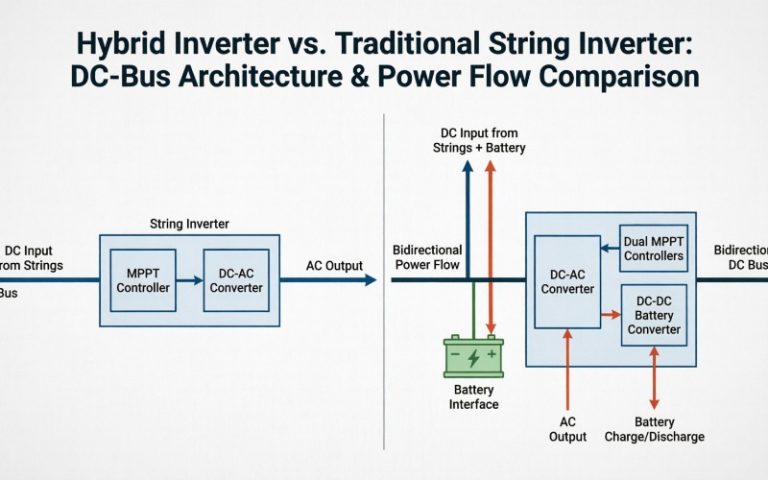
The PCS converts energy between DC (battery) and AC (grid/load).
Engineering challenges:
- Conversion efficiency
- Harmonic distortion
- Grid synchronization
- Dynamic response speed
4. Energy Management System (EMS)
The EMS acts as the “brain” of the system.
Key roles:
- Optimize charge/discharge cycles
- Manage load demand
- Implement economic strategies (TOU, peak shaving)
5. Thermal & Safety Systems
Thermal control and safety protection are critical for system reliability.
Engineering focus:
- Heat dissipation
- Thermal uniformity
- Fault detection and isolation
How BESS Works in Real Applications
In real-world systems, BESS operates dynamically:
- Energy Charging Phase
- Energy is stored during low demand or excess generation
- Energy Storage Phase
- System maintains stable battery conditions
- Energy Discharge Phase
- Energy is released based on demand or pricing
- Control Optimization
- EMS continuously adjusts operation
The system operates continuously, not in isolated steps.
Key Engineering Challenges in BESS Design
1. Battery Degradation
Battery performance decreases over time due to:
- Temperature
- Depth of discharge
- Charge cycles
Accurate modeling is critical.
2. Thermal Management
Heat generation is inevitable.
Challenges include:
- Uneven temperature distribution
- Cooling efficiency
- Thermal runaway risks
3. System Integration
BESS is not plug-and-play.
Challenges:
- Coordination between PCS, BMS, EMS
- Load variability
- Grid interaction
4. Safety Engineering
Safety must be built into every layer:
- Electrical protection
- Thermal protection
- System-level fail-safe design
Types of BESS Applications
Commercial & Industrial (C&I)
- Peak shaving
- Energy cost optimization
Utility-Scale Systems
- Grid stabilization
- Renewable integration
Microgrids
- Off-grid or hybrid energy systems
EV Charging Integration
- Supporting high-power charging loads
Performance Metrics in BESS
Engineers evaluate BESS using:
- Round-trip efficiency (%)
- Cycle life (number of cycles)
- Response time (ms level)
- Depth of discharge (DoD)
- System availability (%)
Future Trends in BESS Technology
AI-Based Optimization
Predictive control for energy usage and battery health.
Grid-Forming Technology
BESS acting as active grid stabilizers.
Modular Design
Scalable architecture for flexible deployment.
Hybrid Systems
Integration with solar, EV, and microgrids.
Why BESS Is a System Engineering Discipline
A common misconception is that BESS performance depends on battery quality alone.
In reality:
System design determines performance, not just components
Successful BESS deployment requires:
- Integrated design
- Real-time control
- Long-term reliability engineering
Battery Energy Storage Systems are not just energy storage devices —
they are complex, intelligent systems that enable modern energy infrastructure.
Understanding BESS from an engineering perspective allows:
- Better system design
- Higher efficiency
- Improved safety
- Stronger economic performance
FAQ
What is a BESS system?
What are the main components of BESS?
How efficient is a BESS system?
How long do battery storage systems last?
Where is BESS used?