6 Steps to store solar energy in battery
Authored by China MoneyPro Energy
China MoneyPro Energy is a technology-driven developer of advanced energy storage systems and intelligent power solutions, built upon a strong heritage of national-level research institutes and decades of engineering experience in high-reliability systems. Originating from China’s aerospace and defense technology ecosystem, China MoneyPro Energy integrates advanced research, system engineering, and industrial manufacturing capabilities to develop next-generation energy storage solutions for the global energy infrastructure.
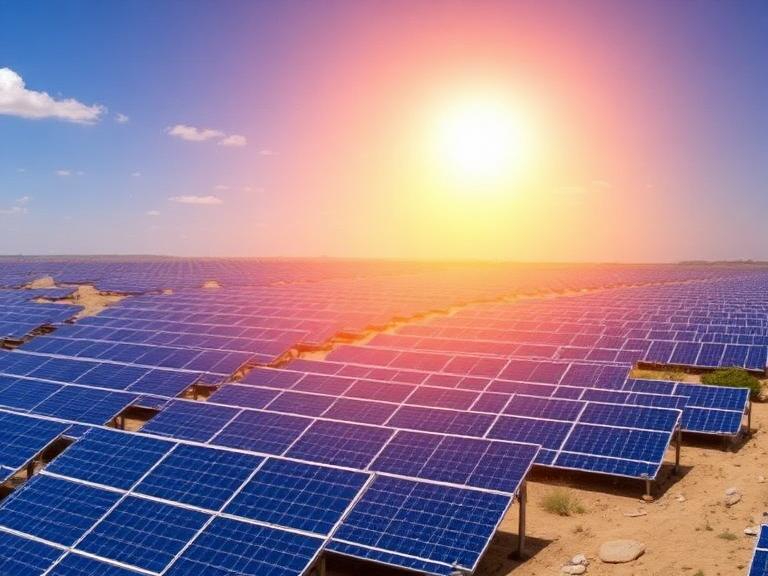
The global transition toward renewable energy architectures relies fundamentally on overcoming the intermittent nature of solar power. The sun produces vast amounts of energy, but production peaks during midday when grid demand is often lowest, and ceases entirely at night. To build a resilient energy infrastructure, operators and homeowners must implement robust methodologies to store solar energy in battery systems. Without an adequate storage mechanism, excess photovoltaic generation is either curtailed or exported to the grid at suboptimal tariffs.
From our experience engineering high-reliability systems rooted in aerospace technology, the process to effectively store solar energy in battery networks requires meticulous planning, precise chemical selection, and advanced digital management. We recommend treating energy storage not merely as a peripheral add-on, but as the critical core of any modern microgrid or standalone power architecture. This authoritative guide outlines the professional steps to store solar energy in battery units safely, efficiently, and with maximum longevity.
Table of Contents
- 1. Understanding the Physics of Solar Storage
- 2. Core Equipment Required to Store Solar Energy in Battery Systems
- 3. Six Critical Steps to Store Solar Energy in Battery Banks
- 4. Scalable Solutions for Diverse Applications
- 5. Summary Table: Storage Configuration Framework
- 6. Frequently Asked Questions (FAQs)
- 7. Authoritative References
1. Understanding the Physics of Solar Storage
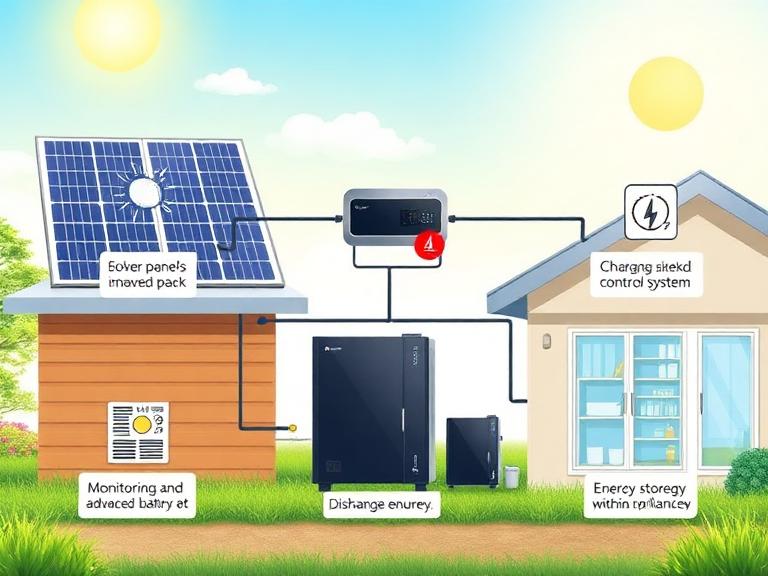
To successfully store solar energy in battery cells, one must understand the conversion process. Photovoltaic (PV) panels generate direct current (DC) electricity when exposed to sunlight. Because batteries also operate on DC power, storing this energy seems straightforward. However, the voltage and current produced by solar arrays fluctuate wildly depending on irradiance, temperature, and shading.
If you attempt to push unregulated power directly into a chemical cell, you risk catastrophic thermal failure. Therefore, to safely store solar energy in battery systems, the raw DC power must be electronically conditioned. The energy is captured, regulated, and then absorbed by the battery’s chemical matrix through an endothermic reaction during charging. Later, during discharge, the process reverses, releasing the stored potential as usable electrical current.
2. Core Equipment Required to Store Solar Energy in Battery Systems
We recommend a highly integrated approach to component selection. To efficiently store solar energy in battery environments, you must procure hardware that communicates seamlessly.
- Photovoltaic Arrays: The primary generation source, capturing photons and creating the initial DC current.
- Maximum Power Point Tracking (MPPT) Controllers: These are non-negotiable if you want to optimally store solar energy in battery banks. MPPT controllers continuously adjust the impedance of the circuit to extract the maximum possible wattage from the panels regardless of environmental conditions.
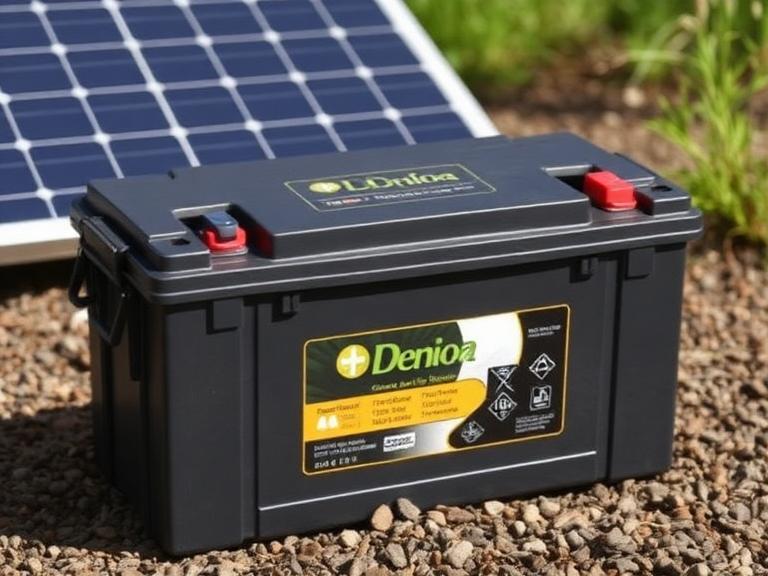
- The Battery Bank: The physical medium. While legacy systems utilized lead-acid, modern high-reliability systems demand Lithium Iron Phosphate (LiFePO4) due to its superior thermal stability and cycle life.
- Battery Management System (BMS): The digital brain. Drawing from our aerospace heritage, we consider the BMS the most critical safety component to store solar energy in battery systems, protecting against overvoltage, undervoltage, and thermal runaway.
- Hybrid Inverters: Responsible for converting the stored DC power into Alternating Current (AC) for facility use or grid export.
3. Six Critical Steps to Store Solar Energy in Battery Banks
Step 1: Accurate Load Profiling and Capacity Sizing
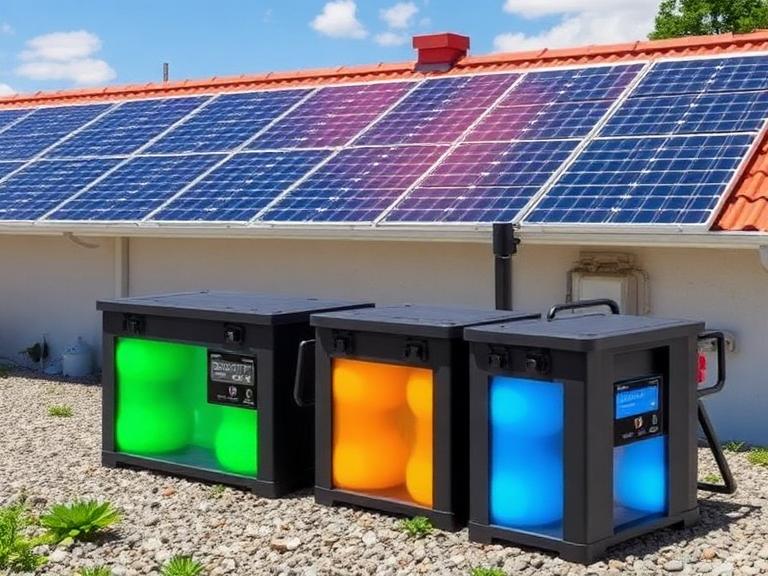
Before purchasing hardware, you must quantify your energy deficit. How much energy do you need to operate when the sun is down? From our experience, undersizing the system leads to deep discharges that damage cell chemistry, while oversizing results in stranded capital. Calculate your daily kilowatt-hour (kWh) consumption and factor in the Depth of Discharge (DoD) limits of your chosen chemistry. To store solar energy in battery formats efficiently, we recommend a 20% capacity buffer to account for eventual degradation and seasonal solar irradiance variations.
Step 2: Selecting the Appropriate Battery Chemistry
To store solar energy in battery cells over a multi-decade lifespan, chemistry is paramount. While Nickel Manganese Cobalt (NMC) batteries offer high energy density suitable for electric vehicles, stationary storage demands longevity and safety. We highly recommend Lithium Iron Phosphate (LFP) for stationary systems. LFP offers a superior cycle life (often exceeding 6,000 cycles) and possesses a highly stable thermal threshold, making it the premier choice to store solar energy in battery infrastructure securely.
Step 3: Determining the Coupling Architecture (AC vs. DC)
You must decide how the system will be wired. In a DC-coupled system, the solar panels and the batteries share the same DC bus before the inverter. This is the most efficient way to store solar energy in battery banks because it avoids the conversion losses associated with flipping DC to AC and back to DC. Alternatively, AC-coupled systems are easier to retrofit into existing solar installations, utilizing a dedicated battery inverter to capture AC power from the main panel and convert it back to DC for storage.
Step 4: Integrating the Charge Controller
If utilizing a DC-coupled architecture, the integration of a high-quality MPPT charge controller is required. The controller must be programmed with the exact charging algorithm suited for your specific battery chemistry. To correctly store solar energy in battery modules, the controller manages the bulk, absorption, and float phases, ensuring that the cells are fully saturated without suffering from overcharging stress.
Step 5: Commissioning the Battery Management System (BMS)
A lithium-ion battery cannot function without a BMS. The BMS monitors individual cell voltages, state of charge (SoC), and temperature. From our engineering perspective, a robust BMS is what allows aerospace-grade reliability in terrestrial applications. When you store solar energy in battery enclosures, the BMS actively balances the cells, bleeding off excess voltage from the highest-charging cells to allow the lower cells to catch up, ensuring maximum capacity utilization.
Step 6: Implementing Safety and Thermal Mitigation
The final step to store solar energy in battery systems is environmental control. Batteries generate heat during rapid charge and discharge cycles. Industrial and utility-scale systems must incorporate HVAC thermal management to maintain the ambient temperature between 15 and 25 degrees Celsius. Furthermore, advanced fire suppression systems must be integrated to isolate any potential thermal events immediately.
4. Scalable Solutions for Diverse Applications
At China MoneyPro Energy, we have engineered scalable solutions that apply these rigorous steps across various sectors. The methodology to store solar energy in battery systems remains scientifically similar, but the scale and integration complexities vary.
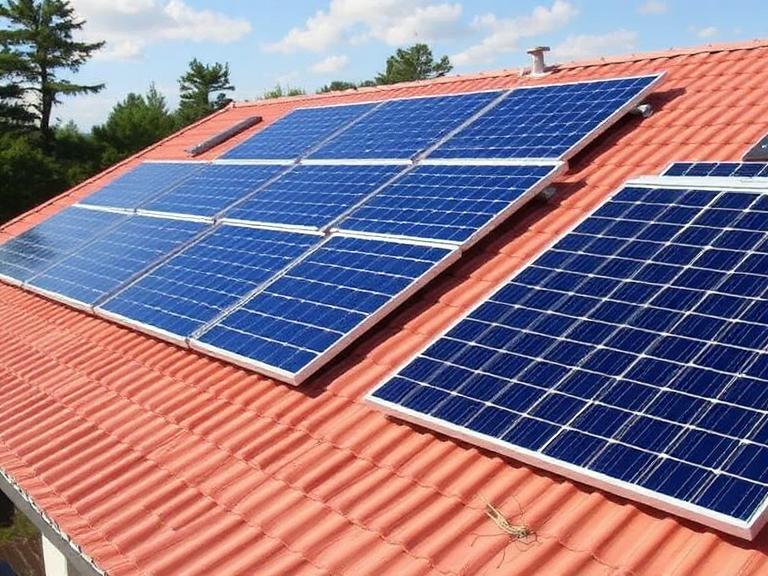
For homeowners looking to achieve energy independence and backup security, the implementation of a Residential Energy Storage System provides a compact, aesthetically refined solution. When integrated properly, a complete Solar + Energy Storage Solution eliminates grid reliance during peak tariff hours.
Businesses facing exorbitant demand charges benefit immensely from a Commercial Energy Storage Solution or a heavier Industrial Energy Storage Solution. These systems store solar energy in battery racks to deploy power during peak load moments, drastically reducing operational expenditures.
Furthermore, as transportation electrifies, the grid faces unprecedented strain. An EV Charging Infrastructure Solution mitigates this by allowing operators to store solar energy in battery reserves during the day to fast-charge vehicles at night without drawing massive grid currents.
For remote operations or areas with unstable grids, establishing an Off-Grid Power Solution or a localized Microgrid Energy Solution is essential for continuous uptime. Finally, at the highest echelon of power management, a Utility Scale Energy Storage Solution allows grid operators to store solar energy in battery farms spanning megawatts, stabilizing grid frequency and shifting vast amounts of renewable power into the evening hours.
5. Summary Table: Storage Configuration Framework
| Implementation Step | Technical Requirement | Engineering Objective |
|---|---|---|
| 1. Capacity Sizing | Calculate daily kWh consumption + 20% buffer | Prevent deep discharges and ensure adequate reserve capacity. |
| 2. Chemistry Selection | Specify Lithium Iron Phosphate (LFP) | Maximize thermal safety and extend cycle life beyond 6,000 cycles. |
| 3. Coupling Architecture | Determine AC vs. DC coupling | Optimize conversion efficiency based on new vs. retrofit installations. |
| 4. MPPT Integration | Install multi-channel charge controllers | Extract maximum wattage and regulate charging voltage profiles. |
| 5. BMS Commissioning | Activate cell-level balancing and monitoring | Protect against overvoltage and ensure uniform cellular degradation. |
| 6. Thermal Mitigation | Deploy HVAC and fire suppression | Maintain optimal operating temperatures to preserve chemical integrity. |
6. Frequently Asked Questions (FAQs)
Why is it necessary to store solar energy in battery systems rather than just using the grid?
While net-metering allows you to export power to the grid, utility tariffs are increasingly shifting to Time-of-Use (TOU) rates. This means the power you sell during the day is worth less than the power you buy at night. When you store solar energy in battery systems, you retain the full financial value of your generated power and gain protection against grid blackouts.
How efficiently can we store solar energy in battery cells?
Modern DC-coupled lithium-ion systems are highly efficient. The round-trip efficiency (the amount of energy you get out compared to what you put in) typically ranges between 90% and 95%. Older lead-acid systems usually hover around 75% to 80%.
Can I store solar energy in battery banks indefinitely?
No. All batteries experience self-discharge over time. Lithium-ion batteries have a very low self-discharge rate (around 2-3% per month), making them excellent for short-to-medium-term storage. However, if you plan to store solar energy in battery formats for seasonal use (e.g., storing summer sun for winter use), chemical batteries are not the ideal medium due to capacity limitations and self-discharge.
7. Authoritative References
To further validate the engineering protocols and material sciences involved when you store solar energy in battery systems, we recommend consulting the following authoritative bodies: