How Hybrid Inverters Fix Common Energy Storage Inefficiencies
Executive Summary: For B2B system designers and EPCs, energy waste is a direct drain on project ROI. Hybrid inverters solve this by integrating DC-coupled architectures, advanced MPPT algorithms, and high-speed power electronics to eliminate conversion stages and improve Round-Trip Efficiency (RTE) to over 95%.
Key Technical Takeaways
- Conversion Efficiency: Hybrid systems achieve 3-5% higher efficiency by avoiding redundant DC-AC-DC conversions.
- BOM Optimization: Integrated PCS (Power Conversion System) and BMS communication reduce hardware footprint by 30%.
- Grid Stability: THDi <3% ensures compatibility with sensitive industrial loads and strict utility requirements.
- Durability: Industrial-grade components (Nippon Chemi-Con, Infineon) extend the operational lifecycle beyond 15 years.
The Legacy Inefficiency Gap: AC vs. DC Coupling
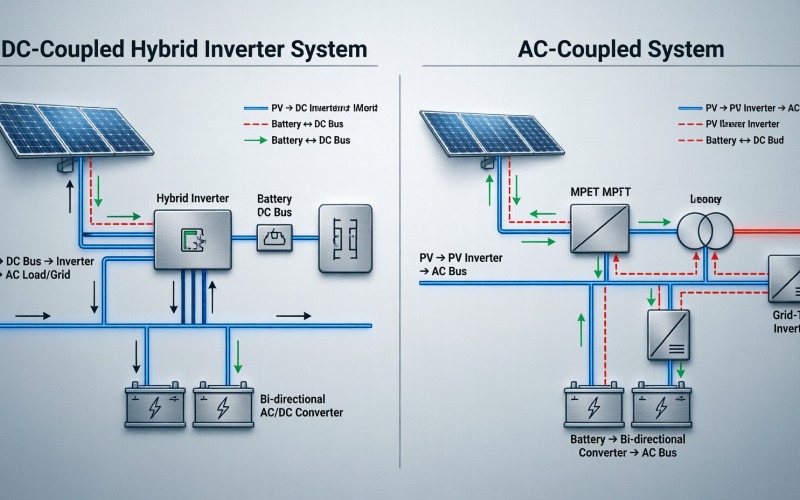
In traditional AC-coupled systems, energy from the PV array must be converted from DC to AC by a solar inverter, and then back from AC to DC by a battery inverter to be stored. Each of these stages introduces conversion losses (typically 2-4% per stage). When the energy is eventually used, it undergoes a third conversion back to AC. By the time the energy reaches the load, the cumulative losses can exceed 15%.
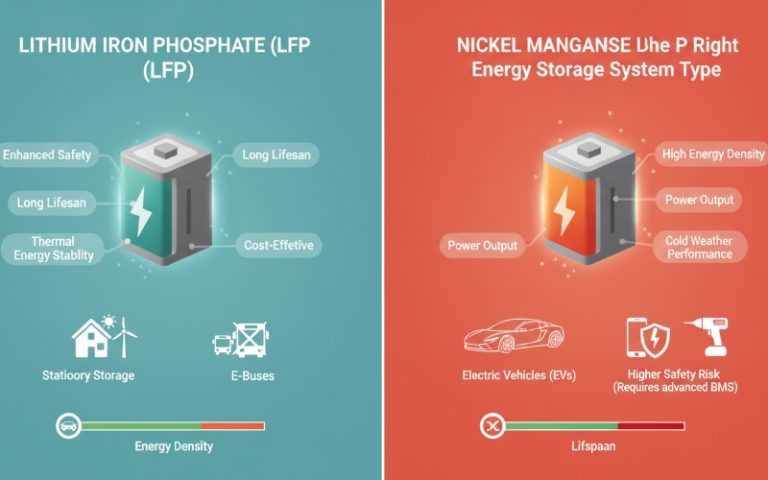
Industry leaders like Sungrow and GoodWe have popularized the shift toward high-voltage hybrid architectures. Our factory-direct hybrid inverters take this a step further by integrating a high-speed Bi-directional DC-DC converter. This allows the system to manage Lithium Iron Phosphate (LFP) battery packs with a C-rate capability of up to 1C, ensuring that sudden surges in PV production are captured rather than clipped. For a 100kW C&I project, this 8% efficiency gain translates into thousands of dollars in annual energy savings and a significantly shorter payback period.
Advanced Power Electronics: Infineon IGBTs and SiC Technology
The core of hybrid inverter efficiency lies in the switching topology and the quality of power semiconductors used to minimize THDi and switching losses.
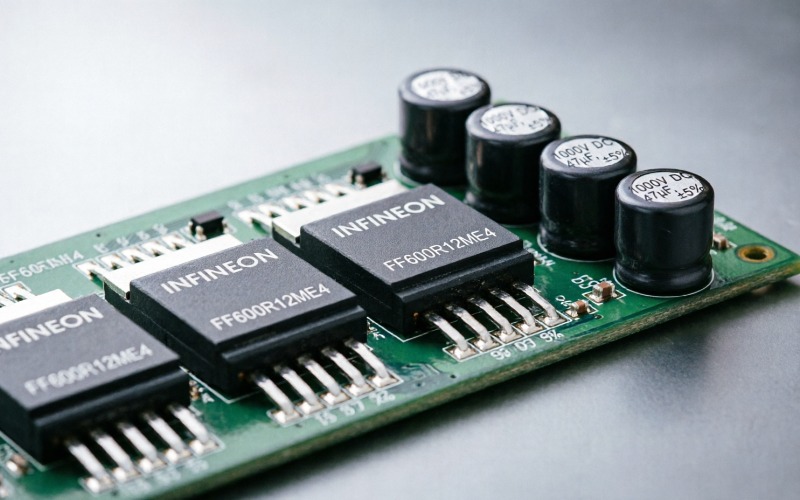
At our manufacturing facility, we focus on the “Information Gain” that generic distributors ignore: the bill of materials (BOM). Our hybrid inverters utilize latest-generation Infineon IGBT modules and Silicon Carbide (SiC) MOSFETs in the boost stage. SiC components allow for higher switching frequencies (up to 50kHz) with significantly lower thermal dissipation. This reduces the size of passive components like inductors and capacitors while maintaining a Total Harmonic Distortion (THDi) of less than 3%.
Furthermore, our R&D team has implemented a three-level I-type T-shape neutral-point-clamped (NPC) topology. Compared to standard two-level topologies found in low-cost alternatives, our design reduces voltage stress on semiconductors and improves the efficiency curve at partial loads. This is critical for C&I applications where the system often operates at 30-60% capacity during cloudy periods or off-peak hours. By optimizing the efficiency curve at these lower thresholds, we ensure that the system maintains a high Euro-efficiency rating across all operating conditions.
Thermal Management: Reducing Derating at High C-Rates
Effective thermal management is the most overlooked factor in long-term ESS efficiency, as internal heat increases resistance and triggers power derating.
Many inverters on the market begin derating at temperatures as low as 40°C. In high-demand environments like desert PV farms or industrial zones, this leads to massive energy loss during peak production hours. Our factory employs a 48-hour high-temperature aging test at 50°C for every unit before shipment. We utilize a split-chamber cooling design that isolates the sensitive electronics from the heat-generating inductors.
By using industrial-grade fans with PWM control and Nippon Chemi-Con long-life capacitors (rated for 10,000 hours at 105°C), we ensure that our hybrid inverters can maintain full power output up to 50°C without derating. This reliability is why our OEM partners in the MENA and Southeast Asian regions prefer our hardware over standard consumer-grade brands. When the ambient temperature rises, our systems continue to deliver the maximum MPPT yield, fixing the efficiency drop-off that plagues standard energy storage setups.
Technical Comparison: Hybrid vs. String Architectures
| Technical Specification | Standard String Inverter + Retrofit | Factory-Direct Hybrid Inverter (C&I) | Utility-Scale Central PCS |
|---|---|---|---|
| Round-Trip Efficiency (RTE) | 86% – 89% | 94% – 97% | 92% – 95% |
| Conversion Stages (PV to Battery) | DC-AC-DC | DC-DC (Direct) | DC-AC-DC |
| Switching Component | Standard IGBT | Infineon SiC MOSFET / IGBT | Large Block IGBT |
| Communication Interface | Asynchronous (Modbus) | Integrated CAN/RS485/EMS | High-Speed Fiber/Ethernet |
| Operating Temperature (No Derating) | Up to 40°C | Up to 50°C | Up to 45°C |
Global Compliance: UL 1741 SB and G98/99 Standards
Achieving global compliance is not just about safety; it is about the efficiency of grid interaction, including reactive power support and fast frequency response.
B2B customers must navigate complex regulatory landscapes. Our hybrid inverters are engineered to meet UL 1741 SB (USA), CE/TUV (Europe), and G98/G99 (UK) requirements. This involves more than just a certificate; it requires advanced firmware capabilities like AFCI (Arc Fault Circuit Interrupter) to prevent fire risks and Rapid Shutdown (RSD) compliance.
Moreover, our firmware supports Virtual Power Plant (VPP) integration. By utilizing a sub-10ms response time for frequency regulation, our inverters allow project owners to participate in ancillary grid services. This functionality transforms the ESS from a simple storage unit into a revenue-generating asset, further offsetting the initial CAPEX. While brands like SMA and Tesla have strong market presence, our factory-direct model provides the same level of compliance and performance at a significantly more competitive price point for large-scale deployments.
Frequently Asked Questions
What is the benefit of a DC-coupled hybrid inverter over an AC-coupled one?
How does THDi <3% impact industrial energy storage?
Can your hybrid inverters handle 1C discharge rates for LFP batteries?
Are your inverters compatible with third-party BMS?
Optimize Your Energy Portfolio with Factory-Direct Expertise
Wholesale & Distribution: Looking to secure Tier-1 quality hybrid inverters with high-margin potential? Contact our sales team for bulk pricing and regional exclusivity opportunities.
EPC & System Designers: Need a customized ESS solution for a specific commercial project? Our R&D team can tailor firmware parameters and hardware interfaces to meet your exact specifications.