What is Energy Storage Technology? The 2026 B2B Technical Guide
Executive Summary: This technical guide defines modern electrochemical energy storage technology, focusing on BESS (Battery Energy Storage Systems) architectures, LFP chemistry advantages, and industrial-grade integration strategies designed to maximize ROI for C&I and Utility-scale projects.
Key Takeaways for EPCs and Distributors
- Core Definition: Energy storage technology integrates hardware (LFP cells, PCS) and software (BMS, EMS) to manage power supply-demand gaps.
- Market Standard: LFP (Lithium Iron Phosphate) remains the dominant chemistry for stationary storage due to its 6,000+ cycle life and thermal stability.
- Efficiency Metrics: Modern ESS reaches round-trip efficiency (RTE) of >90% through SiC-based power electronics.
- Commercial Value: Key drivers include peak-shaving, load-shifting, and participation in Ancillary Service markets.
- How Does Modern Energy Storage Technology Work?
- Why LFP Chemistry Defines the Current ESS Landscape?
- What Are the Critical Components of a Tier-1 ESS?
- Which Applications Benefit Most from Energy Storage?
- Technical Comparison: String vs. Central Architectures
- What Global Standards Govern Energy Storage Safety?
- How to Calculate the ROI of B2B Energy Storage Projects?
- Frequently Asked Questions
How Does Modern Energy Storage Technology Work?
Energy storage technology refers to the capture of energy produced at one time for use at a later time, primarily through electrochemical conversion in Battery Energy Storage Systems (BESS) to balance grid frequency and optimize time-of-use costs.
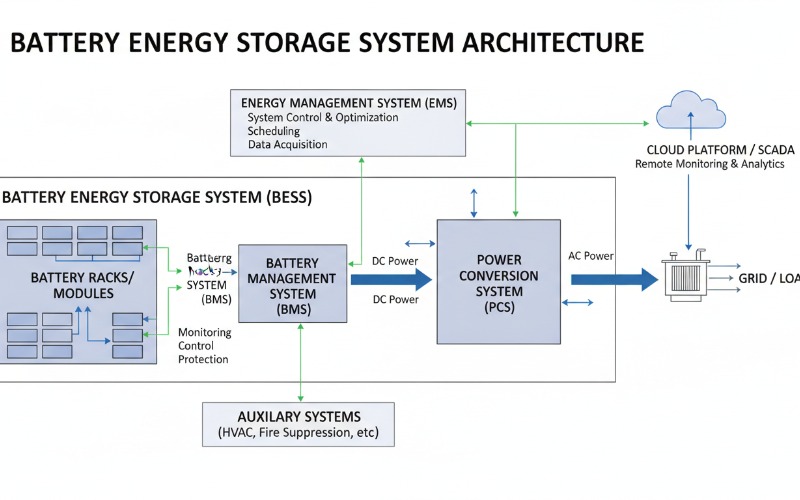
At the engineering core, energy storage technology operates as a bidirectional power gateway. Unlike traditional generators, a BESS can transition from charging to discharging in milliseconds (typically <20ms for Moneypro Energy systems). This rapid response is facilitated by high-speed Power Conversion Systems (PCS) utilizing Infineon IGBT modules, which ensure high power density and minimal THDi (<3%). In large-scale Utility-scale configurations, these systems mirror the sophisticated grid-forming capabilities seen in Tier-1 brands like Sungrow and GoodWe.
The operational logic is governed by a three-layer hierarchy: the Battery Cell (Level 1), the Battery Management System (BMS) (Level 2), and the Energy Management System (EMS) (Level 3). While the cells store the physical electrons, the EMS acts as the brain, communicating via Modbus TCP or CANbus to execute complex algorithms like Peak-shaving or Virtual Power Plant (VPP) participation. For installers, understanding this synergy is crucial for ensuring system longevity and maximizing the C-rate performance during peak demand periods.
Why LFP Chemistry Defines the Current ESS Landscape?
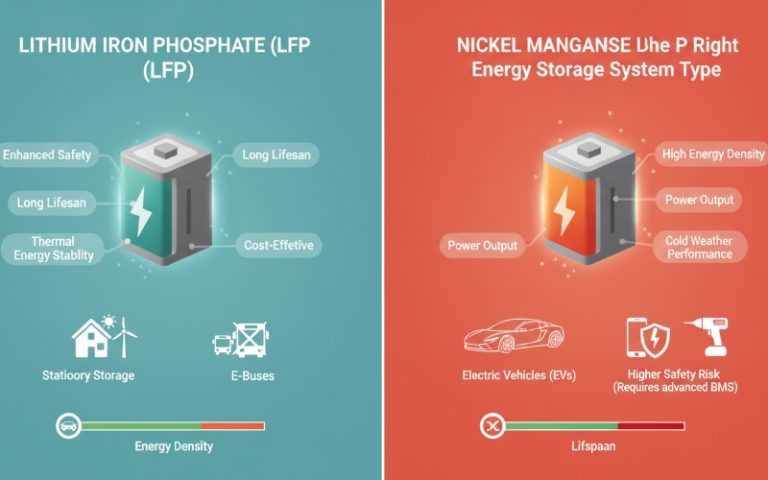
Lithium Iron Phosphate (LiFePO4 or LFP) has become the global benchmark for stationary energy storage technology because of its superior safety profile, lower cost per cycle, and exclusion of cobalt.
While EV manufacturers often prioritize the energy density of NMC (Nickel Manganese Cobalt) for range, B2B stationary applications prioritize safety and cycle life. LFP cells, such as those integrated into Moneypro Energy battery packs, offer a thermal runaway temperature of approximately 270°C, significantly higher than NMC’s ~210°C. This makes LFP the only viable choice for dense urban installations or high-capacity Commercial Building Energy Storage projects where fire safety is the primary procurement filter.
From a manufacturing perspective, Moneypro Energy ensures peak LFP performance through rigorous 48-hour high-temperature aging tests and 100% EOL (End of Line) testing. By using Grade-A cells from industry leaders like CATL and EVE, our systems achieve a cycle life exceeding 6,000 cycles at 80% Depth of Discharge (DoD). This reliability is essential for large-scale Solar Farm Energy Storage where the expected project lifespan is 15-20 years. The absence of rare-earth metals like cobalt also insulates our supply chain from the price volatility seen in other lithium-ion chemistries.
What Are the Critical Components of a Tier-1 ESS?
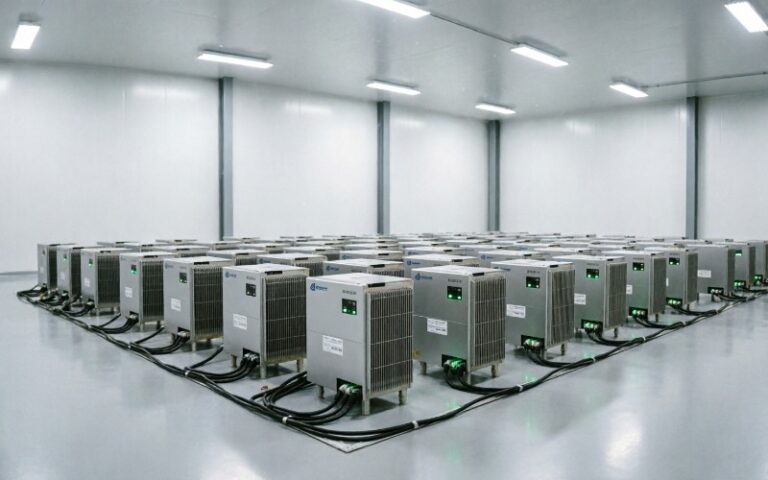
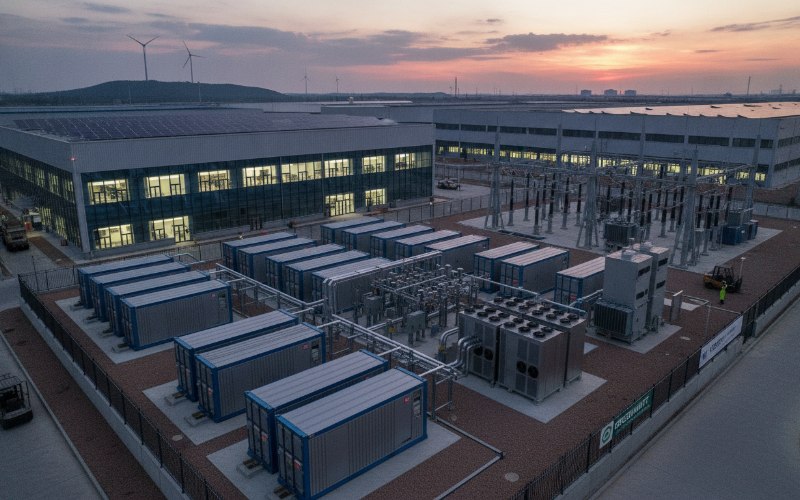
A professional-grade Energy Storage System consists of four mission-critical subsystems: the Battery Cluster, the Power Conversion System (PCS), the Battery Management System (BMS), and the Thermal Management System.
The PCS is the heart of the system, responsible for AC/DC conversion. Moneypro Energy utilizes bi-directional string inverters that achieve up to 98.5% efficiency. We integrate premium components, including Japanese Nippon Chemi-Con capacitors and advanced MPPT tracking algorithms. This hardware choice ensures that even in harsh Factory Energy Storage environments with high inductive loads, the system maintains stable voltage output and avoids harmonic interference.
The BMS provides the secondary line of defense. Our multi-level BMS architecture monitors cell-level voltage and temperature every 10 milliseconds. In case of anomalies, the system triggers pre-alarm protocols or physical disconnection via high-voltage DC contactors. For Data Center Energy Storage, this level of precision prevents downtime and protects sensitive IT infrastructure from power surges. Furthermore, the EMS layer allows for cloud-based monitoring, providing O&M teams with real-time data on State of Charge (SoC) and State of Health (SoH).
Which Applications Benefit Most from Energy Storage?
Energy storage technology is most effective in scenarios requiring high-reliability power, such as Data Centers, or in markets with high demand charges where peak-shaving provides a direct ROI.
1. C&I Peak Shaving: For manufacturing facilities, electricity bills are often determined by the highest 15-minute peak of the month. A Moneypro BESS can discharge during these peaks, effectively lowering the demand charge and providing significant monthly savings. This is a primary driver for Factory Energy Storage solutions across Europe and North America.
2. Grid Stabilization: On a utility scale, energy storage technology provides Frequency Regulation and Voltage Support. Large-scale Grid Stabilization projects use BESS to absorb excess renewable energy during midday and release it during the evening ramp, preventing the ‘duck curve’ phenomenon often managed by giants like Tesla (Megapack) or Fluence.
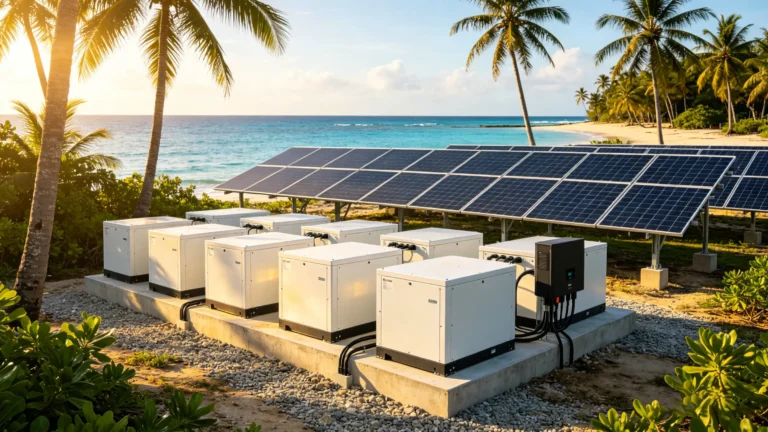
3. Microgrids & Remote Power: In off-grid locations, Remote Power Systems rely on ESS to replace or hybridize diesel generators. This not only reduces fuel costs but also lowers the carbon footprint of mining operations or island resorts, providing a 24/7 clean energy supply.
Technical Comparison: String vs. Central Architectures
Choosing between string and central inverter architectures is a critical design decision; string systems offer higher availability and modularity, while central systems are often more cost-effective for multi-MW utility projects.
| Feature | String ESS Architecture | Central ESS Architecture |
|---|---|---|
| System Granularity | Rack-level MPPT & Control | Container-level Control |
| Availability | High (N+1 redundancy) | Moderate |
| O&M Complexity | Low (Modular replacement) | High (Specialist required) |
| Round-Trip Efficiency | 91% – 93% | 89% – 91% |
| Ideal Application | C&I, Data Centers | Utility-Scale Solar Farms |
| Standard Compliance | UL 1741 SB / IEEE 1547 | UL 1741 SB / G99 |
What Global Standards Govern Energy Storage Safety?
Safety in energy storage technology is mandated by international certifications, with UL 9540A and IEC 62619 being the most critical benchmarks for system-level fire safety and cell reliability.
For B2B distributors, selling non-compliant hardware is a significant legal and financial risk. Moneypro Energy systems are engineered to meet and exceed the most stringent requirements:
- UL 9540/9540A: The gold standard for North American projects, testing large-scale fire spread.
- IEC 62619: European standard focusing on the safety requirements for secondary lithium cells and batteries.
- UN 38.3: Ensures the safety of lithium batteries during international shipping and logistics.
By adhering to these standards, our Residential Energy Storage System and C&I ESS products ensure seamless permitting with local AHJs (Authorities Having Jurisdiction), reducing project timelines and increasing the bankability of the energy assets.
How to Calculate the ROI of B2B Energy Storage Projects?
The Levelized Cost of Storage (LCOS) is the primary metric for evaluating the ROI of energy storage technology, calculated by dividing the total lifetime costs of the system by its total energy throughput.
To maximize ROI, system integrators must look beyond initial CAPEX. Factors such as the degradation rate (SoH), round-trip efficiency, and the responsiveness of the EMS are vital. For instance, a system with a THDi <3% reduces heat loss in transformers, which directly translates to lower OPEX over 10 years. Moneypro Energy’s proprietary EMS supports multi-mode operation, allowing owners to switch between self-consumption and VPP arbitrage based on real-time market signals. This flexibility often shortens the payback period from 8 years down to 5.5 years in high-tariff regions like Australia or Germany.
Frequently Asked Questions
What is the difference between power and energy in an ESS?
Power (measured in kW) refers to the rate at which the system can discharge energy at any given moment, while Energy (measured in kWh) refers to the total capacity the system can store. For example, a 100kW/200kWh system can discharge 100kW for two hours.
How long does an industrial energy storage system last?
With Tier-1 LFP cells and proper thermal management, an industrial BESS typically lasts 15 to 20 years, or approximately 6,000 to 8,000 cycles at 80% Depth of Discharge.
Is LFP better than NMC for C&I applications?
Yes. For stationary C&I storage, LFP is superior due to its thermal stability and lower cost per cycle, despite having lower energy density than NMC which is preferred for mobile applications like EVs.
Partner with Moneypro Energy for Your Next ESS Project
Ready to scale your energy storage business with factory-direct technical support and industry-leading hardware?
1. Wholesale & Distribution: Get access to tier-1 pricing and localized technical training for your sales team. Contact our Wholesale Dept.
2. Project Customization: Our engineering team can provide full SLD (Single Line Diagrams) and ROI modeling for your specific C&I or Utility project. Request a Custom Design.
3. Immediate RFQ: Have a project ready to go? Send your specs and receive a detailed quote within 48 hours. Submit your RFQ here.