5 Cheapest Ways to Store Solar Energy: A 2026 Engineering Guide
The global energy landscape has experienced a monumental shift. Harnessing the sun’s power is no longer the primary financial barrier for modern facilities; the true engineering and economic challenge lies in capturing and holding that power for when it is actually needed. If you are actively researching the cheapest way to store solar energy, you must immediately discard outdated consumer assumptions. In the energy sector, “cheapest” can denote the absolute lowest upfront capital expenditure (CAPEX), or it can represent the lowest Levelized Cost of Storage (LCOS) calculated over a rigorous 15-year operational lifecycle.
China MoneyPro Energy is a technology-driven developer of advanced energy storage systems and intelligent power solutions, built upon a strong heritage of national-level research institutes and decades of engineering experience in high-reliability systems. We design, test, and deploy infrastructure for the most demanding environments globally. We know exactly which chemistries fail prematurely in the field and which system architectures deliver a profitable return on investment. In this comprehensive technical guide, we will break down the five most cost-effective storage methodologies available in 2026. We will explain not only what these technologies are, but definitively state whether they are actually worth your investment.
Quick Answer: What is the Cheapest Way to Store Solar Energy?
The absolute cheapest way to store solar energy is Virtual Storage (Net Metering paired with Load Shifting), which costs nothing upfront as it utilizes the local utility grid as a battery. However, for physical, independent storage, the cheapest upfront hardware is the Lead-Acid Battery at roughly $100 to $200 per kWh.
Despite lead-acid’s low entry price, the most cost-effective method over a 10-to-15-year lifespan (lowest LCOS) is the Lithium Iron Phosphate (LFP) Battery. In 2026, lithium-ion battery pack prices dropped to record lows of $70 to $108 per kWh, making LFP the undeniable standard for both residential stability and heavy-duty commercial applications.
Table of Contents
- 1. Virtual Storage: Net Metering and Load Shifting
- 2. Lead-Acid Batteries: The Lowest Upfront CAPEX
- 3. Lithium Iron Phosphate (LFP): The Lowest Lifetime LCOS
- 4. Thermal Energy Storage: Heating Water and Molten Salt
- 5. Mechanical Storage: Flywheels and Pumped Hydro
- System Architecture: What Makes Storage Actually Work?
- Who Should Use It & Who Doesn’t Need It
- Common Mistakes and Buying Considerations
- Cost-Benefit Analysis and Comparison Tables
- Expert Recommendation from China MoneyPro Energy
- Frequently Asked Questions (FAQ)
1. Virtual Storage: Net Metering and Load Shifting
For the vast majority of grid-connected properties, the cheapest way to store solar energy is to bypass physical batteries entirely. This is achieved through virtual storage, utilizing the utility grid to absorb your excess daytime production.
How it works: By integrating a highly efficient Grid-Tied Inverter into your array, your system synchronizes with the local power grid. During peak sunlight hours, when your panels produce more power than your facility consumes, the inverter pushes the surplus alternating current (AC) into the grid. The utility company credits your account for this export (Net Metering). You then draw against those credits at night. To maximize this financial mechanism, facilities employ “load shifting”—programming heavy machinery, HVAC systems, or agricultural pumps to run exclusively during peak solar production.
Benefits: The primary benefit is financial. You eliminate the massive capital expenditure required for chemical battery racks. Additionally, the grid acts as a battery with an effective 100% depth of discharge and 95% to 99% virtual efficiency.
Limitations: If the grid goes down, your facility goes down. Grid-tied inverters are mandated by law to shut off during blackouts to prevent electrocuting line workers. Furthermore, utility companies globally are aggressively restructuring Net Metering policies, slashing the value of exported credits.
2. Lead-Acid Batteries: The Lowest Upfront CAPEX
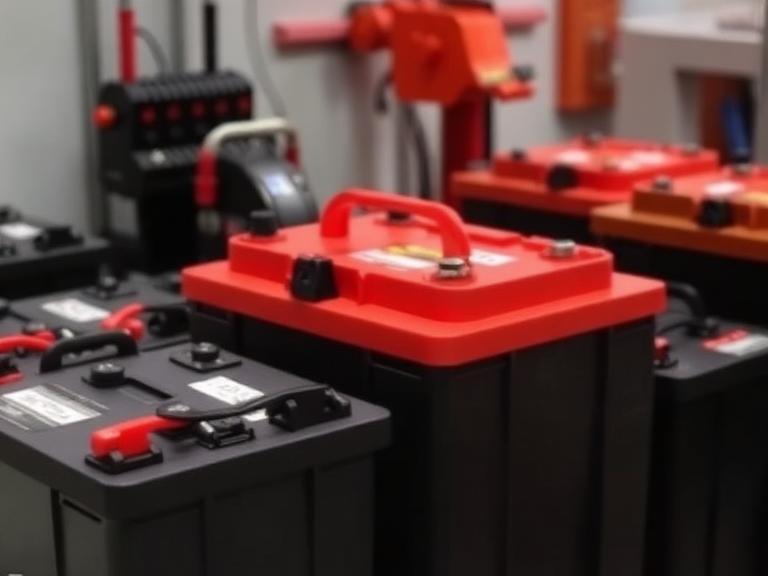
If you absolutely require off-grid capability but have a severely restricted procurement budget, flooded lead-acid (FLA) or absorbent glass mat (AGM) batteries represent the cheapest way to store solar energy in terms of immediate hardware costs. Prices generally range from $100 to $200 per kWh of capacity.
How it works: Lead-acid technology utilizes lead plates submerged in a sulfuric acid electrolyte. It is a 150-year-old technology that stores direct current (DC) power generated by your array. They are commonly used to power simple, low-draw devices such as remote gate openers or small cabin lighting circuits.
Benefits: They are universally available, incredibly cheap to purchase initially, and easily recycled. For beginners setting up a small DIY shed system, the financial risk is exceptionally low.
Limitations: We must be brutally candid: in most professional situations, buying lead-acid batteries is a false economy. They suffer from a critical limitation known as Depth of Discharge (DoD). You can only utilize 50% of a lead-acid battery’s rated capacity without causing permanent, irreversible damage to the cell chemistry. Furthermore, their cycle life is dismal—often failing after 500 to 1,000 cycles. You will likely replace a lead-acid bank three to four times before a modern lithium equivalent requires its first replacement.
3. Lithium Iron Phosphate (LFP): The Lowest Lifetime LCOS
For commercial operators and modern homeowners, the cheapest way to store solar energy over a realistic 15-year operational window is undoubtedly Lithium Iron Phosphate (LFP) technology. According to BloombergNEF, battery storage costs plummeted to record lows in 2025 as manufacturing scales expanded.
How it works: An LFP Lithium Battery Pack utilizes an inherently stable cellular chemistry that eliminates the need for volatile cobalt. By 2026, raw lithium-ion battery pack prices have fallen to historic lows of roughly $70 to $108 per kWh. When fully integrated and installed, residential systems range from $700 to $1,300 per kWh, while massive utility-scale installations have seen costs compress to between $125 and $334 per kWh.
Benefits: LFP is the undeniable gold standard for 2026. It provides a usable Depth of Discharge of 80% to 100%, boasts a lifespan of 6,000 to 10,000 cycles, and is virtually immune to thermal runaway (battery fires). From our experience, deploying LFP is the only mathematically sound decision for daily deep-cycling operations.
Limitations: The upfront capital requirement remains higher than obsolete lead-acid technology. Furthermore, LFP cells are sensitive to sub-zero charging temperatures and require sophisticated thermal management.
4. Thermal Energy Storage: Heating Water and Molten Salt
Instead of converting solar energy into chemical storage, you can convert it directly into thermal energy (heat). For facilities with massive hot water or industrial heating demands, this is mathematically the cheapest way to store solar energy.
How it works: In residential settings, a solar diverter routes excess panel electricity directly into a standard hot water cylinder’s immersion heater. In utility-scale concentrated solar power (CSP) operations, mirrors focus sunlight to heat molten salt to extreme temperatures, effectively storing the thermal energy for days at a cost of roughly $20 to $50 per kWh.
Benefits: Residential water heating acts as an incredibly cheap, highly insulated battery. Industrial molten salt provides continuous, dispatchable power for heavy-duty applications long after sunset.
Limitations: Thermal storage is single-purpose. Once the energy is converted to heat in a residential tank, you cannot practically convert it back into electricity to power your lights or servers.
5. Mechanical Storage: Flywheels and Pumped Hydro
For heavy-duty applications operating at the megawatt or gigawatt scale, mechanical storage bypasses chemical degradation entirely. Pumped hydro remains the largest form of grid energy storage globally.
How it works: Pumped hydro utilizes excess daytime solar energy to pump millions of gallons of water from a lower reservoir to an elevated upper reservoir. When the grid demands power at night, the water is released through generating turbines. Alternatively, flywheel energy storage uses excess electricity to spin a massive rotor in a frictionless vacuum chamber up to 60,000 RPM. The kinetic energy is instantly converted back to electricity when the grid experiences frequency drops.
Benefits: Mechanical systems offer lifespans spanning 50 to 100 years. Pumped hydro delivers round-trip efficiencies exceeding 80%, while flywheels can respond to power demands in milliseconds with 85% to 92% efficiency.
Limitations: These are strictly grid-level solutions. They require massive geographical footprints, billion-dollar infrastructure investments, and complex environmental permitting. They are entirely unfeasible for residential or standard commercial deployment.
| Storage Method | Average Cost per kWh (2026) | Round-Trip Efficiency | Best Use Case |
|---|---|---|---|
| Virtual (Net Metering) | $0 (Utility Dependent) | 95% – 99% | Grid-tied urban facilities with favorable utility policies. |
| Lead-Acid Batteries | $100 – $200 | 70% – 80% | Low-draw, off-grid backup (sheds, gate openers). |
| LFP Lithium Batteries | $200 – $500 (C&I Scale) | 90% – 95% | Daily deep-cycling, commercial microgrids, residential backup. |
| Thermal Storage | $20 – $50 (Molten Salt) | 70% – 90% | Industrial heat processes and concentrated solar power (CSP). |
| Pumped Hydro | Massive infrastructure CAPEX | 70% – 80% | Utility-scale grid stabilization. |
System Architecture: What Makes Storage Actually Work?
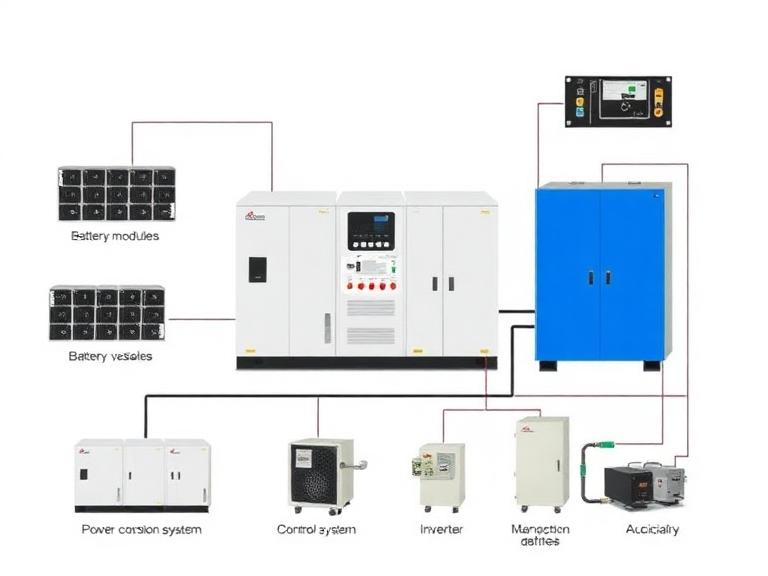
A fatal mistake made by procurement managers is assuming the “battery” is the only cost. In reality, storing solar energy efficiently requires a highly synchronized technological architecture. Whether you are building a residential backup system or a Commercial Energy Storage Solution, the raw battery cells only account for roughly 50% to 60% of the total deployed cost.
To safely bridge the gap between DC batteries and AC facility loads, you must utilize a Power Conversion System (PCS). Furthermore, high-density LFP cells require micro-second voltage and temperature balancing, which is governed by an intelligent Battery Management System (BMS). Ignoring the quality of your BMS is a guaranteed path to premature battery failure. Finally, to ensure code compliance and safety, the BOS Components (Balance of System—including wiring, breakers, and busbars) must be engineered to handle maximum fault currents.
Who Should Use It & Who Doesn’t Need It
For beginners: If you are simply trying to eliminate a $100 monthly electricity bill in a region with 1:1 Net Metering, you do not need physical batteries. Utilize a standard grid-tied architecture. The cheapest way to store solar energy for your scenario is virtually.
For commercial users: If your facility suffers from peak demand charges—where the utility penalizes you for high power spikes during operational hours—you absolutely must invest in an LFP storage system. The system will deploy battery power during peak periods (peak shaving), delivering an ROI that often pays for the entire battery bank within 4 to 6 years.
For heavy-duty applications: Industrial mining sites, remote telecommunications towers, and off-grid resorts require absolute fail-safes. We recommend utilizing a Hybrid Inverter paired with high-voltage LFP cabinets. Hybrid inverters seamlessly manage inputs from the solar array, the battery bank, and auxiliary diesel generators simultaneously.
Common Mistakes and Buying Considerations
In our testing and deployment of energy systems across diverse climates, we consistently witness buyers falling into the same trap: purchasing exclusively on upfront price per kilowatt-hour. Buying a cheap lead-acid bank might save you $5,000 today, but when it degrades to 30% capacity by year three, your operational downtime will cost you exponentially more.
Another common mistake is neglecting system telemetry. If you are operating a multi-megawatt commercial system, you cannot manage what you cannot measure. Integrating advanced Monitoring & Communication protocols (like Modbus TCP or intelligent cloud dashboards) allows you to predict cell degradation before a module fails.
| Technology | Pros | Cons |
|---|---|---|
| Lead-Acid (AGM/FLA) | Lowest initial purchase price. High recycling infrastructure globally. Tolerates extreme cold slightly better without active heating. | Strict 50% Depth of Discharge limit. Heavy, massive physical footprint. Requires regular maintenance (watering FLA cells). Short lifespan (500 – 1,000 cycles). |
| LFP Lithium | Lowest Levelized Cost of Storage (LCOS). Zero daily maintenance required. Up to 100% usable Depth of Discharge. Massive lifespan (6,000+ cycles). | Higher initial capital expenditure. Requires a sophisticated Battery Management System (BMS). Cannot be charged below freezing without internal heaters. |
Expert Recommendation from China MoneyPro Energy
In most professional situations, the debate between storage chemistries is obsolete. We recommend Lithium Iron Phosphate (LFP) systems exclusively for any modern solar deployment requiring physical storage.
Do not be seduced by the low sticker price of lead-acid; it is a technological dead end for daily solar cycling. Furthermore, if your utility allows favorable Net Metering, exploit that virtual storage as your primary buffer, but always integrate a hybridized LFP backup to protect against grid instability. Ensure your procurement strategy utilizes data from trusted authorities, such as the National Renewable Energy Laboratory (NREL) and the Lazard Levelized Cost of Storage Analysis, which consistently prove that LFP’s extended lifecycle creates the highest commercial value in 2026.
Frequently Asked Questions (FAQ)
What is the cheapest way to store solar energy without a battery?
The cheapest method is utilizing Net Metering combined with load shifting. By programming high-consumption appliances to run during peak solar hours and exporting the remainder to the grid for utility credits, you effectively use the grid as a free, 100% efficient virtual battery.
Is lead-acid cheaper than lithium for storing solar energy?
Lead-acid is only cheaper at the point of initial purchase (CAPEX), costing roughly $100 to $200 per kWh. However, because lead-acid batteries must be replaced every 3 to 5 years and can only be discharged to 50%, a lithium LFP battery is vastly cheaper over a 15-year period.
How much does a commercial solar battery storage system cost in 2026?
In 2026, the average commercial and industrial (C&I) solar battery storage cost ranges from $200 to $500 per kWh of installed capacity. Utility-scale deployments benefit from massive economies of scale, pushing costs down to $125 to $334 per kWh.
Can thermal energy storage replace battery banks?
Yes, but only for heating demands. Routing excess solar power to a residential hot water tank or an industrial molten salt reservoir is incredibly cheap and highly efficient. However, thermal storage cannot efficiently be converted back into electricity to power standard AC loads.