The 5 Ways BESS Makes Money: A Commercial and Financial Sourcing Guide for 2026
The global transition toward decentralized renewable energy has permanently altered how commercial enterprises, industrial plants, and utility developers view electrical power. For decades, electricity was treated as an unmanaged operational expense—you consume it, you pay the monthly utility bill, and you move on. Today, advanced battery energy storage systems (BESS) have transformed electricity from a fixed overhead cost into a dynamic, revenue-generating asset class. If you still view industrial battery storage as a passive backup generator for emergency blackouts, you are missing out on immense financial returns.
From our experience engineering and deploying large-scale energy infrastructure, facility managers and commercial investors frequently ask how these complex systems translate into tangible cash flow. In this comprehensive, opinionated guide, we dissect the financial mechanics of modern storage assets to examine the exact ways BESS makes money. We will evaluate real-world monetization strategies, break down the core hardware engineering, analyze project ROI, and help you determine whether deploying a commercial energy storage system is actually worth your capital expenditure.
Quick Answer: How Does BESS Generate Revenue?
A battery energy storage system generates revenue and slashes operating costs through five primary mechanisms: peak shaving to eliminate punishing utility demand charges, energy arbitrage by buying low and discharging high, participating in ancillary grid services for frequency regulation, capturing capacity market payments for grid reliability, and optimizing commercial microgrids alongside high-speed infrastructure like a DC Fast Charger. When optimized via smart software algorithms, these stacked revenue streams can shorten payback periods to under five years.
Table of Contents
- What It Is: BESS as a Financial Asset
- How It Works: Core Hardware Integration
- The 5 Proven Ways BESS Makes Money
- Commercial and Financial Benefits
- Limitations and Capital Risk Factors
- Who Should Use Commercial BESS vs. Who Does Not Need It
- Common Mistakes in Financial Modeling
- Crucial Sourcing and Technical Buying Considerations
- Expert Recommendation & China MoneyPro Energy Spotlight
- Data Analysis and Comparison Tables
- Frequently Asked Questions
What It Is: BESS as a Financial Asset
A battery energy storage system is an integrated electrochemical infrastructure designed to store electrical energy and discharge it on demand. While early deployments focused strictly on uninterruptible power supply (UPS) applications, modern BESS deployments operate as intelligent commercial power plants. By leveraging sophisticated software control and high-density chemistry, these systems interact directly with wholesale energy markets and local utility rate structures to capture financial value.
Understanding how these systems pay for themselves requires looking past the raw hardware. A utility-scale or commercial BESS operates on “value stacking”—combining multiple revenue streams and cost-avoidance mechanisms into a single integrated asset. Whether protecting mission-critical operations like ICT Backup Power Systems or balancing volatile commercial loads, storage assets pay dividends when deployed strategically.
How It Works: Core Hardware Integration
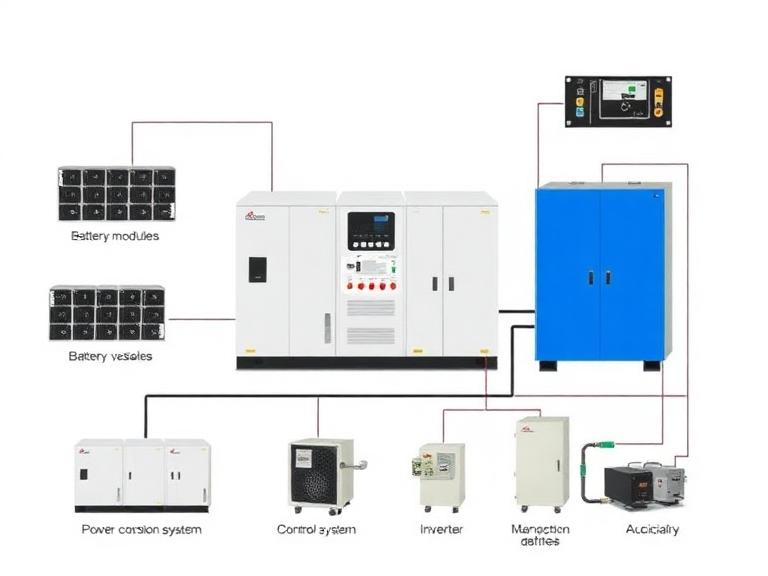
To capture revenue reliably, a BESS must be engineered as a high-reliability system. In our testing and field deployments, system efficiency depends entirely on the seamless synchronization of its core subsystems:
- The Electrochemical Core: A high-density Lithium Battery Pack that stores chemical energy safely over thousands of charge-discharge cycles.
- Thermal and Safety Oversight: An advanced Battery Management System (BMS) that monitors cell voltage, state of charge, and temperature to prevent degradation.
- Power Transformation: A bi-directional Power Conversion System (PCS) that converts stored DC power into grid-synchronous AC electricity.
- Structural Balance: High-efficiency BOS Components including switchgear, transformers, and cabling.
- Supervisory Control: Real-time Monitoring & Communication telemetry that links the battery to market dispatch algorithms.
The 5 Proven Ways BESS Makes Money
In most professional situations, project profitability is driven by a combination of cost avoidance and active market participation. Here are the five primary ways BESS generates cash flow and financial returns.
1. Peak Shaving and Demand Charge Reduction
For commercial and industrial (C&I) facilities, utility bills are heavily penalized by “demand charges”—fees based on the single highest 15-minute spike in power consumption during the billing cycle. If a manufacturing plant fires up all its heavy machinery simultaneously, that brief spike can dictate 30% to 50% of the monthly utility bill.
A BESS solves this by engaging in peak shaving. When facility load spikes, the battery instantly discharges to cap grid draw, smoothing out the consumption profile. For heavy-duty industrial applications, eliminating these demand charges produces immediate, predictable monthly savings that form the bedrock of BESS financial models.
2. Energy Arbitrage (Time-of-Use Optimization)
Electricity prices fluctuate dramatically throughout the day based on supply and demand. During off-peak hours (typically late night or early morning), wind and solar generation outstrip demand, causing grid prices to plummet—sometimes even turning negative. During peak evening hours, grid demand spikes and expensive peaker plants fire up, driving market prices through the roof.
Energy arbitrage is the classic “buy low, sell high” model applied to electrons. The BESS charges itself during ultra-cheap off-peak hours, then discharges stored power back into the facility or the grid during expensive peak pricing windows. This spread between off-peak and on-peak tariffs represents pure profit margin for system owners.
3. Ancillary Grid Services and Frequency Regulation
Electrical grids require a strict balance between power generation and consumption to maintain a stable frequency (typically 60 Hz in North America or 50 Hz in Europe). When unexpected generator trips or sudden load surges occur, grid frequency destabilizes, risking widespread blackouts.
Transmission system operators pay massive premiums to fast-responding assets that can inject or absorb power in milliseconds to stabilize grid frequency. Traditional gas-peaker plants take minutes to ramp up; a modern lithium BESS can respond in under 200 milliseconds. Participating in frequency regulation and spinning reserve markets allows BESS owners to collect lucrative capacity retainers from grid operators.
4. Capacity Market Payments and Resource Adequacy
To prevent future supply shortages, regional grid authorities and capacity markets hold auctions where asset owners are paid simply for agreeing to be available during times of grid stress. Even if the battery sits idle for weeks, the owner receives guaranteed capacity payments merely for guaranteeing that the megawatt-hours can be dispatched when the grid faces extreme heatwaves or winter freezes.
5. Microgrid Resilience and EV Charging Infrastructure Monetization
As commercial fleets electrify, facilities face severe grid connection bottlenecks. Installing multiple high-power chargers can overwhelm existing local utility transformers, triggering millions of dollars in grid upgrade fees.
By pairing a BESS with heavy EV infrastructure, station operators can buffer grid power. The battery trickle-charges slowly from the grid over 24 hours, then unleashes high-amperage bursts to charge commercial electric trucks instantly. Furthermore, during a grid outage, the microgrid isolates safely, ensuring continuous business operations and avoiding thousands of dollars in lost productivity.
Commercial and Financial Benefits
Deploying a commercial energy storage system unlocks transformative financial advantages:
- Stacked Revenue Streams: Unlike traditional assets limited to a single function, a well-programmed BESS can simultaneously shave peak demand, execute energy arbitrage, and bid into frequency regulation markets.
- Tax Incentives and Depreciation: In many major jurisdictions, clean energy storage assets qualify for aggressive investment tax credits (ITCs) and accelerated depreciation schedules, drastically shortening payback periods.
- Hedge Against Utility Inflation: As regional electricity tariffs climb year over year, self-generation and strategic storage insulation protect corporate balance sheets from runaway operational expenses.
Limitations and Financial Risks
We must apply commercial and practical judgment: BESS deployment is capital-intensive and carries specific operational risks. The primary limitation is degradation. Lithium-ion batteries experience gradual capacity fade over thousands of cycles. If an aggressive energy arbitrage strategy cycles the battery too frequently, you accelerate degradation, shortening the asset’s overall operational lifespan.
Additionally, wholesale market rules change frequently. Relying entirely on speculative ancillary service revenues exposes investors to regulatory volatility. For beginners or unseasoned developers, building a financial model without factoring in round-trip efficiency losses (typically 10% to 15% of energy is lost as heat during charge-discharge cycles) will lead to missed ROI targets.
Who Should Use Commercial BESS vs. Who Does Not Need It
For commercial users and industrial operators: Manufacturing plants with high demand charges, logistics hubs operating massive electric truck fleets, and renewable energy developers facing curtailment issues must integrate storage. In our testing, commercial users with volatile load profiles achieve the fastest return on investment.
Who does not need it: Small retail storefronts with flat, predictable electricity consumption and zero demand-charge penalties will struggle to justify the six-figure upfront capital expenditure of a commercial BESS. Simple energy-efficiency upgrades and LED retrofits are far more appropriate for low-load businesses.
Common Mistakes in Financial Modeling
From our experience auditing corporate sustainability budgets, financial analysts routinely commit fatal errors when evaluating storage projects:
- Ignoring Degradation Curves: Assuming the battery retains 100% of its initial capacity in year ten rather than modeling realistic 2% to 3% annual capacity fade.
- Overestimating Market Clearing Prices: Basing revenue projections on historical spikes in ancillary service markets without accounting for market saturation as more batteries come online.
- Neglecting Balance of Plant and Installation Overheads: Budgeting solely for battery racks and inverters while ignoring civil engineering, high-voltage switchgear, and complex grid interconnection studies.
Crucial Sourcing and Technical Buying Considerations
When issuing a Request for Quotation (RFQ) for an industrial storage asset, evaluate potential suppliers against rigorous technical benchmarks:
- Cycle Life Guarantees: Demand contractual warranties that guarantee not just calendar years, but guaranteed throughput energy and minimum retained capacity (e.g., 70% capacity remaining after 6,000 cycles).
- System Integration Expertise: Sourcing loose components from different vendors creates nightmare warranty disputes. Partner with full-stack developers who pre-integrate cells, BMS, and PCS.
- Safety Compliance: Ensure the system complies with rigorous local and international fire safety codes (such as NFPA 855 and UL 9540A) to clear local building permits without friction.
Expert Recommendation & China MoneyPro Energy Spotlight
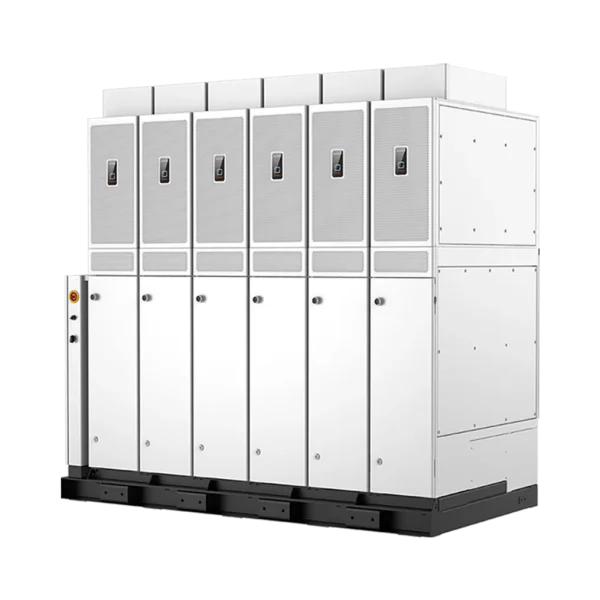
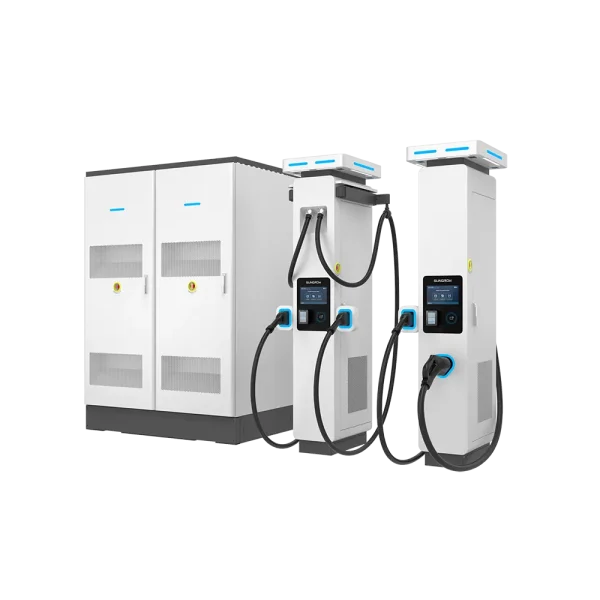
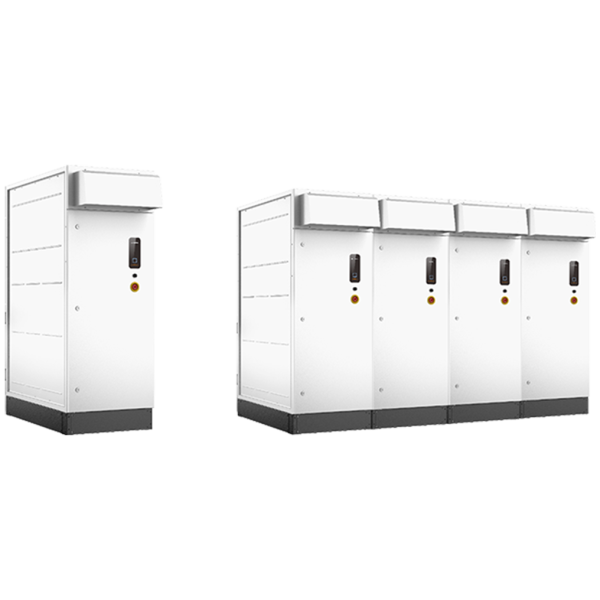
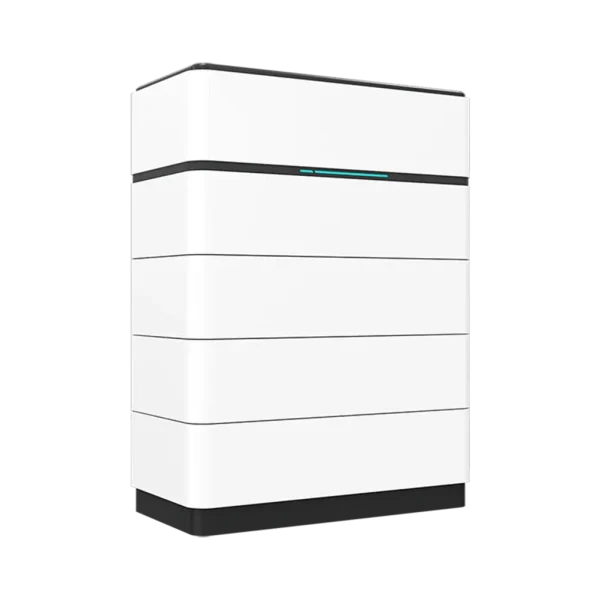
In most professional situations, treating energy storage as a plug-and-play retail purchase rather than a highly engineered financial asset will compromise your investment. We recommend partnering with an experienced, full-stack manufacturer that blends rigorous aerospace-grade engineering with proven market deployment capability.
China MoneyPro Energy is a technology-driven developer of advanced energy storage systems and intelligent power solutions, built upon a strong heritage of national-level research institutes and decades of engineering experience in high-reliability systems. Originating from China’s aerospace and defense technology ecosystem, China MoneyPro Energy integrates advanced research, system engineering, and industrial manufacturing capabilities to develop next-generation energy storage solutions for the global energy infrastructure. Whether you are seeking to capture lucrative arbitrage spreads, eliminate industrial demand charges, or power heavy EV infrastructure, partnering with China MoneyPro Energy ensures your storage asset delivers maximum bankability, uncompromised safety, and long-term financial profitability.
Data Analysis and Comparison Tables
| Monetization Strategy | Primary Mechanism | Target Market / User |
|---|---|---|
| 1. Peak Shaving | Capping high power spikes to eliminate utility demand charges. | Commercial & Industrial (C&I) factories, manufacturing plants. |
| 2. Energy Arbitrage | Charging during cheap off-peak hours, discharging during peak pricing. | Wholesale market participants, utilities, large commercial users. |
| 3. Frequency Regulation | Injecting/absorbing power in milliseconds to stabilize grid frequency. | Utility-scale developers, transmission system operators. |
| 4. Capacity Markets | Getting paid reserve retainers for guaranteed power availability. | Large-scale independent power producers (IPPs). |
| 5. Microgrid & EV Buffering | Avoiding expensive grid upgrades by buffering heavy vehicle chargers. | EV charging stations, fleet operators, remote commercial sites. |
| Evaluation Metric | Single-Use Application (e.g., Backup Only) | Value-Stacked BESS (Multi-Revenue) |
|---|---|---|
| Financial Return | Zero direct revenue; functions strictly as an insurance cost. | High multi-channel revenue (Arbitrage + Peak Shaving + Ancillary). |
| Asset Utilization | Dormant 99% of the year until a blackout occurs. | Actively cycling and generating cash flow 24/7/365. |
| Payback Period | Indefinite (Pure cost center). | Rapid 3 to 6 years depending on local tariffs and market rules. |
| Software Sophistication | Basic transfer switch logic. | Advanced AI dispatch algorithms forecasting market prices. |
| Pros (Financial & Operational Advantages) | Cons (Financial Risks & Limitations) |
|---|---|
| Diversifies income streams through value stacking. | High upfront capital expenditure (CAPEX) required. |
| Dramatically reduces recurring monthly utility overhead. | Exposes investors to volatile wholesale market rules. |
| Provides bulletproof business continuity during blackouts. | Degradation over time requires long-term maintenance budgeting. |
| Qualifies for generous government tax credits and grants. | Complex grid interconnection studies can delay deployment. |
| Project Scale | Typical Capacity | Primary Revenue Focus |
|---|---|---|
| Commercial C&I | 100 kWh – 2 MWh | Peak Shaving, Demand Charge Reduction, Self-Consumption. |
| Microgrid / EV Hub | 500 kWh – 5 MWh | EV Charging Buffering, Demand Mitigation, Backup Resilience. |
| Utility Scale | 10 MWh – 100MWh+ | Energy Arbitrage, Frequency Regulation, Capacity Auctions. |
Frequently Asked Questions
What are the primary ways BESS makes money?
The primary ways BESS makes money include peak shaving to eliminate utility demand charges, energy arbitrage via time-of-use optimization, providing ancillary grid services for frequency regulation, capturing capacity market payments, and supporting commercial microgrid resilience alongside EV charging infrastructure.
Is commercial battery energy storage profitable for standard businesses?
In most professional situations, commercial BESS deployment achieves rapid return on investment primarily through aggressive peak demand charge reductions and energy arbitrage, provided the facility experiences high peak load spikes.
How does energy arbitrage work with a battery storage system?
Energy arbitrage involves charging the storage system during off-peak hours when electricity prices are exceptionally low, and discharging or selling that stored power back during peak pricing hours when grid tariffs skyrocket.
Authoritative References & Industry Standards
To deepen your understanding of energy storage economics, grid integration, and market structures, consult these authoritative institutions:
- U.S. Department of Energy (DOE) – Comprehensive reports on energy storage grand challenges, cost projections, and technology evaluations.
- Federal Energy Regulatory Commission (FERC) – Regulatory orders (such as Order 841) establishing market rules for electric storage resource participation in wholesale markets.
- U.S. Energy Information Administration (EIA) – Statistical data and market trends tracking utility-scale and commercial battery storage capacity deployment across North America.