5 Ways to Buy Solar Panels Direct From Manufacturer
The renewable energy supply chain is notoriously convoluted. Between the factory floor and the final installation, solar modules typically pass through exporters, international freight forwarders, domestic importers, national distributors, and regional wholesalers. Every single touchpoint adds a margin, compounding the final price. If you are scaling an installation business, developing commercial real estate, or operating as an EPC (Engineering, Procurement, and Construction) firm, this margin stacking destroys your project economics.
From our experience engineering advanced energy solutions, the only way to achieve competitive pricing at scale is to sever the middleman. You must learn how to buy solar panels direct from manufacturer. However, international factory-direct sourcing is not for the faint of heart. It requires a ruthless understanding of logistics, Incoterms, and strict quality control. In this definitive guide, we break down exactly how professional procurement teams operate, providing commercial and practical judgment to help you secure Tier 1 pricing without getting scammed.
Quick Answer: How to Source Direct
To successfully buy solar panels direct from manufacturer, you must navigate high Minimum Order Quantities (MOQs)—typically one 40-foot shipping container (approx. 30kW to 50kW depending on panel wattage). The 5 most reliable ways are: 1) Sourcing through verified B2B portals like Alibaba, 2) Engaging factory reps at global trade shows, 3) Contacting Tier 1 OEM sales departments directly, 4) Utilizing bulk purchasing cooperatives, and 5) Securing white-label manufacturing contracts. We strongly advise that you understand import tariffs (AD/CVD) and freight logistics before wiring capital overseas.
Table of Contents
- What It Means to Buy Factory Direct
- How the Direct Supply Chain Works
- 5 Ways to Buy Solar Panels Direct from Manufacturer
- The Strategic Benefits
- Limitations and Logistical Headaches
- Who Should Use Direct Sourcing
- Who Does Not Need Direct Sourcing
- Common Import Mistakes
- Critical Buying Considerations
- Essential Comparison Tables
- Expert Recommendation: Integrating Your System
- The Bottom Line
- Frequently Asked Questions
- References
What It Means to Buy Factory Direct
Buying direct means placing a purchase order explicitly with the facility that laminates the photovoltaic (PV) cells and frames the modules. You bypass domestic warehousing companies entirely. In most professional situations, this involves communicating with export sales managers located in manufacturing hubs (primarily in Asia, though manufacturing is expanding globally). You assume the responsibility of importing, which means handling the ocean freight, customs clearance, and inland trucking to your job site or warehouse.
How the Direct Supply Chain Works
When you decide to buy solar panels direct from manufacturer, you are no longer just a customer; you become an importer of record. The process begins with vendor verification to ensure you are talking to a factory, not a trading company. Once terms are negotiated, you will sign a Proforma Invoice (PI) and pay a deposit (usually 30% via T/T wire transfer). The factory produces the panels, and upon completion, you pay the balance.
The critical element here is the Incoterm. If you buy “FOB” (Free on Board), the factory pays to load the container onto a ship at their local port, but you pay for the ocean freight and all costs thereafter. If you buy “DDP” (Delivered Duty Paid), the manufacturer handles everything right up to your warehouse door. We recommend FOB for commercial users who have established relationships with reliable freight forwarders, as it provides ultimate control over shipping costs.
5 Ways to Buy Solar Panels Direct from Manufacturer
1. Verified B2B Procurement Portals
Platforms like Alibaba or Global Sources are the most accessible entry points. However, they are fraught with peril. Many profiles claiming to be manufacturers are actually trading companies that add a 10-15% markup. To succeed here, you must filter searches strictly for “Verified Manufacturers” and demand factory audit reports. This method is highly effective if you take the time to conduct video tours of their production lines before transferring funds.
2. International Industry Trade Shows
In our testing and procurement history, nothing beats shaking hands. Attending massive industry exhibitions like SNEC in Shanghai or Intersolar in Munich puts you directly in front of factory executives. This environment allows you to inspect build quality, negotiate pricing face-to-face, and secure production allocations that you could never negotiate over email.
3. Direct OEM Outreach to Tier 1 Brands
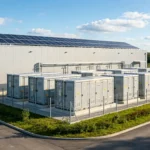
If you require bankable, Tier 1 panels (e.g., Jinko, Trina, Longi) for a massive project, you can bypass distributors by contacting their regional corporate offices directly. Be warned: Tier 1 manufacturers have astronomical MOQs. They will generally not speak to you unless you are procuring multiple Megawatts of capacity. For heavy-duty applications, aligning these Tier 1 panels with a robust Utility Scale Energy Storage System is mandatory for grid stabilization.
4. Bulk Purchasing Cooperatives
If you are a mid-sized regional installer who cannot meet a factory’s 1-Megawatt MOQ alone, you can join an EPC cooperative. These groups pool the procurement volume of dozens of installers to negotiate factory-direct pricing. You get the benefit of direct pricing without the risk of absorbing a massive inventory on your balance sheet.
5. White-Label / Contract Manufacturing
For aggressive commercial entities looking to build their own brand equity, you can contract a manufacturer to produce panels under your own company name. This requires a dedicated supply agreement and strict Quality Assurance (QA) oversight, but it allows you to control the exact bill of materials (BOM), ensuring the panels pair flawlessly with your preferred String Inverter architectures.
The Strategic Benefits
The advantages of cutting out the distributor are purely financial and strategic. You can expect a 25% to 40% reduction in capital expenditure per watt. This lower cost basis allows EPCs to win highly competitive commercial bids. Furthermore, direct sourcing gives you access to the newest technology bins (like N-Type TOPCon or HJT cells) months before they filter down to domestic wholesale warehouses.
Limitations and Logistical Headaches
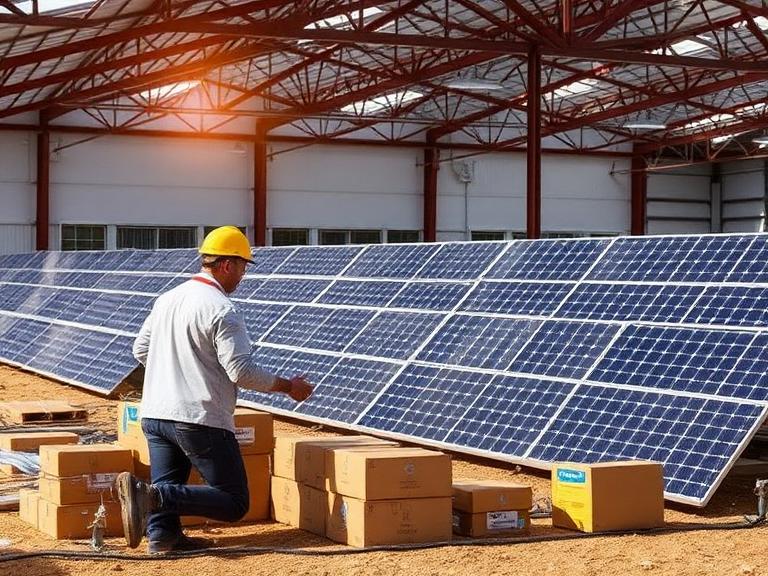
We must apply commercial and practical judgment: importing is difficult. When you buy solar panels direct from manufacturer, you lose the safety net of local customer support. If a pallet arrives shattered, filing a warranty claim across international borders is a slow, grueling process. Furthermore, international freight markets are volatile. A sudden spike in container shipping costs can instantly wipe out the margins you saved by buying direct.
Who Should Use Direct Sourcing
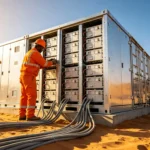
For commercial users and EPCs: If you are installing more than 500kW per year, you are losing money by using local distributors. Developers building out C&I (Commercial and Industrial) rooftops should be importing direct and pairing their panels with a customized C&I Energy Storage System to maximize peak-shaving ROI.
Who Does Not Need Direct Sourcing
For beginners and residential homeowners: Do not attempt to import solar panels for a single residential roof. The customs brokerage fees, port handling charges, and inland freight for a Less-than-Container-Load (LCL) shipment will make the panels more expensive than simply buying from a local retail supplier. If you just need a few panels to tie into your Grid-Tied Inverter, pay the retail markup for the convenience and local warranty.
Common Mistakes When Importing Solar Panels
The most catastrophic mistake companies make is ignoring Anti-Dumping and Countervailing Duties (AD/CVD) and regional trade tariffs. You might find an incredible price per watt from a foreign factory, only to have your container seized at the port and hit with a 200% punitive tariff by customs authorities because the manufacturer sourced polysilicon from a sanctioned region.
Another severe mistake is failing to hire a third-party QA inspector. Never wire the final 70% balance to a factory without having an independent engineer test the flash data and electroluminescence (EL) images of your specific batch of panels before they are loaded into the container.
Buying Considerations & Due Diligence
Before you issue a purchase order, evaluate the following:
- Bankability: Does the factory hold Tier 1 status? If not, will your project financiers accept the risk?
- System Compatibility: High-wattage bifacial panels output massive current. Ensure you are procuring an appropriate Hybrid Inverter capable of handling high short-circuit currents without clipping the production.
- Certifications: The panels must hold IEC, UL, or CE certifications relevant to your grid jurisdiction, otherwise utility interconnect agreements will be denied.
Essential Comparison Tables
Quick Summary Table: Direct vs. Distributor Sourcing
| Sourcing Method | Average Price per Watt | Minimum Order Quantity | Logistics Responsibility |
|---|---|---|---|
| Factory Direct (FOB) | Lowest ($0.10 – $0.20/W) | 1 Container (approx. 30kW+) | Buyer handles ocean freight & customs |
| National Distributor | Moderate ($0.30 – $0.45/W) | 1 Pallet (approx. 10-15kW) | Distributor handles import, buyer pays inland |
| Local Retailer | Highest ($0.60 – $0.90/W) | 1 Panel | None (Pick up or local delivery) |
Pros and Cons Table: Buying Factory Direct
| Pros of Direct Sourcing | Cons of Direct Sourcing |
|---|---|
| Massive reduction in capital expenditure (CAPEX). | Requires significant upfront capital to meet MOQs. |
| Access to the newest cell technologies (TOPCon/HJT) first. | High exposure to international freight volatility. |
| Ability to customize branding (OEM white-labeling). | Complex warranty claims across international borders. |
| Direct communication with factory engineering teams. | Risk of catastrophic tariff penalties if compliance is ignored. |
Buying Guide Table: Aligning Panels with Your Architecture
| Target Application | Recommended Panel Specs | Required System Integration |
|---|---|---|
| Remote / Telecom / Mining | High durability, standard Mono PERC | Off-Grid Power Solution with deep-cycle storage. |
| Commercial & Industrial Rooftop | N-Type TOPCon, 550W+ | Microgrid Energy Solution to manage complex load profiles. |
| Utility Solar Farms | Bifacial Dual-Glass, 600W+ | Centralized grid-tied inverters and massive BESS deployment. |
Expert Recommendation: Scaling with China MoneyPro Energy

Procuring raw solar panels is only half of the commercial equation. In most professional situations, solar panels are useless unless they are integrated into a highly intelligent, responsive power architecture. When you commit the capital to buy solar panels direct from manufacturer, you must pair them with equally robust storage and inversion technology to guarantee your project’s ROI.
China MoneyPro Energy is a technology-driven developer of advanced energy storage systems and intelligent power solutions, built upon a strong heritage of national-level research institutes and decades of engineering experience in high-reliability systems. We recommend that commercial developers looking to maximize their factory-direct panel purchases integrate our advanced BESS architectures. Whether you are building an independent microgrid or deploying utility-scale solar farms, our systems ensure that the massive power you generate is captured, stabilized, and deployed with absolute precision. Do not compromise your direct-procured assets with inferior power management hardware.
The Bottom Line
Deciding to buy solar panels direct from manufacturer is an aggressive, highly profitable maneuver for commercial installers and EPCs willing to manage international supply chains. By utilizing B2B portals, attending trade shows, or leveraging purchasing cooperatives, you can strip away 30% of your hardware costs. However, you must execute ruthless due diligence regarding import tariffs, third-party quality control, and Incoterms. Treat panel procurement as a critical operational discipline, and pair your imported assets with tier-1 energy storage systems to build a resilient, future-proof energy portfolio.
Frequently Asked Questions
What is the minimum order quantity (MOQ) when buying direct from a solar manufacturer?
In most professional situations, a true factory will require a minimum order of one 20-foot or 40-foot shipping container. Depending on the panel wattage and physical dimensions, a 40-foot High Cube container typically holds between 600 to 850 panels, equating to roughly 30kW to 50kW of total capacity.
Are there hidden costs when importing solar panels?
Yes. The price quoted by the factory (often FOB) does not include ocean freight, marine insurance, destination port fees, customs brokerage, inland trucking, or import tariffs. Importers must be exceptionally vigilant regarding Anti-Dumping and Countervailing Duties (AD/CVD), which can drastically inflate the final landed cost.
How do I verify a solar panel manufacturer’s quality overseas?
Never rely solely on marketing brochures. You must hire an independent, third-party Quality Assurance (QA) firm located in the manufacturing country. They will visit the factory, perform pre-shipment inspections, verify the Bill of Materials (BOM), and check Electroluminescence (EL) imaging to ensure no micro-cracks exist in the cells prior to shipping.
References & Authoritative Sourcing
To ensure our procurement advice aligns with global trade and energy standards, we rely on data and protocols established by the following authorities: