The 7 Best Lithium Battery for Off Grid Solar Configurations in 2026
Designing an independent power system is an exercise in risk management. When you sever ties with the utility grid, your energy storage bank becomes the sole heartbeat of your infrastructure. In the past, achieving energy independence meant filling a ventilated shed with toxic, heavy, and high-maintenance lead-acid batteries. Today, the landscape has radically shifted. However, the market is now flooded with poorly engineered lithium cells wrapped in flashy marketing, leaving consumers and contractors confused about what actually constitutes the best lithium battery for off grid solar.
From our experience as a technology-driven developer of advanced energy storage systems at China MoneyPro Energy, we have witnessed countless catastrophic system failures caused by mismatched chemistries and undersized management systems. In most professional situations, treating your battery bank as a generic commodity is a fast track to system downtime and financial loss. You must apply commercial and practical judgment to your procurement strategy. In this comprehensive expert guide, we will bypass the consumer-grade hype, dissect the architectural configurations that define the best lithium battery for off grid solar, and equip you with the engineering insights needed to make a generational investment in your power infrastructure.
Quick Answer: What is the Best Lithium Battery for Off Grid Solar?
The absolute best lithium battery for off grid solar applications relies on Lithium Iron Phosphate (LiFePO4 / LFP) chemistry, configured in a 48V Server Rack or High-Voltage Stackable architecture. Unlike NMC (Nickel Manganese Cobalt) batteries, LiFePO4 offers superior thermal stability, a 6,000+ cycle lifespan, and 100% depth of discharge capability. For any system larger than a weekend cabin, we strongly recommend deploying 48V server rack modules equipped with a 100A+ Battery Management System (BMS) that features closed-loop communication with your hybrid inverter. Avoid 12V drop-in replacements for whole-home setups, as they cause severe amperage bottlenecks.
Table of Contents
- What is an Off-Grid Lithium Battery?
- How It Works in Your Power System
- The 7 Best Lithium Battery Configurations for Off Grid Solar
- Strategic Benefits of LiFePO4
- Limitations and Red Flags
- Who Should Use It
- Who Does Not Need It
- Common Mistakes in System Sizing
- Critical Buying Considerations
- Essential Comparison Tables
- Expert Recommendation from China MoneyPro Energy
- The Bottom Line
- Frequently Asked Questions
- Authoritative References
What is an Off-Grid Lithium Battery?
An off-grid lithium battery is a highly dense electrochemical storage device designed to capture direct current (DC) electricity generated by photovoltaic panels and hold it until it is demanded by the site’s loads. When professionals discuss the best lithium battery for off grid solar, they are almost exclusively referring to Lithium Iron Phosphate (LiFePO4) technology, rather than the Lithium-ion Cobalt (NMC) cells found in electric vehicles or smartphones.
LiFePO4 is the undisputed champion of stationary storage. It sacrifices a small amount of volumetric energy density (size-to-weight ratio) in exchange for massive gains in thermal runaway resistance (safety) and cyclic longevity. A premium off-grid lithium battery is not just a collection of cells; it is a sophisticated IT asset containing microprocessors, temperature sensors, and internal contactors.
How It Works in Your Power System
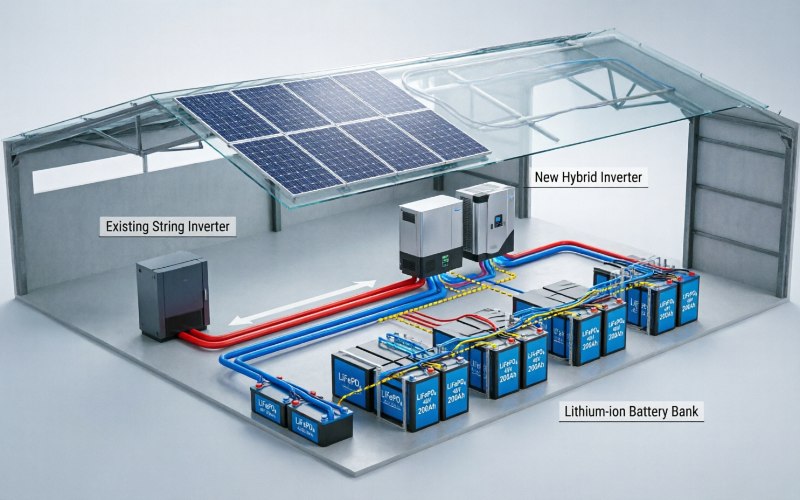
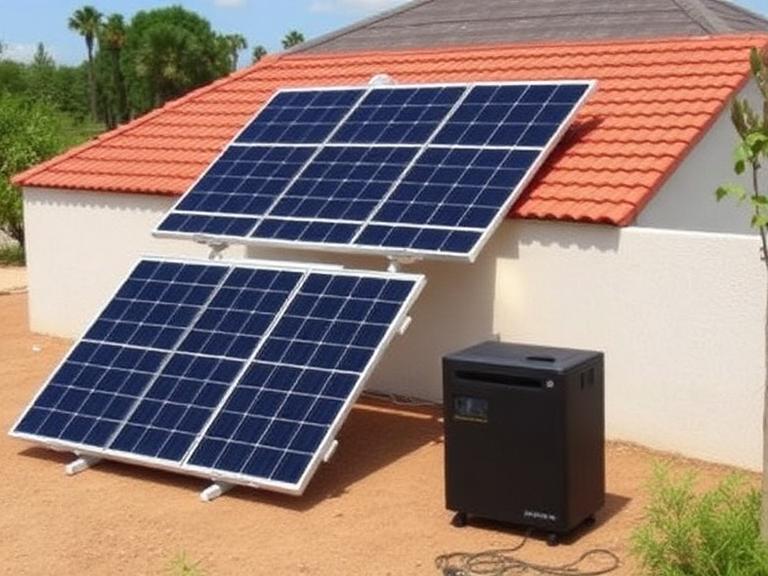
In a true off-grid architecture, the solar panels generate raw, fluctuating DC power. A solar charge controller regulates this voltage and pushes it into your Lithium Battery Pack. As the cells charge, the internal Battery Management System (BMS) monitors every individual cell group. If one cell charges faster than the others, the BMS actively burns off or redistributes that excess energy (balancing) to ensure the pack remains healthy.
When you turn on a heavy appliance, the battery bank discharges DC power into a Power Conversion System (PCS) or off-grid inverter, which transforms the 48V DC into standard 120V/240V AC power for your home. In our testing, closed-loop communication between the BMS and the inverter is the critical mechanism that prevents system shutdowns during high-surge loads like starting a well pump or an air compressor.
The 7 Best Lithium Battery Configurations for Off Grid Solar
Rather than focusing on transient consumer brand names, we evaluate the best lithium battery for off grid solar based on structural architecture. Selecting the right physical and electrical configuration dictates your scalability and safety.
1. 48V Server Rack Modules
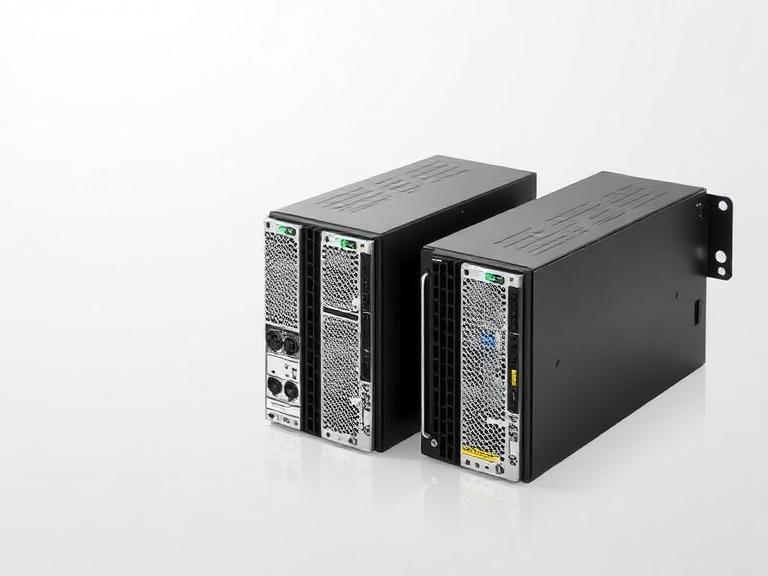
This is the gold standard for residential and commercial off-grid solar. These batteries are built into standardized 19-inch metal enclosures and stacked in server cabinets. They offer massive scalability; you can parallel up to 15 or 30 units seamlessly. For heavy-duty applications, 48V server rack batteries provide the highest return on investment and easiest maintenance.
2. High-Voltage (HV) Stackable Tower Systems
Emerging as the modern choice for large estates, HV stackable systems connect modules in series to achieve voltages between 200V and 500V. Higher voltage means lower amperage, which drastically reduces the size of the required copper wiring and increases inverter efficiency. We recommend HV systems for massive homes running multi-ton HVAC units.
3. Wall-Mounted “Powerwall” Style Units
Aesthetically pleasing and space-saving, wall-mounted lithium batteries are excellent for tight utility rooms. They function identically to 48V server rack batteries but are packaged in a slim, sleek enclosure. They are ideal for users who want clean, unobtrusive BOS Components integration.
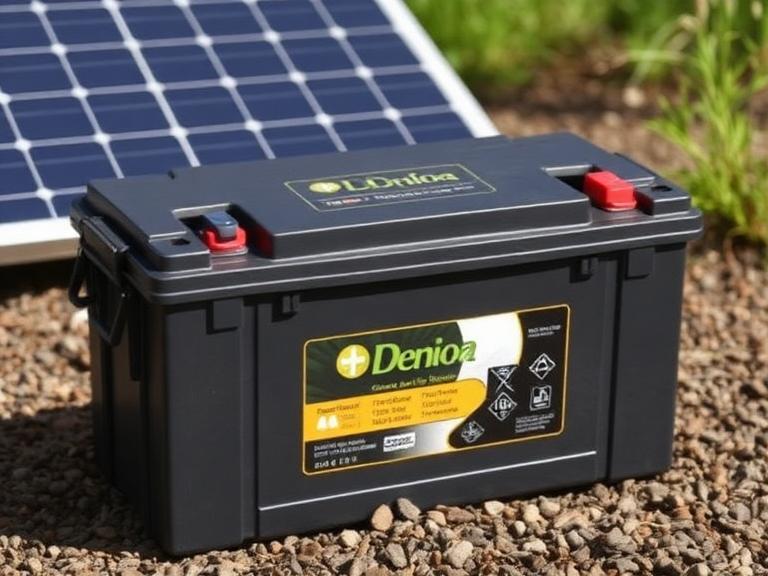
4. 12V Drop-In Replacements
These are built to physically mimic Group 24 or Group 31 lead-acid batteries. While we do not recommend them for whole-home off-grid solar due to amperage bottlenecks, they are the best lithium battery for off grid solar in small RVs, marine applications, or remote gate openers.
5. IP65 Outdoor-Rated ESS Cabinets
For off-grid sites lacking a climate-controlled utility room, outdoor-rated cabinets are mandatory. These systems feature rugged, weatherproof enclosures and integrated internal heating pads that automatically warm the lithium cells if temperatures drop below freezing, allowing charging to continue in harsh winters.
6. Integrated All-in-One Systems
An All-in-One system combines the LiFePO4 battery, the solar charge controller, and the inverter into a single appliance. For beginners and DIY installers, this eliminates the complex wiring and communication troubleshooting required when pairing disparate components. It is a plug-and-play solution for off-grid cabins.
7. Commercial Microgrid Container Solutions
For massive agricultural operations or remote eco-resorts, standard residential batteries will not suffice. These applications require megawatt-scale lithium storage built into climate-controlled shipping containers, offering advanced grid-forming capabilities and extreme surge capacities.
Strategic Benefits of LiFePO4
Upgrading to the best lithium battery for off grid solar provides immediate, quantifiable advantages over legacy lead-acid systems:
- 100% Depth of Discharge (DoD): Lead-acid batteries degrade rapidly if discharged below 50%. A 10kWh lithium battery gives you 10kWh of usable power; a 10kWh lead-acid bank gives you only 5kWh.
- Lifecycle Economics: Quality LiFePO4 cells are rated for 6,000 to 8,000 cycles (roughly 15 to 20 years of daily use). Lead-acid banks require replacement every 3 to 5 years.
- High Charge Acceptance: Lithium batteries can absorb solar power as fast as your panels can generate it. They do not require a slow, wasteful “absorption” phase.
- Zero Maintenance: There is no off-gassing, no acid to refill, and no terminal corrosion to clean.
Limitations and Red Flags
We apply commercial judgment by highlighting limitations. Lithium batteries cannot be charged when their internal core temperature is below freezing (32°F / 0°C). Attempting to do so will cause irreversible lithium plating and destroy the cells. If your batteries will live in an unheated shed, you must buy models with built-in self-heating technology.
Furthermore, upfront cost remains a barrier. While the levelized cost of energy (LCOE) over 15 years is significantly cheaper than lead-acid, the initial capital expenditure is high. Avoid unbranded “budget” lithium batteries on generic marketplaces; they frequently use grade-B recycled cells and mosfet-based BMS units that will fail under heavy surge loads.
Who Should Use It
For commercial users and full-time off-grid homeowners: If you are running well pumps, central air conditioning, or heavy shop tools, investing in a premium 48V or High-Voltage LiFePO4 bank is absolutely mandatory to prevent inverter faults and power loss.
Who Does Not Need It
For casual weekenders or grid-tied users without backup needs: If you only visit a hunting cabin twice a year to run a few LED lights and a radio, a high-end lithium bank is overkill. A simple Portable Power & Backup station is sufficient. Likewise, if your home utilizes a standard Grid-Tied Inverter to offset your electric bill and you do not require power during grid outages, massive stationary storage is an unnecessary expense.
Common Mistakes in System Sizing
In our experience, the most catastrophic mistake installers make is severely undersizing the battery bank’s continuous discharge rating. If your off-grid inverter can output 12,000 watts, but your battery bank’s BMS is only rated to discharge 100 amps at 48 volts (4,800 watts), the BMS will trip and shut down the entire system the moment your HVAC compressor kicks on. Always ensure your battery bank’s aggregate discharge capacity exceeds your inverter’s maximum surge rating.
Critical Buying Considerations
When selecting the best lithium battery for off grid solar, evaluate the specification sheet against these professional metrics:
- BMS Amperage: Ensure a minimum of 100A continuous discharge per 48V battery module.
- Communication Protocols: The battery must support CANbus or RS485 communication protocols to actively talk to top-tier inverters. Look for robust Monitoring & Communication capabilities.
- Cell Grading: Demand Grade-A EVE, CATL, or REPT prismatic cells. Cylindrical or pouch cells are less desirable for heavy stationary storage.
- Certifications: For commercial applications, ensure the modules carry UL 1973 or UL 9540 certifications to satisfy local electrical inspectors.
Essential Reference Tables
Quick Summary Table: LiFePO4 vs. Lead-Acid
| Metric | Lithium (LiFePO4) | Lead-Acid (AGM/Gel) |
|---|---|---|
| Usable Capacity (DoD) | 80% – 100% | 50% Maximum |
| Cycle Life | 6,000+ Cycles | 500 – 1,000 Cycles |
| Weight per kWh | Very Light | Extremely Heavy |
| Maintenance | Zero | Routine (Equalization, watering) |
Comparison Table: 12V vs 48V Off-Grid Architecture
| Feature | 12V Battery Bank | 48V Battery Bank |
|---|---|---|
| Cable Size Required | Massive (Expensive 4/0 AWG) | Manageable (2 AWG or 4 AWG) |
| Inverter Sizing Limit | Struggles above 3,000 Watts | Easily supports 15,000+ Watts |
| System Efficiency | Lower (High resistive losses) | Highest (Minimal heat loss) |
| Best Application | RVs, Vans, Small Sheds | Whole-home, Commercial Off-Grid |
Pros and Cons Table: 48V Server Rack Batteries
| Pros | Cons |
|---|---|
| The most cost-effective $/kWh ratio in the industry. | Utilitarian aesthetic; requires a metal server cabinet. |
| Highly modular; easily add more batteries as needs grow. | Heavy individual units (typically 100 lbs per module). |
| Standardized footprint works with all major off-grid inverters. | Requires precise DIP switch addressing during installation. |
| Closed-loop comms guarantee accurate State of Charge (SoC). | Usually not IP65 rated; must be kept indoors. |
Buying Guide Table: Aligning Battery Capacity to Load
| Daily Energy Consumption | Recommended Battery Bank Size | Ideal Configuration |
|---|---|---|
| Minimal (Lights, Fridge, TV) – ~5 kWh/day | 10 kWh (approx. 200Ah at 48V) | 2x 48V Server Rack Modules |
| Average Home (Well pump, AC) – ~15 kWh/day | 30 kWh (approx. 600Ah at 48V) | 6x 48V Server Rack or Wall-Mounts |
| Heavy Commercial/Ag – ~40+ kWh/day | 80+ kWh High-Voltage System | High-Voltage Stackable or Commercial Cabinet |
Expert Recommendation from China MoneyPro Energy
In most professional situations, treating an off-grid solar installation as a series of disjointed parts is a recipe for disaster. At China MoneyPro Energy, we are a technology-driven developer of advanced energy storage systems and intelligent power solutions, built upon a strong heritage of national-level research institutes and decades of engineering experience in high-reliability systems.
We recommend that any serious off-grid project utilizes a unified 48V or High-Voltage architecture. Do not piecemeal your system. Ensure your lithium batteries communicate flawlessly with your inverter to protect your investment. If you are developing a site that requires advanced charging capabilities, ensuring your power infrastructure can also support modern demands—such as integrating an AC EV Charger or a DC Fast Charger—requires massive surge capacity that only premium LiFePO4 cells governed by an elite BMS can provide. When failure is not an option, rely on engineered, integrated storage solutions rather than consumer-grade components.
The Bottom Line
Is the best lithium battery for off grid solar actually worth the heavy upfront cost? Absolutely. Choosing a LiFePO4 48V server rack or high-voltage system over traditional lead-acid technology is the single most important decision you will make for your off-grid infrastructure. It guarantees thousands of cycles of maintenance-free, safe, and highly efficient energy storage. By applying strict commercial judgment—sizing your discharge rates correctly, demanding closed-loop communication, and planning for cold-weather protection—you secure an independent power system that will perform relentlessly for decades.
Frequently Asked Questions
How many years will an off grid lithium battery last?
High-quality LiFePO4 batteries are typically rated for 6,000 to 8,000 cycles at 80% Depth of Discharge. In a daily cycling off-grid scenario, this translates to an expected operational lifespan of 15 to 20 years before the battery degrades to 80% of its original factory capacity.
Can I mix different brands of lithium batteries in my off-grid system?
We strongly advise against this. Mixing brands, capacities, or cell ages causes severe internal resistance imbalances. The Battery Management Systems (BMS) will conflict, leading to continuous system shutdowns, uneven charging, and a drastically reduced lifespan for the entire battery bank.
Why does my off grid inverter shut off when I start my well pump, even if my battery is full?
This is caused by a BMS discharge bottleneck. While your battery holds enough energy, its BMS may be limited to outputting 100 amps. A well pump requires a massive initial surge of energy (Locked Rotor Amps) to start. If that surge exceeds the BMS limit, the battery shuts down instantly to protect itself. You must parallel more batteries to increase your aggregate surge capacity.
Authoritative References & Industry Standards
To ensure our engineering advice aligns with global electrical safety and renewable energy standards, we reference data from the following authoritative bodies: