How Battery Energy Storage Systems Work: A Technical Deep Dive
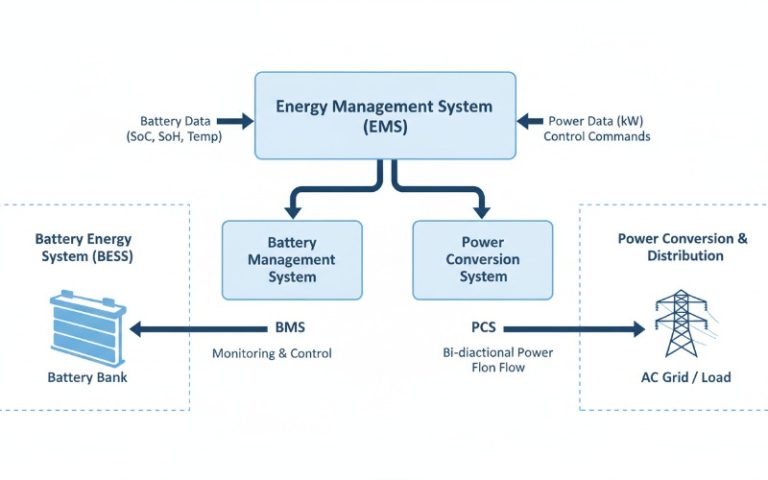
Executive Summary: This comprehensive guide explores the multi-layered architecture of Battery Energy Storage Systems (BESS), detailing the interplay between Power Conversion Systems (PCS), Battery Management Systems (BMS), and Energy Management Systems (EMS) to maximize commercial ROI and grid stability.
Key Takeaways
- Core Components: A modern BESS is composed of four critical layers: the battery cells (LFP), the BMS (Brain), the PCS (Muscle), and the EMS (Intelligence).
- Conversion Efficiency: High-performance systems utilize Infineon IGBT modules to achieve round-trip efficiency (RTE) exceeding 90%.
- Grid Compliance: Global standards like UL 1741 SB and IEEE 1547 are mandatory for utility-scale integration.
- Lifecycle Management: Active balancing and liquid cooling are essential for maintaining a 10+ year operational lifespan in C&I applications.
Table of Contents
- What is a Battery Energy Storage System (BESS) and Its Core Components?
- How Does Energy Conversion Work? The Role of the PCS
- Why Battery Management Systems (BMS) are the Brain of Reliability
- The Intelligence Layer: How EMS Optimizes ROI and Grid Interaction
- Thermal Management and Fire Suppression in High-Density Storage
- LFP vs. NMC: Technical Comparison Table
- How to Choose a BESS Manufacturer for Large-Scale Projects
- FAQ Section
What is a Battery Energy Storage System (BESS) and Its Core Components?
A Battery Energy Storage System (BESS) is an integrated electrochemical system that captures energy from various sources (solar, grid, wind) and stores it in battery modules for subsequent discharge to manage peak loads, provide backup power, or stabilize the grid.
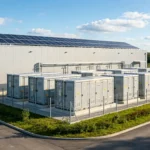
At the factory level, Moneypro Energy defines a BESS not just as a “big battery,” but as a sophisticated power plant. The fundamental building block is the Lithium Iron Phosphate (LFP) cell. Unlike consumer electronics, B2B storage requires automotive-grade cells with high C-rates. These cells are assembled into modules, then into racks, and finally into containers (10ft, 20ft, or 40ft).
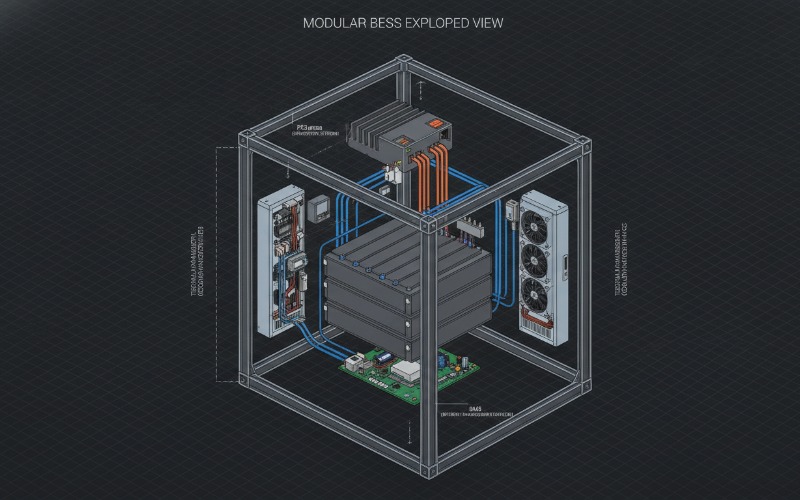
To ensure industrial reliability, we integrate components from world-class suppliers like CATL for cells and Nippon Chemi-Con for long-life capacitors. While competitors might focus on aesthetic design, our engineering focus remains on the electrical topology that supports Commercial Building Energy Storage. The physical structure includes the battery enclosure, the power electronics compartment, and the HVAC (Heating, Ventilation, and Air Conditioning) or liquid cooling unit.
How Does Energy Conversion Work? The Role of the PCS
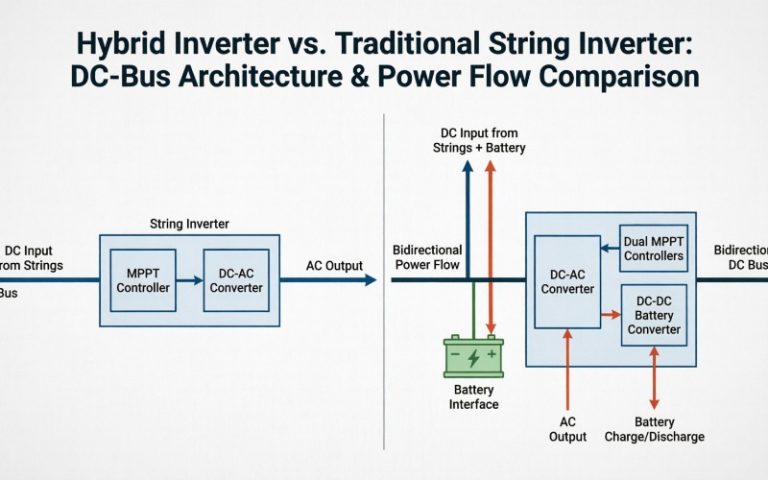
The Power Conversion System (PCS) is the bi-directional inverter responsible for converting DC power from the batteries into AC power for the grid, and vice versa, while maintaining precise voltage and frequency regulation.
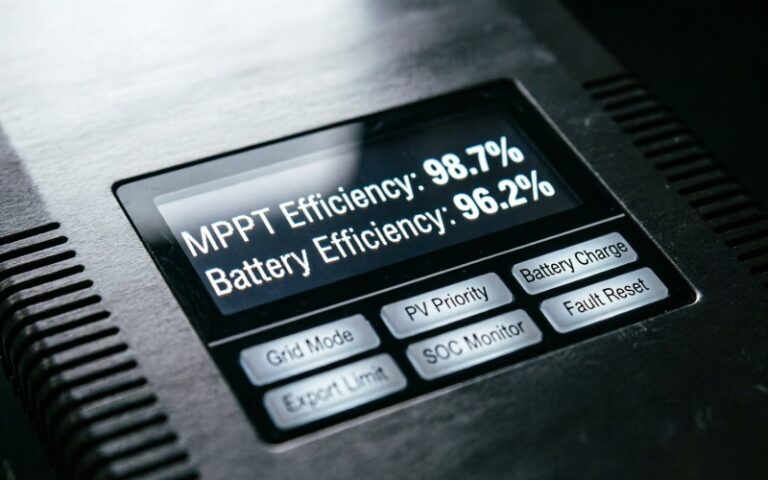
The PCS is the “muscle” of the system. In high-demand scenarios like Factory Energy Storage, the PCS must handle rapid load changes. At Moneypro Energy, our PCS units utilize Infineon IGBT (Insulated Gate Bipolar Transistor) technology to achieve conversion efficiencies of up to 98.8%. This matches the high-tier standards set by industry leaders like Sungrow and GoodWe.
Key technical parameters for a B2B PCS include Total Harmonic Distortion (THDi), which must remain below 3% to prevent electrical noise in sensitive industrial environments. Additionally, our systems support four-quadrant operation, allowing for both active and reactive power control. This is critical for Voltage/Frequency Regulation and Black Start capabilities, where the BESS must re-energize a dead microgrid without external reference.
Why Battery Management Systems (BMS) are the Brain of Reliability
The Battery Management System (BMS) is a three-tier hierarchical electronic system that monitors the State of Charge (SoC), State of Health (SoH), and State of Power (SoP) of every individual cell to ensure safe operation and longevity.
In our manufacturing facility, we implement a Three-Tier BMS Architecture: 1. BMU (Battery Management Unit): Monitors cell voltage and temperature at the module level. 2. CBMS (Cluster Battery Management System): Manages a string of modules, coordinating balancing currents. 3. GBMS (Global/System BMS): Communicates with the PCS and EMS via CANbus or Modbus/TCP.
One of the most critical functions is Active Balancing. Unlike cheap passive balancing which dissipates excess energy as heat, our active balancing circuits transfer charge between cells. This minimizes cell mismatch, which is the primary cause of premature rack failure in Utility-Scale Solar Farm Energy Storage. Every Moneypro Energy BMS undergoes 48 hours of high-temperature aging tests to ensure zero-defect performance before shipment.
The Intelligence Layer: How EMS Optimizes ROI and Grid Interaction
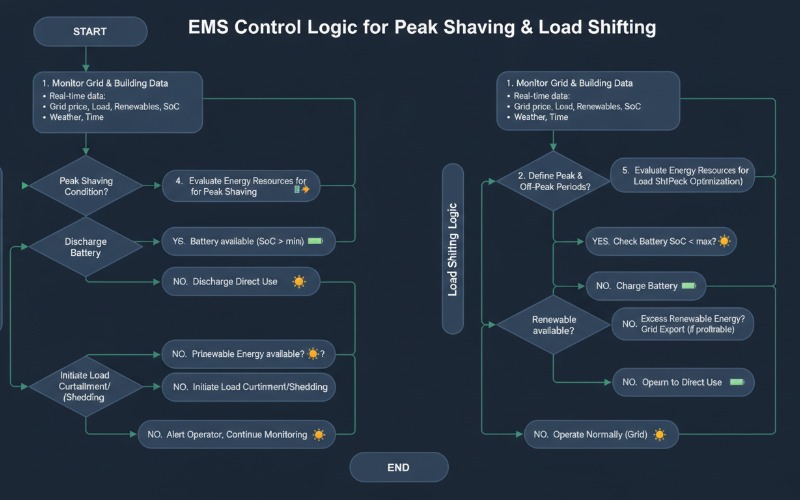
The Energy Management System (EMS) is the software layer that executes high-level control strategies such as peak-shaving, load-shifting, and participation in Virtual Power Plants (VPP) to maximize the economic value of the BESS.
For a B2B client, the EMS is what delivers the ROI. It uses predictive algorithms to anticipate peak demand and discharges the battery to lower “demand charges”—a major cost for industrial users. This is known as Peak Shaving. The EMS also facilitates Time-of-Use (ToU) Arbitrage, charging the system when electricity prices are low and discharging when they are high.
Furthermore, our EMS supports seamless integration with SCADA systems and cloud-based monitoring. This allows O&M teams to track performance metrics remotely, reducing the need for on-site visits. In the context of Data Center Energy Storage, the EMS ensures that the BESS acts as a dynamic UPS, providing millisecond-level response times to power outages.
LFP vs. NMC: Technical Comparison for C&I Applications
| Feature | LFP (Lithium Iron Phosphate) | NMC (Nickel Manganese Cobalt) |
|---|---|---|
| Safety / Thermal Stability | Excellent (Thermal runaway >270°C) | Moderate (Thermal runaway ~210°C) |
| Cycle Life (80% DoD) | 6,000 – 10,000 cycles | 2,000 – 3,000 cycles |
| Cost per kWh | Lower (No Cobalt/Nickel) | Higher |
| Energy Density | 160-180 Wh/kg | 200-250 Wh/kg |
| Best Application | Stationary BESS, Utility, C&I | EVs, Space-constrained mobile |
Thermal Management and Fire Suppression in High-Density Storage
Effective thermal management, through either forced-air or liquid cooling, is mandatory to prevent thermal runaway and ensure that battery cells operate within their optimal temperature window of 15°C to 35°C.
Heat is the enemy of battery life. At Moneypro Energy, we have transitioned our high-density 20ft container solutions to Liquid Cooling. Liquid-cooled systems offer 20% higher energy density and 30% lower auxiliary power consumption compared to traditional HVAC systems. This is particularly vital for Grid Stabilization projects where high C-rate discharging generates significant heat.
Safety is non-negotiable. Our systems are built to UL 9540A unit-level fire test standards. We integrate multi-level fire suppression including smoke/gas detection and aerosol-based or water-mist extinguishers. This rigour ensures compliance with stringent fire codes in North America and Europe, providing peace of mind for system integrators.
How to Choose a BESS Manufacturer for Large-Scale Projects
Selecting a BESS manufacturer requires evaluating their R&D depth, manufacturing vertical integration, and adherence to global certification standards rather than just looking at the price per kWh.
When vetting a supplier for Remote Power Systems or large-scale utility projects, consider these three criteria: 1. Bankability and Warranty: Can the manufacturer support a 10-year performance guarantee? Moneypro Energy offers full factory-backed warranties with local service partners. 2. System Integration: Does the manufacturer build their own BMS and PCS? Buying a “Frankenstein” system with components from five different vendors leads to communication failures and O&M headaches. 3. Certification Compliance: Ensure the system holds CE, TUV, and UL certifications. Without these, grid connection in most jurisdictions is impossible.
Frequently Asked Questions about BESS Operation
What is the typical round-trip efficiency of a BESS?
A high-quality industrial BESS typically has a round-trip efficiency (RTE) of 85% to 92%. This includes losses from the battery chemistry, PCS conversion, and auxiliary loads like cooling. Moneypro Energy systems are optimized to keep auxiliary consumption below 3% of total capacity.
Can a BESS function without the grid (Off-grid)?
Yes, provided the PCS is “Grid-Forming” capable. In off-grid mode, the BESS creates its own AC reference (voltage and frequency). This is essential for remote mining sites or islands using Remote Power Systems.
How long do BESS batteries last?
Most commercial LFP batteries are rated for 6,000 to 8,000 cycles at 80% Depth of Discharge (DoD). In a typical daily cycling application, this equates to roughly 15-20 years of operational life before the capacity drops below 70% of its original rating.
Ready to Scale Your Energy Storage Project?
Wholesale Inquiries: Looking for factory-direct pricing on 100kWh to 5MWh systems? Contact our sales team today for a volume quote.
Custom Solutions: Need a tailored OEM design for a specific C&I application? Our R&D engineers are ready to assist with your technical specification. Request a Technical Consultation.
Immediate RFQ: Submit your project requirements now and receive a preliminary system layout and ROI analysis within 48 hours. Get an RFQ Now.