10kw Solar System Malaysia Price in 2026
We are officially past the era where installing solar panels was viewed merely as a progressive environmental statement. In 2026, navigating the Malaysian energy market is a ruthless exercise in operational economics. With the Tenaga Nasional Berhad (TNB) tariff structures escalating aggressively and the Net Energy Metering (NEM) quotas facing volatile extensions, depending entirely on the national grid is an inexcusable financial liability for large households and businesses. You must take control of your power generation.
However, the market is currently saturated with deceptive marketing. Unverified vendors continuously bait property owners with unrealistically low figures, only to deliver subpar components that degrade within three years, lack proper thermal management, and fail to integrate with modern battery architectures. When analyzing the 10kw solar system malaysia price, you must move beyond the initial sticker shock and evaluate the lifetime levelized cost of energy (LCOE). From our experience engineering high-reliability systems derived from aerospace technologies, a 10kW system is the absolute baseline capacity required to meaningfully offset high consumption loads—specifically air conditioning networks, EV charging infrastructure, and heavy household appliances.
China MoneyPro Energy is a technology-driven developer of advanced energy storage systems and intelligent power solutions, built upon a strong heritage of national-level research institutes and decades of engineering experience in high-reliability systems. Originating from China’s aerospace and defense technology ecosystem, China MoneyPro Energy integrates advanced research, system engineering, and industrial manufacturing capabilities to develop next-generation energy storage solutions for the global energy infrastructure.
In this uncompromising technical guide, we dissect the authentic 10kw solar system malaysia price in 2026. We will strip away the hidden fees, analyze the absolute necessity of hybrid storage solutions, and explain why your choice of inverter and battery chemistry will dictate your financial survival over the next twenty-five years.
Table of Contents
- The Real Cost Breakdown: What You Actually Pay
- Component Quality: Where You Cannot Cut Corners
- The Hybrid Imperative: Why Storage is Non-Negotiable
- ROI and Financial Yield in the 2026 TNB Landscape
- Scaling Up: From Residential to Commercial
- Summary Table: 10kW System Cost Parameters
- Frequently Asked Questions (FAQs)
- Industry References
The Real Cost Breakdown: What You Actually Pay
Let us confront the numbers directly. The 10kw solar system malaysia price is not a single, monolithic figure; it is heavily dependent on the architecture of the system you deploy. In 2026, a standard, grid-tied (on-grid) 10kW solar system—which simply pushes excess power back to TNB without local battery storage—will cost you between RM 35,000 and RM 45,000 fully installed.
If you are quoted a price significantly lower than RM 35,000 for a 10kW array, you are being sold compromised hardware. The installation will likely feature outdated polycrystalline panels, non-compliant mounting hardware, or an inverter lacking a robust 10-year warranty. The cost breakdown generally functions as follows:
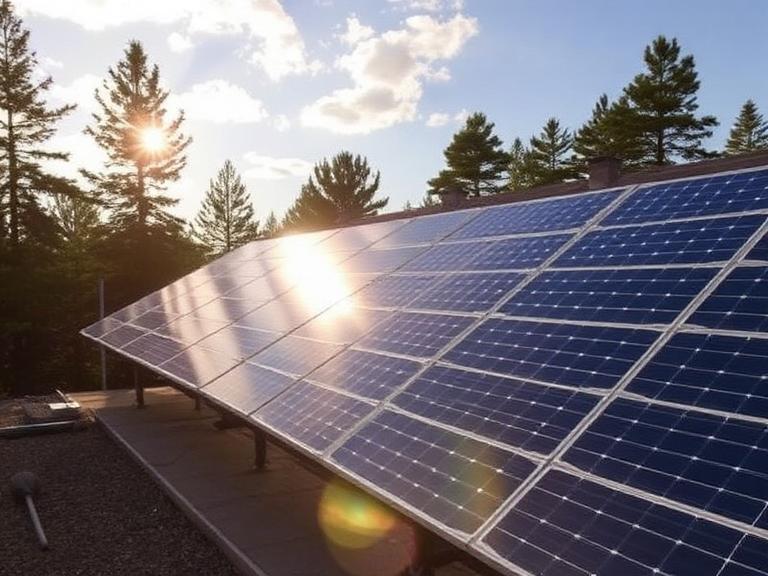
- Solar Panels (50% – 55%): The bulk of the expense. Premium N-Type TOPCon or heterojunction (HJT) monocrystalline panels offer superior efficiency in Malaysia’s high-heat, high-humidity environment. Cheap panels suffer from severe temperature coefficients, losing massive efficiency during peak afternoon heat.
- Inverter (15% – 20%): The brain of the operation. This converts DC power from the panels into usable AC power. We recommend high-capacity string inverters or microinverters capable of handling extreme voltage loads without thermal throttling.
- Mounting & Cabling (10% – 15%): Malaysia experiences intense monsoon seasons. The aluminum racking and stainless-steel fasteners must be anodized and rated to withstand severe wind loads. Roof penetration must be completely hermetically sealed.
- Installation & Compliance (10% – 15%): Professional engineering sign-offs, SEDA (Sustainable Energy Development Authority) applications, and labor. Do not deploy unauthorized contractors; failure to comply with SEDA guidelines will void your grid-connection approval.
Component Quality: Where You Cannot Cut Corners
The relentless pursuit of the lowest 10kw solar system malaysia price often leads to catastrophic failures. From our experience, purchasing managers and homeowners routinely underestimate the brutal reality of thermal degradation. Inverter failure is the most common point of systemic collapse. A cheap inverter operating in a 35°C ambient environment will burn out its capacitors within five years, wiping out your financial savings through expensive replacements and downtime.
You must demand Tier-1 equipment. The panels must feature a minimum 25-year linear performance warranty guaranteeing at least 85% output at the end of the term. The entire architecture should be built around a Solar + Energy Storage Solution framework, utilizing pure sine wave hybrid inverters capable of managing both grid synchronization and battery charging simultaneously with precision MPPT (Maximum Power Point Tracking) algorithms.
The Hybrid Imperative: Why Storage is Non-Negotiable
If you are installing a solar array in 2026 without integrating battery storage, you are making a critical strategic error. Grid-tied systems shut down immediately during a TNB blackout for safety reasons (anti-islanding protection). Furthermore, as peak-hour consumption costs rise, simply exporting power to the grid during the day yields diminishing returns compared to storing that power and using it to run your home at night.
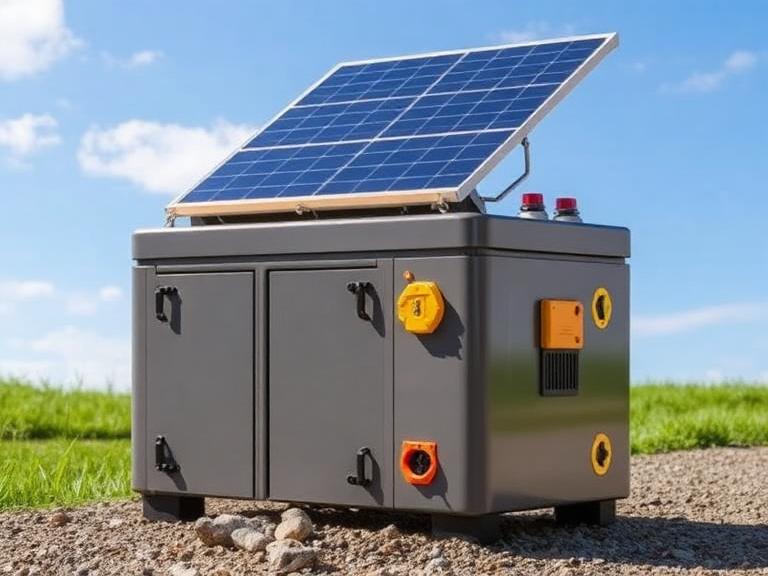
A true hybrid system requires advanced lithium iron phosphate (LiFePO4) storage. Adding a 10kWh to 15kWh battery bank will increase your 10kw solar system malaysia price by roughly RM 15,000 to RM 25,000. This elevates the total capital expenditure to between RM 50,000 and RM 70,000. We recommend making this investment. A fully autonomous Off-Grid Power Solution or a sophisticated hybrid setup provides absolute energy sovereignty, immunizing your property against cascading grid failures and arbitrary tariff hikes.
This autonomy is increasingly vital for homeowners who have transitioned to electric vehicles. Trying to charge an EV off the standard grid during peak evening hours is financially ruinous. By leveraging a comprehensive EV Charging Infrastructure Solution tied to your solar and battery network, you secure zero-emission, zero-cost transit.
ROI and Financial Yield in the 2026 TNB Landscape
You do not buy a 10kW system; you invest in a 25-year financial instrument. A 10kW array in Malaysia will generate approximately 1,100 to 1,300 kWh of electricity per month, assuming minimal shading and optimal azimuth orientation. For a large multi-story home or a light commercial facility with a monthly electricity bill of RM 600 to RM 900, a 10kW system can virtually eliminate your grid reliance.
Currently, the Return on Investment (ROI) for a high-quality 10kW grid-tied system in Malaysia sits between 5.5 and 7 years. Once the system breaks even, it delivers pure financial yield for the remaining two decades of its operational life. However, if you opt for inferior components to secure an artificially low 10kw solar system malaysia price, premature inverter failure and accelerated panel degradation will push your ROI timeline out to 10 or 12 years, effectively neutralizing the economic benefit.
Scaling Up: From Residential to Commercial
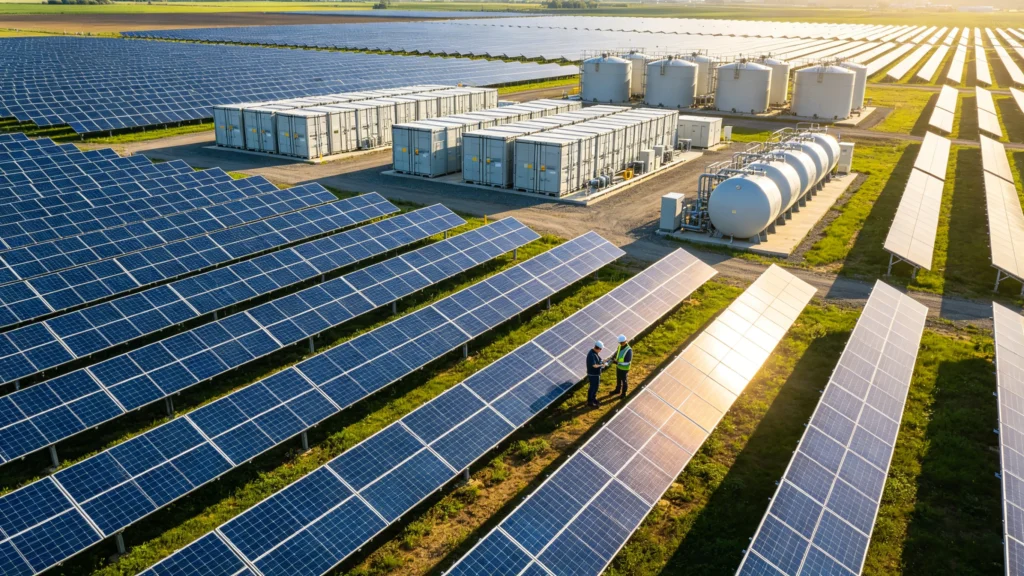
While a 10kW system is the gold standard for premium residential properties, commercial enterprises require significantly more power. If your facility houses heavy machinery, constant refrigeration, or server racks, a 10kW system will barely dent the baseline load. In these scenarios, you must rapidly scale the architecture.
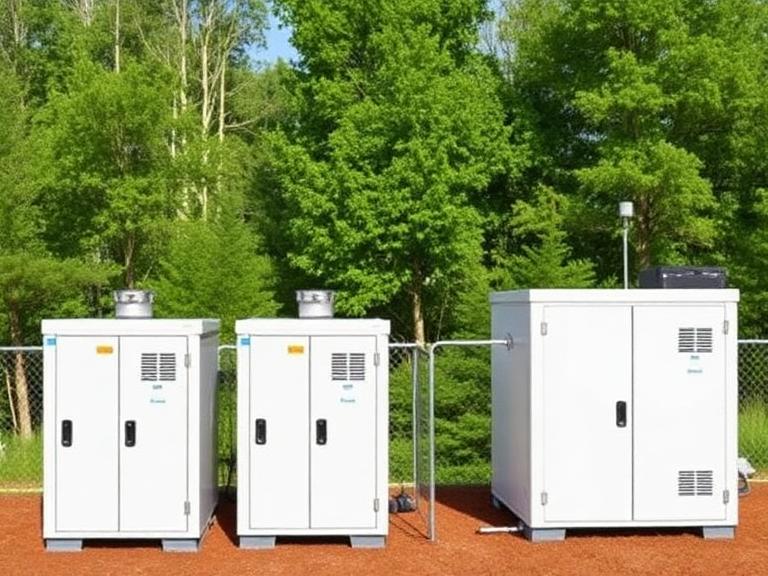
Deploying a Commercial Energy Storage Solution or a heavy-duty Industrial Energy Storage Solution requires a fundamental shift in engineering scope. Industrial systems range from 50kW to over 1MW and demand complex microgrid controllers. For massive manufacturing plants operating in remote or grid-unstable regions, integrating a Microgrid Energy Solution or exploring a Utility Scale Energy Storage Solution is the only method to ensure uninterrupted production capacity. China MoneyPro Energy engineers these specific high-stress architectures, relying on our aerospace pedigree to guarantee flawless, fail-safe operation in mission-critical environments.
Summary Table: 10kW System Cost Parameters
To assist in your financial planning, we have distilled the 2026 market data into this uncompromising reference matrix regarding the true 10kw solar system malaysia price and output expectations.
| System Architecture | Estimated Cost (RM) | Battery Storage | Ideal Use Case |
|---|---|---|---|
| 10kW Grid-Tied (On-Grid) | 35,000 – 45,000 | None | High daytime consumption; maximizing NEM export credits. |
| 10kW Hybrid System | 50,000 – 70,000 | 10kWh – 15kWh LiFePO4 | Grid independence, blackout protection, EV charging at night. |
| 10kW Off-Grid System | 65,000 – 85,000+ | 20kWh+ LiFePO4 | Remote properties, agricultural sites, absolute energy sovereignty. |
| Inverter Replacement (Future) | 4,000 – 7,000 | N/A | Standard operational expense expected at Year 10-12. |
Frequently Asked Questions (FAQs)
1. Does a 10kW solar system require a three-phase power supply?
From our experience, yes. TNB regulations generally mandate that any solar PV system exceeding 4kWp to 5kWp on a single-phase connection must be upgraded to a three-phase supply. A 10kW inverter pushing power into a single-phase line will cause severe voltage imbalance and grid instability. The cost of upgrading your TNB meter to three-phase must be factored into your deployment budget.
2. How much physical roof space is required for a 10kW array?
A standard 10kW system utilizes approximately 18 to 24 high-efficiency monocrystalline panels (assuming 400W to 550W per panel). You will require a completely unshaded roof area of roughly 45 to 60 square meters (480 to 650 square feet). We recommend ensuring your roof structure is structurally sound before mounting heavy aluminum racking and glass.
3. Why are some online retailers offering 10kW systems for under RM 20,000?
These are overwhelmingly dangerous scams or incomplete “kits.” They do not include installation, SEDA certification, proper mounting rails, or safety breakers. Furthermore, they frequently utilize rejected B-grade solar cells and modified sine-wave inverters that will destroy sensitive home electronics. Do not compromise your property by purchasing uncertified, uninstalled equipment.
Industry References
To ensure your energy transition is compliant with federal mandates and grounded in verified engineering data, we advise consulting the following regulatory bodies:
- Sustainable Energy Development Authority (SEDA) Malaysia. “Net Energy Metering (NEM) Guidelines and Quota Allocations.” (The definitive regulatory framework for grid-connection and solar export tariffs in Malaysia).
- IEEE Xplore. “Performance Analysis and Levelized Cost of Energy (LCOE) of Hybrid Photovoltaic Systems in Tropical Climates.” (Peer-reviewed engineering research detailing the necessity of N-Type panel technology and robust thermal management in high-humidity environments).