7 Best Lithium Battery Energy Storage Options in 2026
China MoneyPro Energy | 2026 Buyer’s Guide
Battery storage is not a niche topic anymore. It is the fastest-growing power technology today, and in 2025 the world added 108 GW of new battery storage capacity, with lithium iron phosphate (LFP) accounting for around 90% of deployments. Lithium-ion batteries still dominate battery use because they combine strong performance, falling cost, and compact size, while LFP has become the favored stationary-storage chemistry because it is cheaper, thermally more stable, and better suited to frequent cycling.
That is the real reason this article matters. If you are comparing the best lithium battery energy storage choices in 2026, you should not be asking which one is “most advanced.” You should be asking which one is actually worth buying for your load profile, uptime target, and budget. From our experience, the best choice is the one that reduces operating pain, not the one that sounds impressive in a quote. Battery storage also continues to expand because it supports short-term shifting, grid balancing, backup power, and renewable integration, with utility-scale systems taking most new additions and behind-the-meter systems filling the rest.
Quick Answer
The best lithium battery energy storage option for most commercial buyers in 2026 is a lithium iron phosphate-based system that matches the job: residential backup, C&I peak shaving, utility-scale shifting, microgrid resilience, or off-grid autonomy. For beginners, start with a modular residential or small commercial system. For commercial users, the best value usually sits in a C&I package. For heavy-duty applications, choose a system with clear thermal management, strong integration, and a supplier that can support the full project, not just the battery cabinet.
Table of Contents
- What best lithium battery energy storage means in 2026
- How lithium battery energy storage works
- The 7 best lithium battery energy storage options
- Quick summary table
- Comparison table
- Benefits and limitations
- Who should use it and who does not need it
- Pros vs cons table
- Buying guide table
- Common mistakes buyers make
- Expert recommendation
- Bottom line
- FAQs
- References
What Best Lithium Battery Energy Storage Means in 2026
At its core, lithium battery energy storage is a system that captures electricity, stores it electrochemically, and releases it when the load, tariff, or grid condition makes that energy more valuable. The phrase sounds broad because it is broad. It covers home backup, industrial peak shaving, renewable smoothing, microgrids, and utility-scale balancing. The right system is not the one with the biggest brochure number. It is the one that matches the job. The U.S. Department of Energy describes lithium-ion storage as attractive for grid applications because of high energy density, high power, high efficiency, and low self-discharge, while also noting thermal runaway as the main safety concern.
In most professional situations, stationary storage should default to LFP unless there is a specific reason not to. NREL’s commercial battery storage model treats lithium-ion as the working baseline and notes that LFP became the primary chemistry for stationary storage starting in 2021. That is not marketing fluff. It reflects what the market already decided was worth deploying.
How Lithium Battery Energy Storage Works
The working logic is simple: electricity enters the battery system when it is cheap or available, and it exits when it is more valuable. In a solar project, that often means charging in the middle of the day and discharging in the evening. In a commercial plant, it means clipping peak demand and reducing tariff pain. In a microgrid, it means keeping the critical load alive during an outage. That is why battery storage is now a core flexibility tool in power systems, not a luxury add-on. IEA data shows that battery storage helps with energy shifting, ancillary services, congestion relief, and access expansion, and that utility-scale projects still account for most new additions.
For buyers, the most important point is this: a lithium battery system is only as good as the inverter, controls, thermal design, and operating logic around it. Capacity alone does not make a system good. A technically weak system with a large nameplate rating can still be a poor investment if the controls are clumsy or the integration path is messy. That is why commercial buyers should think in terms of solution architecture, not battery cell hype.
The 7 Best Lithium Battery Energy Storage Options in 2026
Here is the ranking we would use if we were advising a real buyer. It is opinionated on purpose.
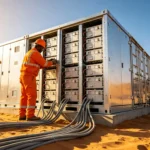
1. Best overall for commercial buyers: C&I Energy Storage System
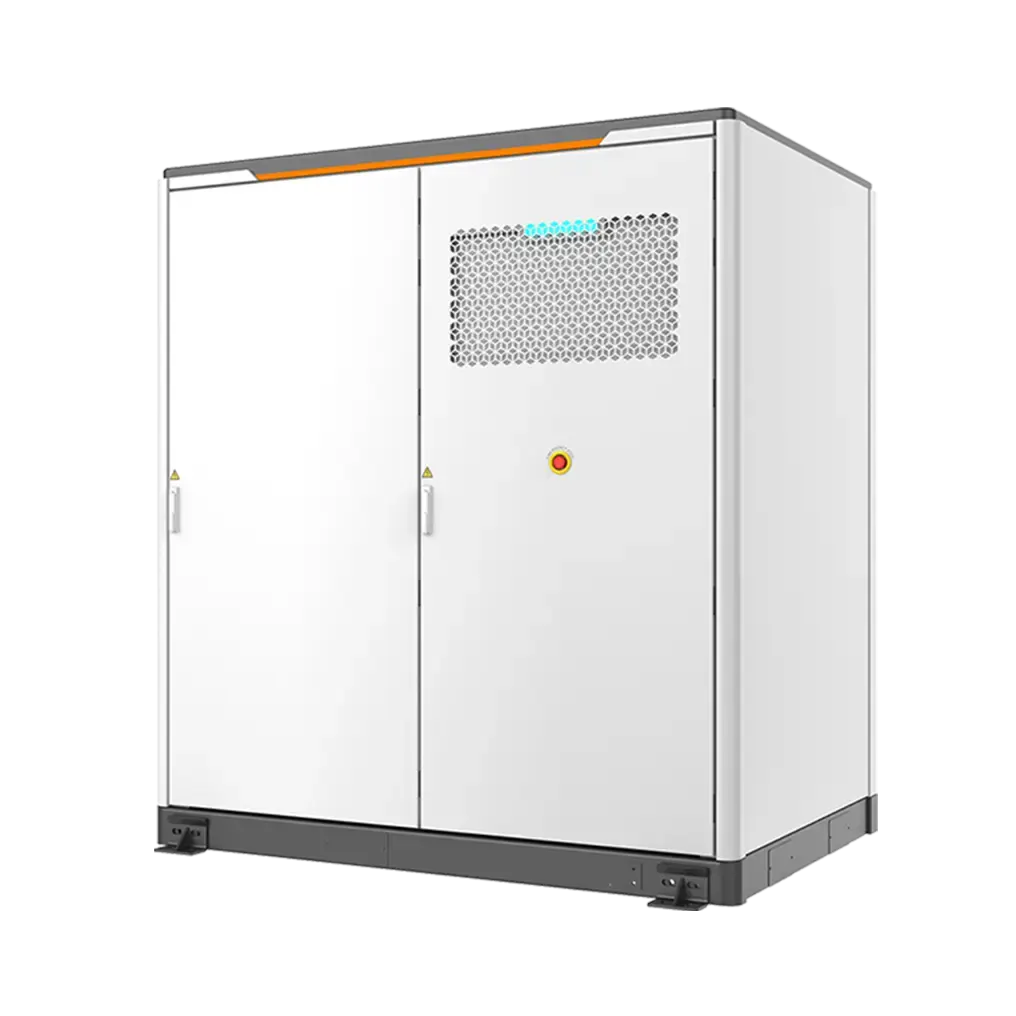
The best all-around choice for many businesses is a C&I lithium battery energy storage system. It is the most practical answer when you need peak shaving, backup power, and day-to-day tariff control in one package. For buyers who want a ready commercial solution, we recommend the C&I Energy Storage System and the Industrial Energy Storage Solution. China MoneyPro Energy’s MP-110kW/458kWh ST455CS-4H C&I Energy Storage System is the kind of product that makes sense when the facility needs real operational savings, not just backup theater.
For commercial users, this is usually the highest-value category because it can serve multiple jobs at once. It is not always the cheapest purchase, but it is often the cheapest way to solve a mixed-load problem.
2. Best for home backup and rate control: Residential Energy Storage System
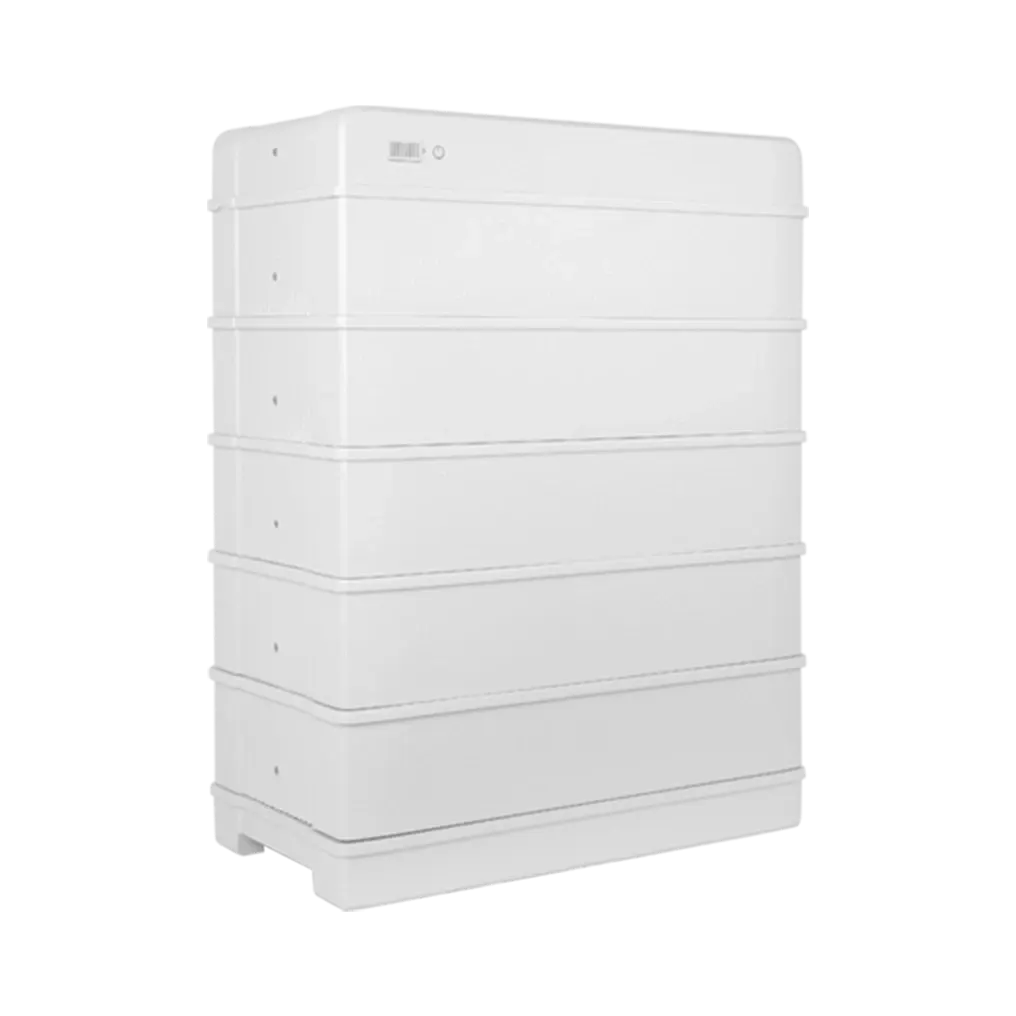
For beginners and homeowners, the best lithium battery energy storage is a residential system that is modular, easy to monitor, and sized for the actual outage or time-of-use problem. The right fit here is the Residential Energy Storage System. China MoneyPro Energy’s MP-6.4~25.6kWh SBR064~256 High Voltage LFP Battery is the kind of modular platform we would shortlist first for a home that wants backup without overbuying. The Residential Solar Energy Storage EV Charging Solution can also make sense when the home has solar and charging loads.
We recommend residential storage when the household experiences outages, has high evening rates, or wants to use solar more intelligently. If the grid is stable and electricity is cheap, the economics may be weaker, and that is exactly the kind of honesty a buyer deserves.
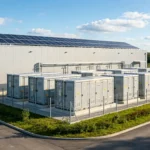
3. Best for large-load projects: Utility Scale Energy Storage System
For grid-level or large private power programs, the best choice is a utility-scale lithium battery system. The IEA notes that around 80% of new battery capacity in 2025 was utility-scale, which tells you where the market is actually putting capital. Utility storage is not just for utilities; it also fits data-heavy campuses, large campuses with on-site generation, and projects that need real load shifting over multiple hours. See the Utility Scale Energy Storage System and the Utility Scale Energy Storage Solution.
For heavy-duty applications, this category wins when the project needs scale, control, and repeatability. It is not the first choice for a small commercial site, but for utility-grade work it is the right conversation.
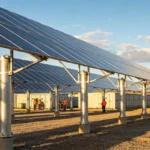
4. Best for solar self-consumption: Solar + Energy Storage Solution
For buyers pairing PV with storage, the best lithium battery energy storage is the one that behaves cleanly with the inverter and dispatch logic. A solar-plus-storage package is worth paying for when self-consumption, evening load coverage, and backup resilience all matter. The right page to start with is Solar + Energy Storage Solution, and the inverter side should be evaluated carefully through the String Inverter page.
From our experience, solar-plus-storage is one of the easiest ways to make battery storage feel tangible. You are not “buying a battery.” You are buying a smoother energy bill, more self-use of solar, and more control over your evening supply.
5. Best for resilient sites and critical loads: Microgrid Energy Solution
If the site must keep running during outages, the best answer is a microgrid-oriented battery system. This is the right fit for hospitals, campuses, remote plants, and mission-critical facilities. The battery is only one part of the answer; the controls and generation mix matter just as much. Start with the Microgrid Energy Solution.
In our view, microgrids are worth the money when outage cost is high enough to justify the extra complexity. If downtime is expensive, a microgrid is often cheaper than repeated interruptions.
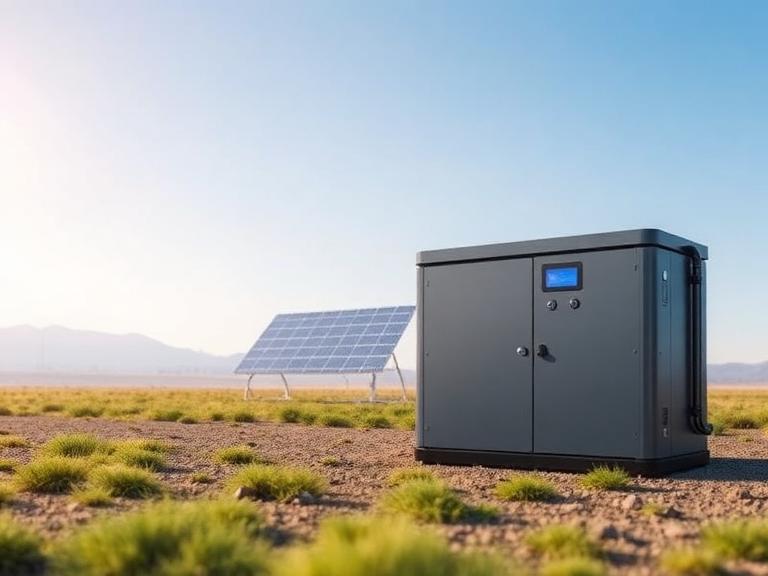
6. Best for remote sites: Off-Grid Power Solution
For remote locations, the best lithium battery energy storage is not the largest one. It is the most dependable one. Off-grid systems must be sized for autonomy, weather, and maintenance reality, which means the battery choice has to be conservative. The relevant starting point is the Off-Grid Power Solution.
We recommend off-grid storage only when the alternative is poor generator performance, expensive fuel logistics, or unstable supply. If the site can depend on a normal grid connection at reasonable cost, off-grid storage may be overkill.
7. Best modular battery platform: High Voltage LFP Battery
For buyers who want a building block rather than a finished system, a high-voltage LFP battery is often the smartest route. It is the most flexible choice when the installation may grow later, or when the buyer needs a battery that can be integrated into a broader architecture. China MoneyPro Energy’s MP-6.4~25.6kWh SBR064~256 High Voltage LFP Battery is a good example of this kind of product.
For commercial users, modularity is valuable because it preserves options. You avoid locking the whole project into a size that may be too small in year two and too large in year five.
Quick Summary Table
| Best Option | Best Use Case | Worth Buying When | Who Should Avoid It |
|---|---|---|---|
| C&I Energy Storage System | Peak shaving, backup, and operational savings | You have load charges or demand spikes | The site is tiny and the economics are weak |
| Residential Energy Storage System | Backup and time-of-use control | You need outage resilience or solar self-use | You already have cheap, reliable grid power |
| Utility Scale Energy Storage System | Grid balancing and large-project shifting | You need multi-hour flexibility and scale | You are trying to solve a small commercial problem |
| Solar + Energy Storage Solution | PV self-consumption and backup | Solar curtailment or evening demand matters | The PV system is too small to benefit |
| Microgrid Energy Solution | Critical-load resilience | Outage cost is high | Downtime is cheap and rare |
| Off-Grid Power Solution | Remote autonomy | Grid access is weak or unavailable | You have normal, low-cost utility access |
| High Voltage LFP Battery | Modular expansion and custom integration | You want flexibility and growth room | You need a fully packaged turnkey system now |
Comparison Table
NREL’s commercial storage modeling is built around 1–8 hour battery durations, and the IEA notes that most projects still cluster around roughly two hours, with four hours or more becoming more common in systems that need more flexibility. That is the practical backdrop for the comparison below.
| Category | Typical Buyer | Strength | Commercial Verdict |
|---|---|---|---|
| Residential storage | Homeowner | Simple backup and tariff control | Worth it when outages or rates justify it |
| C&I storage | Factory, warehouse, campus | Peak shaving and backup value | Usually the best ROI balance |
| Utility-scale storage | Utility or large project developer | Grid flexibility at scale | Best for large, multi-hour energy programs |
| Solar-plus-storage | PV owner | Higher self-consumption | Excellent if the solar array is already valuable |
| Microgrid | Critical facility | Resilience under outage | Worth the complexity when uptime matters |
| Off-grid | Remote operator | Energy independence | Smart when grid access is poor or expensive |
| High-voltage LFP battery | Integrator / growing user | Modular expansion | Best when future scale is uncertain |
Benefits and Limitations
Benefits
- Lower energy cost when used for peak shaving or load shifting.
- Better resilience when outages are costly.
- Cleaner solar self-consumption and less wasted generation.
- Scales from small buildings to utility projects.
Limitations
- Thermal runaway is the central safety issue for Li-ion systems.
- Economics can be weak if the load is flat and the grid is cheap.
- Bad integration can ruin an otherwise good battery.
- Over-specifying capacity raises cost without adding value.
In plain language, the best lithium battery energy storage is useful only if it solves a real operational problem. The most common mistake is buying storage because it is popular, not because it is profitable.
Who Should Use It and Who Does Not Need It
Use lithium battery storage if you have demand charges, solar curtailment, frequent outages, remote power needs, critical load sensitivity, or a project that benefits from flexibility. Commercial and industrial buyers usually see the best combination of measurable value and operational control, especially when storage is tied to Commercial Energy Storage Solution or Industrial Energy Storage Solution. Buyers planning EV load management should also look at EV Charging Infrastructure Solution.
You do not need it if your grid supply is already cheap, reliable, and not time-sensitive, and your site has no meaningful backup or load-shift value. In that case, storage can become a capital expense with a weak return. That is the kind of purchase that looks strategic in a meeting and disappointing in a ledger.
Pros vs Cons Table
| Pros | Cons |
|---|---|
| Fast response and strong operating flexibility | Requires careful thermal and electrical integration |
| Excellent fit for solar, backup, and demand management | Can be overpriced if the use case is weak |
| LFP is now the default stationary choice in many projects. | Higher energy density chemistries are not always the right answer for storage |
| Modular options simplify expansion | Full system value depends on inverter and controls quality |
Buying Guide Table
Use this table as a practical shortlist tool. It is the fastest way to avoid buying the wrong category of battery system.
| Scenario | Recommended Option | What to Ask Before You Buy | Upgrade Worth It? |
|---|---|---|---|
| Home backup | Residential Energy Storage System | How long must the home run without grid power? | Yes, if outages or tariffs are painful |
| Factory or warehouse | C&I Energy Storage System | Do demand charges justify storage? | Yes, usually the strongest value case |
| Solar self-consumption | Solar + Energy Storage Solution | Does the inverter strategy fit the load profile? | Yes, when daytime export is weak |
| Grid-scale project | Utility Scale Energy Storage System | Is this a two-hour or four-hour-plus design? | Yes, if the project is large enough |
| Remote site | Off-Grid Power Solution | What is the real autonomy requirement? | Yes, if generator dependence is expensive |
| Critical campus | Microgrid Energy Solution | What load must stay alive during an outage? | Yes, when downtime is costly |
| Flexible integration | High Voltage LFP Battery | Will the system need future expansion? | Yes, when size uncertainty is high |
Common Mistakes Buyers Make
- Buying capacity instead of solving a use case. A larger battery is not automatically a better battery.
- Ignoring the inverter. Battery performance depends on the power electronics around it, not only the cells.
- Picking EV-style chemistry for a stationary job. For stationary storage, LFP usually makes more sense.
- Underestimating safety design. Thermal runaway is the key hazard and should be handled at the system level.
- Overcomplicating a simple site. If the facility only needs short backup, do not spec a utility-grade solution.
From our experience, the smartest teams ask the supplier one question before anything else: what problem are we really solving? If the answer is unclear, the project usually becomes a cost conversation instead of a value conversation.
Expert Recommendation
Our recommendation is straightforward. For most stationary projects in 2026, choose LFP-based lithium battery storage unless there is a special technical reason to do otherwise. That is the market direction, and it makes practical sense because LFP is cheaper, more thermally stable, and better suited to frequent cycling. For commercial users, the best lithium battery energy storage is usually a C&I package. For residential buyers, a modular home system is the smarter first purchase. For utility work, scale and controls matter more than cosmetic product features.
China MoneyPro Energy is strongest when the buyer wants the battery system treated as a full solution, not a commodity item. That is why the MP-110kW/458kWh ST455CS-4H C&I Energy Storage System is a good commercial example and the MP-6.4~25.6kWh SBR064~256 High Voltage LFP Battery is a sensible modular example. The product matters, but the architecture matters more.
Bottom Line
The best lithium battery energy storage in 2026 is not the biggest or the most expensive. It is the one that matches the actual load, uptime, and tariff problem with the least operational friction. For most buyers, LFP-based storage is the right default. For commercial projects, C&I systems usually deliver the strongest value. For utility-scale and microgrid work, integration quality is what separates a good investment from a bad one.
FAQs
What is the best lithium battery energy storage for most commercial buyers?
A C&I lithium battery energy storage system is usually the best commercial choice because it can handle peak shaving, backup, and tariff control in one investment.
Is LFP the best chemistry for stationary storage?
For most stationary storage projects, yes. IEA and DOE both support the view that LFP has become the dominant and most practical choice for grid storage because it is cheaper and more thermally stable, even though it is less energy-dense than some EV-focused chemistries.
When is residential storage actually worth buying?
Residential storage is worth buying when outages hurt, solar self-consumption matters, or time-of-use rates create a real savings opportunity. If none of those are true, the payback may be weak.
Why do utility-scale systems dominate new battery additions?
Because large systems solve grid balancing, congestion, and flexibility at scale. The IEA reports that around 80% of new battery capacity in 2025 was utility-scale.
What is the main safety issue in lithium battery energy storage?
The main safety issue is thermal runaway. DOE identifies it as the central hazard for Li-ion batteries and notes that it must be addressed through materials, controls, and system design.
References
Exactly three authoritative references are listed below.