7 Reasons Why Your Business Needs a High-Power Hybrid Inverter
Executive Summary: High-power hybrid inverters are the cornerstone of modern Commercial and Industrial (C&I) energy strategies. By integrating solar, storage, and grid management into a single power electronics platform, businesses can achieve energy independence, reduce demand charges by up to 40%, and ensure 24/7 operational continuity through advanced microgrid capabilities.
Key Takeaways for Decision Makers
- Financial Optimization: Aggressive peak shaving and load shifting significantly lower utility demand charges.
- Operational Resilience: Sub-10ms UPS-grade switching ensures seamless transition during grid outages.
- Efficiency & Longevity: Use of Tier-1 components like Infineon IGBTs ensures >98% efficiency and 20+ year design life.
- Scalable Architecture: Modular designs allow businesses to expand capacity from 50kW to MW-scale as energy needs grow.
Table of Contents
- 1. Strategic Peak Shaving and Demand Charge Mitigation
- 2. Uninterrupted Business Continuity and Microgrid Stability
- 3. Maximum Energy Harvesting with Multi-MPPT Architectures
- 4. Grid Interaction and VPP Revenue Streams
- 5. Industrial-Grade Reliability and Thermal Management
- 6. Future-Proof Scalability and Modular Integration
- 7. Global Compliance and Advanced Safety Protocols
- Technical Comparison: Hybrid vs. Traditional Systems
- Frequently Asked Questions
1. Strategic Peak Shaving and Demand Charge Mitigation
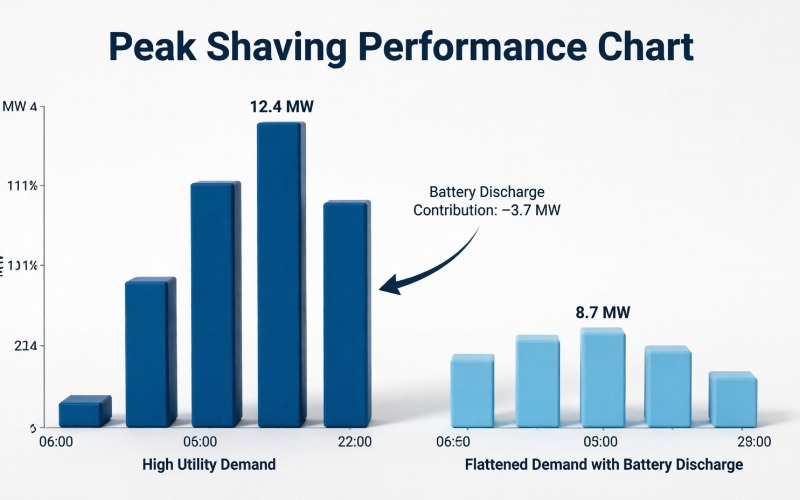
High-power hybrid inverters utilize intelligent algorithms to discharge battery energy during peak tariff hours, effectively capping the maximum power drawn from the utility grid.
For most commercial facilities, demand charges—calculated based on the highest 15-minute power usage interval—can account for up to 50% of the monthly utility bill. A high-power hybrid inverter addresses this volatility through “peak shaving.” Unlike traditional string inverters from manufacturers like GoodWe or Sungrow that primarily focus on grid-tie PV, our hybrid series features bidirectional power conversion with integrated EMS (Energy Management System) logic. This allows the system to monitor real-time load demand and inject battery power precisely when the facility approaches its peak threshold.
By flattening the load profile, businesses not only save on immediate costs but also reduce the stress on the local distribution transformer. This is particularly critical for facilities with intermittent high-load equipment, such as CNC machines, industrial HVAC units, or EV charging stations. Our factory-calibrated algorithms support multiple peak-shaving modes, including fixed-point shaving and scheduled discharge, ensuring maximum ROI regardless of the specific utility tariff structure. This technical advantage translates directly into a shorter payback period for the entire ESS (Energy Storage System).
2. Uninterrupted Business Continuity and Microgrid Stability
The ability to transition from grid-tied to off-grid mode in under 10 milliseconds allows a high-power hybrid inverter to function as a large-scale UPS, protecting sensitive industrial loads from data loss or equipment damage.
In the C&I sector, even a momentary power dip can lead to catastrophic financial losses. While traditional backup generators take several seconds to stabilize, our high-power hybrid inverters leverage advanced DSP (Digital Signal Processing) control to achieve UPS-level switching. This ensures that servers, medical equipment, and precision manufacturing lines remain operational without rebooting. The inverter essentially creates a local microgrid, synthesizing its own voltage and frequency when the utility grid fails.
Furthermore, our inverters support “Black Start” capabilities, allowing the system to re-energize the microgrid using only solar or battery power after a complete shutdown. This is a significant technical leap over standard grid-tie inverters which require a reference grid voltage to operate. By integrating high-speed communication with the BMS, the inverter manages the discharge C-rate dynamically to prevent cell over-stress during sudden load surges, a common issue in off-grid scenarios. This robustness ensures that your business remains a beacon of stability in an increasingly unstable energy landscape.
3. Maximum Energy Harvesting with Multi-MPPT Architectures
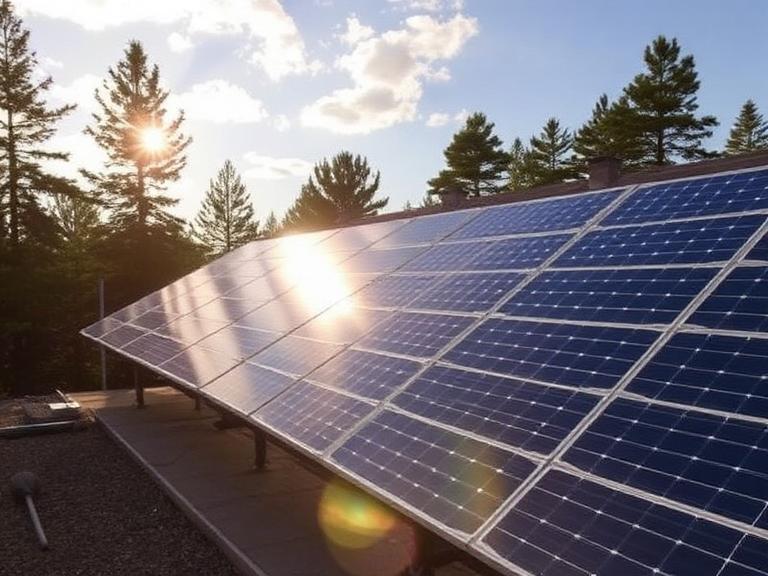
Equipped with multiple Maximum Power Point Trackers (MPPT) and a wide DC voltage range, these inverters maximize PV yield even in complex industrial rooftop installations with partial shading.
Energy conversion efficiency is the primary driver of commercial solar profitability. Our high-power hybrid inverters utilize state-of-the-art Infineon 4th Generation IGBT modules and Silicon Carbide (SiC) MOSFETs in the DC-DC stage. This power electronics architecture reduces switching losses significantly compared to older silicon-based designs. With a peak efficiency of 98.8% and MPPT tracking efficiency exceeding 99.9%, we ensure that every photon captured by your PV array is converted into usable AC power or stored efficiently in the LFP battery bank.
Multi-channel MPPT design is another critical feature. Large commercial roofs often feature varying orientations or obstacles like HVAC vents and skylights. By utilizing 4 to 12 independent MPPT trackers (depending on the model), our inverters prevent the “mismatch loss” that plagues single-tracker systems. This flexibility allows for higher design freedom and ensures that the underperformance of one array section due to shading or dust does not drag down the performance of the entire system. When compared to market alternatives from SMA or Huawei, our factory-tuned firmware provides faster tracking response times under rapidly changing irradiance conditions.
4. Grid Interaction and VPP Revenue Streams
Advanced hybrid inverters are Virtual Power Plant (VPP) ready, allowing businesses to participate in frequency regulation and demand response programs to generate additional revenue.
Modern energy management is moving from passive consumption to active grid participation. Our high-power hybrid inverters are designed with the latest communication protocols (SunSpec Modbus, CAN, RS485) to integrate seamlessly into VPP aggregators. By allowing the utility to briefly access your stored energy for frequency stabilization or voltage regulation, your business can earn lucrative credits or direct payments. This transforms your energy infrastructure from a cost center into a revenue-generating asset.
The inverter’s firmware supports advanced grid-support functions such as Low Voltage Ride Through (LVRT) and High Voltage Ride Through (HVRT), ensuring compliance with the strictest global grid codes like UL 1741 SB and IEEE 1547. Unlike simpler systems that simply disconnect during grid instability, our inverters provide reactive power support to help stabilize the local network. This level of sophistication is highly valued by grid operators and often leads to faster interconnection approvals for large-scale C&I projects.
5. Industrial-Grade Reliability and Thermal Management
Engineered for harsh environments, our inverters feature IP66 protection ratings and redundant active cooling systems to ensure 24/7 operation in extreme temperatures.
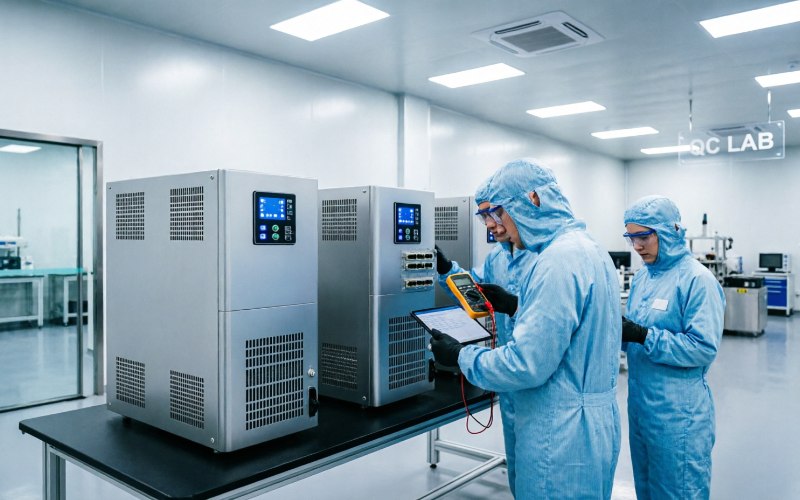
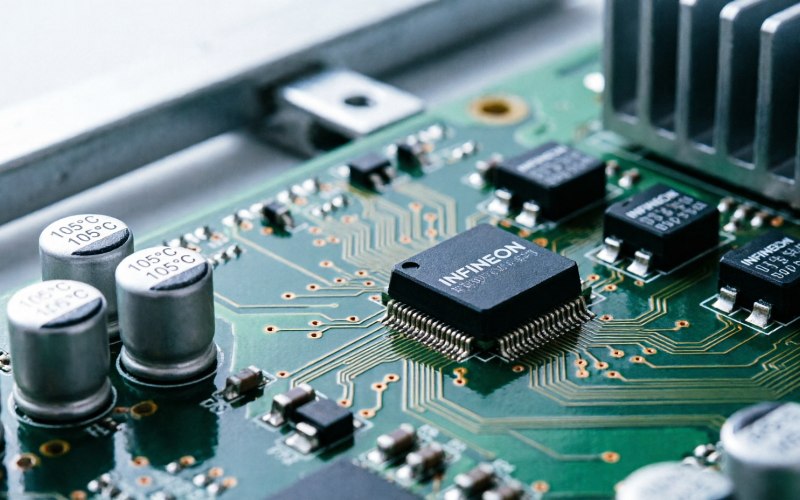
Reliability in an industrial context means more than just a long warranty; it means components that can withstand thermal cycling and electrical noise. At our factory, every high-power hybrid inverter undergoes a rigorous 48-hour high-temperature aging test at full load before shipping. We use Japanese Nippon Chemi-Con electrolytic capacitors, which are rated for 105°C and provide significantly better ripple current handling than standard alternatives. This meticulous component selection is why our failure rates remain below 0.5% in the field.
Thermal management is equally critical. High-power conversion generates significant heat, which can lead to component derating and premature failure. Our 100kW+ models utilize a combination of heat pipe technology and intelligent, speed-controlled redundant fans. This ensures that the core power modules operate within their optimal temperature window even in ambient environments of up to 50°C. The IP66-rated enclosure protects internal electronics from dust, moisture, and corrosive salt spray, making our systems suitable for coastal installations and heavy industrial zones.
6. Future-Proof Scalability and Modular Integration
Modular architecture allows for parallel connection of multiple inverter units, enabling business owners to scale their energy capacity in lockstep with facility expansion.
Business energy needs are rarely static. A facility that requires 100kW of power today might need 500kW in three years due to production expansion or the addition of an EV fleet. Our high-power hybrid inverters are designed with parallel scalability at their core. Using a high-speed fiber-optic synchronization bus, up to 10 units can be paralleled to work as a single cohesive power plant. This avoids the need for massive upfront capital expenditure on oversized systems.
Furthermore, our DC-coupled architecture allows for flexible battery sizing. Businesses can start with a minimal battery bank for peak shaving and later add more modules for extended backup duration. The inverter’s master-slave control logic ensures balanced load sharing across all units, preventing any single module from being over-stressed. This modular approach significantly reduces the Total Cost of Ownership (TCO) by providing a clear and affordable path for future upgrades without replacing existing hardware.
7. Global Compliance and Advanced Safety Protocols
Integrated Arc Fault Circuit Interruption (AFCI) and Rapid Shutdown (RSD) capabilities ensure that your facility meets the highest global safety standards, including NEC 2020 and IEC 62109.
Safety is non-negotiable in commercial environments. Our high-power hybrid inverters incorporate AFCI 3.0, which uses advanced AI algorithms to distinguish between safe switching arcs and dangerous fault arcs, virtually eliminating nuisance tripping while providing industry-leading fire protection. In the event of an emergency, our integrated Rapid Shutdown transmitter ensures that the DC voltage on the roof is reduced to safe levels in seconds, protecting both the facility and emergency responders.
Beyond physical safety, we prioritize data security. Our monitoring platform features end-to-end encryption and is hosted on secure servers, ensuring that your energy usage data and system controls are protected from cyber threats. With certifications including CE, TUV, G98/99, and UKCA, our inverters are ready for deployment in any major global market, simplifying the permitting process for international distributors and multi-national corporations.
Technical Comparison: Hybrid vs. Traditional Systems
| Feature | High-Power Hybrid (Our Factory) | Traditional String Inverter | Generic Off-Grid Inverter |
|---|---|---|---|
| Peak Shaving | Integrated EMS Logic | Not Supported | Limited Manual Support |
| Switching Time | <10ms (UPS Grade) | N/A (Grid-tie only) | 20ms – 50ms |
| Battery Chemistry | High-Voltage LFP Optimized | No Battery Port | Lead-Acid / Low-Voltage LFP |
| MPPT Efficiency | >99.9% | 99.0% – 99.5% | 95.0% – 98.0% |
| VPP Readiness | Fully Compliant (Modbus/SunSpec) | Limited | None |
| THDi | <3% at full load | <3% | <5% |
Frequently Asked Questions
Can I use this inverter with existing solar panels?
What is the typical lifespan of an industrial-grade hybrid inverter?
Does the system support remote monitoring and firmware updates?
Is the inverter compatible with other battery brands?
Ready to Future-Proof Your Business Energy?
Wholesale & Distribution: Are you an installer or distributor looking for reliable, high-margin ESS solutions? Join our global partner network and get access to factory-direct pricing and priority technical support.
Custom Engineering (OEM/ODM): Need a bespoke energy solution for a specific industrial application? Our R&D team can customize inverter hardware and EMS firmware to meet your project’s unique requirements.
Get a Quote Today: Contact our sales engineering team for a detailed ROI analysis and a comprehensive RFQ for your next C&I project.
Reference Authority: For more on global grid standards, see the IEEE Standards Association and Underwriters Laboratories (UL).