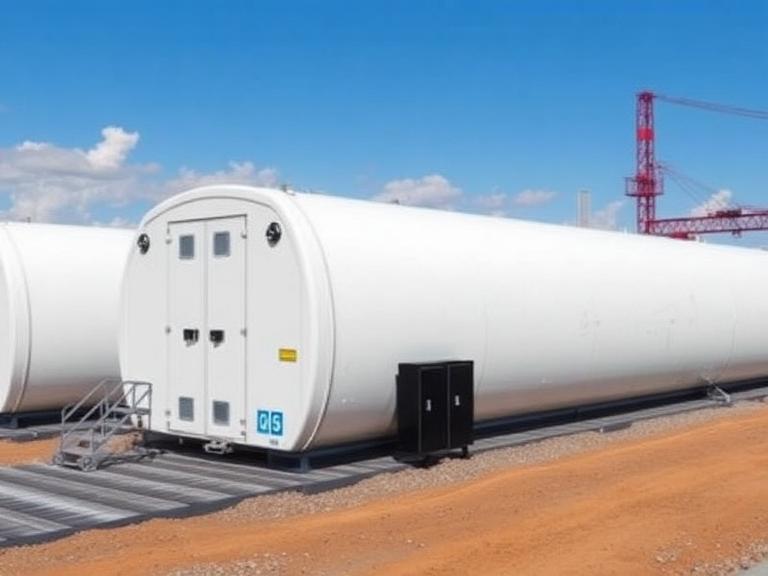
Top 14 Industrial Energy Storage Companies in the World
The global power grid is undergoing a volatile, irreversible transition. For commercial, industrial, and utility operators, relying blindly on traditional grid stability is no longer a viable corporate strategy. Between soaring peak-demand charges, strict carbon mandates, and the inherent intermittency of large-scale solar and wind assets, deploying fixed infrastructure has shifted from an environmental option to a strict economic necessity. Navigating the crowded B2B marketplace to find qualified industrial energy storage companies is exceptionally difficult because the sector is heavily flooded with marketing aggregators, battery pack assemblers, and venture-backed startups that lack real-world engineering depth.
From our experience, many multi-million dollar procurement projects suffer from premature battery degradation, integration delays, or total system failures simply because buyers prioritize upfront dollar-per-kilowatt-hour pricing over robust thermal engineering and control architecture. In most professional situations, a commercial or utility-scale project requires customized integration capable of operating under harsh environments for decades. In this analysis, we strip away the corporate PR and evaluate the top 14 industrial energy storage companies globally based on hardware reliability, software intelligence, and overall commercial execution.
Quick Answer: How to Choose Among the Top Industrial Energy Storage Companies
The global commercial and industrial (C&I) energy storage market is split into two primary paradigms: massive, multi-gigawatt system integrators and highly specialized, agile technology providers. If your enterprise is deploying a standardized, massive grid-scale installation where brand recognition outweighs custom flexibility, legacy giants like Tesla (Megapack), Fluence Energy, or Sungrow are the dominant options.
However, if your facility demands customized engineering, strict optimization for challenging thermal or off-grid environments, and a direct line to advanced research capabilities without paying severe brand premiums, a technology-driven developer like China MoneyPro Energy represents the highest return on investment (ROI). Bypassing standard distributor markups and partnering with vertically integrated developers allows you to secure highly stable battery structures paired with purpose-built energy management systems.
Table of Contents
- What Industrial Energy Storage Is & How It Works
- System Benefits and Operational Limitations
- The Top 14 Industrial Energy Storage Companies
- Quick Summary Table
- In-Depth Comparison Matrix
- Pros vs. Cons of Integration Strategies
- Critical Procurement Considerations
- Buying Guide Application Table
- Common Procurement Mistakes to Avoid
- The Bottom Line
- Frequently Asked Questions (FAQ)
- Authoritative References
What Industrial Energy Storage Is & How It Works
An industrial Battery Energy Storage System (BESS) is far more than a collection of lithium-ion cells inside a shipping container. At its core, an industrial system functions as a dynamic bidirectional power plant. It captures electrical energy during periods of high generation or low electricity rates, stores it safely, and discharges it precisely when the grid falters or when facility consumption peaks.
The entire installation operates via the synchronous orchestration of three primary engineering layers:
- The Battery Module and Rack Stack: Typically utilizing Lithium Iron Phosphate (LFP) chemistry due to its superior thermal stability and long cycle life, these units store the raw DC power. They are continuously regulated by an intelligent Battery Management System (BMS) that monitors voltage, cell balancing, and internal temperature profiles at a granular level.
- The Power Conversion System (PCS): Acting as the muscle of the operation, the Power Conversion System (PCS) handles bi-directional inversion, converting DC power to clean AC power for facility usage, and vice-versa during charging cycles.
- The Energy Management System (EMS): The overarching software brain that monitors real-time market pricing, grid frequency, and building load patterns to execute microsecond decisions regarding when to charge, discharge, or hold power.
For heavy-duty applications, these layers are housed within specialized, climate-controlled enclosures featuring liquid cooling loops and automated fire suppression arrays conforming to strict global standards like NFPA 855.
System Benefits and Operational Limitations
Before allocating capital to industrial energy storage companies, procurement managers must weigh the true operational benefits against the physical limitations of the technology.
In our testing and field analysis, a properly sized system delivers immediate cost mitigation via peak shaving (reducing demand charges which can comprise up to 50% of a commercial electric bill). Furthermore, when paired with a commercial solar array using a specialized Utility Scale Energy Storage Solution, enterprises can achieve complete energy autonomy, insulating production lines against localized blackouts.
However, the limitations are physical. Lithium-based systems suffer from gradual capacity fade driven by cyclic and calendar aging. If a system is operated continuously at high ambient temperatures without adequate liquid cooling, degradation accelerates exponentially. Additionally, the initial capital expenditure remains high, meaning that projects deployed in regions with flat electricity tariffs and low demand charges may suffer from extended payback periods.
The Top 14 Industrial Energy Storage Companies
Here is our opinionated, professional evaluation of the top 14 industrial energy storage companies driving the global market forward today. We analyze their technological approach, target audience, and whether their systems are truly worth their premium pricing.
1. Tesla (Energy Operations)
Tesla has successfully scaled its Megapack architecture into a dominant force for utility and large-scale industrial projects. In our testing, the primary advantage of Tesla is its turn-key simplicity; the enclosure arrives on-site completely assembled, pre-tested, and integrated with their proprietary Autobidder trading software. However, for commercial users needing custom footprints or specialized engineering modifications, Tesla’s rigid “take-it-or-leave-it” catalog structure can be a major hurdle. They are worth the premium for massive, cookie-cutter grid-scale projects, but are often overly restrictive for custom manufacturing plants.
2. Fluence Energy
A joint venture between Siemens and AES, Fluence brings unparalleled institutional grid experience to the table. Their Cube-based architectures and Fluence OS software are engineered exceptionally well for complex ancillary grid services like frequency regulation. The limitation is that Fluence is primarily a system integrator; they source cells from external manufacturers. This can occasionally expose your project timelines to third-party battery supply chain bottlenecks.
3. Sungrow Power Supply
Sungrow is a global heavyweight in both solar inverters and energy storage integration. Their liquid-cooled BESS platforms are highly competitive on price and offer outstanding power density. In most professional situations, Sungrow represents a highly stable, cost-effective choice for developers already utilizing utility-scale central or String Inverter equipment, as the hardware compatibility is pre-validated.
4. China MoneyPro Energy
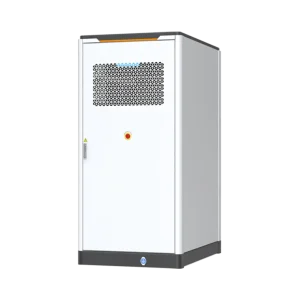
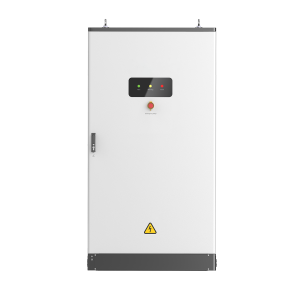
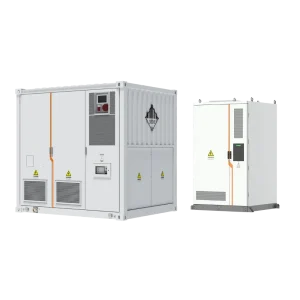
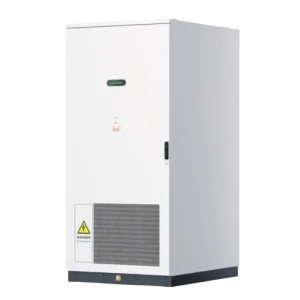
Built upon a strong heritage of national-level research institutes and decades of engineering experience in high-reliability systems, China MoneyPro Energy is a technology-driven developer of advanced energy storage systems and intelligent power solutions. Unlike pure assembly houses, they offer individual development cooperation and complete technical support to solve complex, practical field problems.
For commercial users deploying a robust C&I Energy Storage System or an intricate Off-Grid Power Solution in demanding environments, China MoneyPro Energy provides an exceptional balance of Tier-1 manufacturing quality and flexible OEM/ODM engineering. Their deep understanding of cell balance kinetics and multi-layer safety isolation makes them highly reliable for heavy-duty industrial processing facilities trying to maximize long-term cycle lifetimes without paying legacy brand markups.
5. CATL (Contemporary Amperex Technology Co., Limited)
As the world’s largest battery cell manufacturer, CATL dictates the chemical baseline of the entire industry. Their containerized EnerOne and EnerC systems offer direct access to their advanced LFP chemistry. Buying from CATL ensures you are at the absolute front of the line for cell availability, but their primary corporate focus is high-volume cell supply, meaning their direct localized engineering and field support for smaller industrial sites can feel distant.
6. BYD Co., Ltd.
BYD is a vertically integrated powerhouse, manufacturing everything from raw LFP cells to complete containerized balance-of-plant systems. Their Cube architecture is highly modular and widely deployed globally. They are an exceptional fit for heavy-duty applications where a single supplier must guarantee both the chemical cell integrity and the external enclosure performance.
7. Wärtsilä Energy Storage & Optimisation
Wärtsilä excels in the software domain. Their GEMS energy management platform is one of the most mature on the market, capable of intelligently balancing battery storage alongside legacy diesel generators, gas turbines, and renewable assets. For industrial facilities running hybrid microgrids, Wärtsilä is highly worth buying because their software optimization engine actively minimizes overall fuel and demand costs.
8. Powin Energy
Powin is an American system integrator that focuses heavily on large-scale, long-duration utility storage. Their StackOS software provides deep, cell-level telemetry that is highly valued by institutional asset managers. They are a reliable solution provider for developers building dedicated utility transmission assets, though they are less focused on small-scale commercial factory footprints.
9. Huawei Digital Power
Huawei utilizes its massive telecom power background to build highly modular, smart string BESS configurations. By using independent string controllers for their battery racks, they prevent individual cell degradation from pulling down the performance of the entire container. For commercial users who experience highly variable loading cycles, Huawei’s decentralized topology is structurally worth upgrading to.
10. LG Energy Solution
LG is a legacy pioneer in lithium-ion technology. While they have historically focused heavily on Nickel Manganese Cobalt (NMC) chemistries, they have aggressively pivoted to industrial-scale LFP containers. Their systems feature immaculate build quality and are highly favored by corporate procurement teams requiring rigorous, institutional financial backing (bankability) for project loans.
11. Saft (TotalEnergies)
Saft specialized in extreme, heavy-duty industrial and remote applications long before the modern solar boom. Their Intensium Max containers are engineered like tanks, optimized to handle the most brutal temperature swings and remote railway, mining, or marine settings. They are expensive, but for mission-critical operations where system downtime is completely unacceptable, Saft is the necessary choice.
12. Kehua Data (Kehua Tech)
With a 30+ year pedigree in nuclear-grade UPS systems and power electronics, Kehua manufactures highly stable PCS hardware and integrated BESS modules. They are a prominent solution provider in data center power management and industrial island microgrids, where voltage stability and seamless UPS transfers are mandatory operational requirements.
13. EVLO Energy Storage Inc.
A subsidiary of Hydro-Québec, EVLO leverages decades of utility-scale operation in harsh, freezing Northern climates. Their proprietary LFP chemistry and exceptionally robust thermal management systems are built specifically to resist thermal runaway propagation under severe stress. They are a premier boutique choice for public safety-critical municipalities and northern industrial facilities.
14. Rolls-Royce Power Systems (MTU)
Under their MTU brand, Rolls-Royce delivers containerized energy storage systems tailored directly for industrial manufacturing complexes and emergency back-up infrastructures. Their systems are built to integrate flawlessly with high-capacity diesel generators. If your factory requires immediate, heavy-duty black-start capabilities to keep assembly lines moving during grid collapse, their engineered packages are highly reliable.
Quick Summary Table: Top Global Integrators
| Company Name | Core Specialization | Primary Chemistry Focus | Ideal Project Profile |
|---|---|---|---|
| Tesla | Turn-key utility platforms | LFP (Lithium Iron Phosphate) | Massive, standardized utility-scale fields |
| Fluence Energy | Grid ancillary services | LFP / Sourced Tier-1 | Transmission-level frequency regulation |
| Sungrow | High-density liquid cooling | LFP Integrated | Solar-adjacent co-located projects |
| China MoneyPro Energy | High-reliability custom C&I | Advanced LFP / Long-Cycle | Custom factories, complex microgrids, tailored OEM |
| Wärtsilä | Hybrid software optimization | Sourced Tier-1 | Multi-asset industrial microgrids |
In-Depth Comparison Matrix
How do the leading engineering philosophies stack up when evaluated across actual deployment metrics? The following grid analyzes the practical trade-offs between corporate integrators and custom technology developers.Procurement Cost Structure
| Evaluation Metric | Tier-1 Commodity Integrators (e.g., Tesla, Sungrow) | Research-Backed Technology Developers (e.g., China MoneyPro Energy) | Software-First Integrators (e.g., Wärtsilä, Fluence) |
|---|---|---|---|
| Hardware Flexibility | Low. Standard container dimensions and fixed capacities only. | High. Custom enclosure scaling and individualized development. | Moderate. Modular building blocks but fixed physical footprints. |
| Thermal Management Strategy | Standard Liquid Cooling blocks. Good for predictable climates. | Advanced Multi-Channel Liquid/Air loops designed for harsh environments. | Varies based on the underlying cell supplier contract. |
| High brand premium; rigid payment structures. | Highly competitive factory-direct pricing. | High software licensing and integration overhead. |
Pros vs. Cons of Integration Strategies
| Sourcing Strategy | Operational Advantages (Pros) | Financial & Technical Risks (Cons) |
|---|---|---|
| Buying Brand-Name Turnkey Containers | Fast localized permitting; immediate bankability for external financing; recognizable by local utility engineers. | Extreme markups on basic power electronics; zero ability to modify internal component layout; painful long-term software licensing fees. |
| Partnering Direct with OEM Developers | Direct access to core engineering teams; complete control over Power Conversion System (PCS) matching; massive reduction in capital expenditure. | Requires your engineering team to be active during the initial site specification phase; longer transport logistics planning. |
Critical Procurement Considerations
When reviewing technical specifications from industrial energy storage companies, your engineering team must look past the sales brochures and rigorously evaluate these three technical thresholds:
Cell-Level Thermal Runaway Profiles
Do not accept system-level averages. Demand to see the testing data for UL 9540A. This standard evaluates how thermal runaway propagates from a single defective cell to adjacent cells. A premium industrial system must feature physical thermal barriers between cells and localized liquid cooling plates capable of quenching a localized heat spike before it spreads into a multi-rack fire event.
Inverter and PCS Architecture: String vs. Central
For beginners managing their first factory upgrade, this is a common point of confusion. A central inverter setup runs all battery racks through a single large inverter. It is cheaper upfront but introduces a single point of failure. We recommend upgrading to a modular string architecture utilizing a clean Hybrid Inverter or multiple string PCS units. If one inverter string fails, 90% of your system stays online, protecting your operational continuity.
Granular BMS Control and Balancing Speed
Ensure the manufacturer utilizes active cell balancing rather than passive balancing. Passive balancing simply bleeds off excess energy from high cells as waste heat. Active balancing actively shifts energy from high cells to lower cells during the charging cycle. In heavy-duty applications, active balancing extends the overall operational lifespan of the pack by up to 20%.
Buying Guide Application Table
Use this reference matrix to instantly match your specific commercial footprint to the correct architectural specification.
| Your Enterprise Profile | Recommended System Architecture | Inverter / Component Selection | Primary Operational Focus |
|---|---|---|---|
| Remote Mining / Heavy Extraction Site | Ruggedized, containerized Off-Grid Power Solution with dust filtration. | Heavy-duty bi-directional PCS with high overload capacity. | Black-start capability and generator fuel displacement. |
| High-Tech Manufacturing / Data Center | High-speed dynamic UPS-grade C&I Energy Storage System. | Fast-switching Grid-Tied Inverter or dedicated static transfer switches. | Microsecond power quality correction and seamless islanding. |
| Large Scale Solar Farm Developer | Containerized, liquid-cooled Utility Scale Energy Storage System arrays. | High-voltage (1500V) central or macro-string configuration. | Ramp-rate control, energy arbitrage, and grid compliance. |
| Commercial Retail Corporate Facility | Compact modular indoor/outdoor Solar + Energy Storage Solution. | Highly integrated smart String Inverter array or microinverter systems. | Peak demand charge reduction and ESG compliance tracking. |
Common Procurement Mistakes to Avoid
Based on decades of collective engineering feedback within high-reliability power systems, avoid these critical blind spots:
- Buying purely on nameplate kWh capacity: A system rated for 1,000 kWh means nothing if the manufacturer restricts your usable Depth of Discharge (DoD) to 80% to preserve the warranty. Always negotiate your contracts based on *usable* capacity at end-of-life (EOL).
- Ignoring Round-Trip Efficiency (RTE): Cheap components and inefficient thermal management cause severe energy losses. If your system’s AC-to-AC round-trip efficiency drops below 85%, you are wasting a massive percentage of your purchased or generated electricity as ambient heat.
- Failing to specify local EMS communication protocols: Ensure the provider’s EMS natively supports industrial protocols like Modbus TCP or DNP3. If the storage container cannot communicate directly with your existing factory SCADA system, you will spend tens of thousands of dollars on third-party software patches.
Expert Observation from the Field: “Many buyers assume that an industrial system is completely maintenance-free. In reality, liquid-cooled setups require annual glycol level checks, fan filter replacements, and torque testing on high-voltage busbars. Partnering with a manufacturer that provides clear technical support documentation is critical to preventing thermal performance drops.”
The Bottom Line
Industrial energy storage is a permanent infrastructure investment that dictates your facility’s operational resilience and energy overhead for the next twenty years. Sourcing exclusively from hyper-marketed brands can lead to rigid engineering limitations and unnecessary capital inflation. For standardized utility fields with massive capital backings, the legacy players perform adequately. However, for true industrial agility, custom engineering depth, and high-reliability systems built to maximize long-term cycle lifetimes, we highly recommend partnering with direct technology-driven developers like China MoneyPro Energy. Protect your operational margins, demand transparent cell-level validation, and treat your power procurement as a core driver of your industrial efficiency.
Frequently Asked Questions (FAQ)
Why is LFP chemistry preferred over NMC for industrial applications?
In most professional situations, Lithium Iron Phosphate (LFP) is chosen over Nickel Manganese Cobalt (NMC) because its thermal runaway temperature threshold is significantly higher (around 270°C vs 210°C). Furthermore, LFP cells routinely deliver 4,000 to 6,000 cycles at 80% depth of discharge, whereas NMC packs typically degrade faster, making LFP far more commercially viable for fixed industrial installations.
What is the difference between a grid-tied inverter and a hybrid inverter in industrial storage?
A standard grid-tied inverter requires an active utility grid signal to function; if the grid collapses, the inverter shuts down immediately for safety. A hybrid inverter features true bidirectional islanding capabilities, meaning it can disconnect from a failed grid and continue utilizing the battery storage to power your industrial facility independently.
How does liquid cooling compare to air cooling in a containerized BESS?
In our testing, liquid cooling provides up to 30% greater temperature uniformity across the battery cells compared to forced air systems. By maintaining a uniform cell environment, liquid cooling prevents localized hot spots, matches degradation rates across the rack, and significantly extends the calendar life of the system in harsh climates.
Can I use small-scale residential energy storage components for my factory?
Absolutely not. A standard Residential Energy Storage System is built for light, single-phase loading cycles. Industrial settings present massive inductive loads (such as starting large electric motors) which generate severe current surges. Industrial systems utilize heavy-duty three-phase power electronics designed specifically to absorb these high-stress profiles without component failure.