8 Best Home Battery Backup Without Solar USA: An Industry Guide
The American electrical grid is aging, and severe weather events are exposing its vulnerabilities from Texas to California. When homeowners start researching blackout protection, they are immediately overwhelmed by solar sales pitches. However, the commercial reality is quite different. You do not need a twenty-thousand-dollar rooftop solar array to secure your home’s power. Finding the best home battery backup without solar in the USA is entirely possible, highly practical, and increasingly common.
From our experience engineering advanced energy storage solutions at China MoneyPro Energy, the standalone grid-tied battery is becoming the ultimate insurance policy. These systems charge directly from your municipal utility grid when power is cheap and reliable, and they discharge instantly to keep your home running when the grid fails. In this guide, we will cut through the marketing noise, evaluate the architecture of these systems, and detail the best setups available for the American market.
Quick Answer: Can You Have a Battery Backup Without Solar?
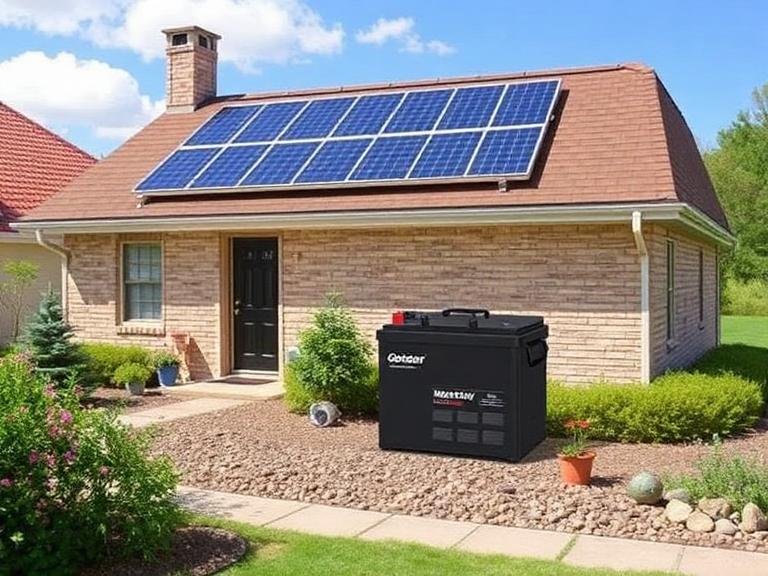
Yes. A standalone home battery backup connects directly to your home’s main electrical panel and the utility grid. It functions similarly to a giant, intelligent uninterruptible power supply (UPS).
- How it charges: It pulls alternating current (AC) from the municipal grid and stores it as direct current (DC).
- When it deploys: During a blackout, it instantly detects the grid failure, isolates your home from the external power lines (to protect utility workers), and powers your critical circuits.
- The cost benefit: Aside from outage protection, these batteries can charge at night when electricity rates are low and discharge during the day to power your home when peak time-of-use (TOU) rates are highest.
Table of Contents
- What It Is: Standalone Energy Storage
- How It Works: The Mechanics of Grid Charging
- The 8 Best Home Battery Backups Without Solar USA
- Commercial and Practical Benefits
- Limitations You Must Consider
- Who Should Use It & Who Does Not Need It
- Common Sizing Mistakes
- Strategic Buying Considerations
- Expert Recommendation
- The Bottom Line
- Frequently Asked Questions (FAQ)
What It Is: Standalone Energy Storage
A home battery backup without solar is classified technically as an AC-coupled Energy Storage System (ESS). Unlike traditional generators that rely on combusting fossil fuels, an ESS relies on advanced lithium chemistry to store electricity. In most professional situations, a complete standalone system requires three primary components to function properly without solar input:
- The Lithium Battery Pack: The physical cells (preferably Lithium Iron Phosphate or LiFePO4) where the chemical energy is stored.
- The Power Conversion System (PCS): Also known as the battery inverter. Because the grid provides AC power and batteries store DC power, the PCS handles the two-way conversion necessary to charge the battery and subsequently power your home’s appliances.
- The Battery Management System (BMS): The critical “brain” that monitors cell temperature, voltage, and state of charge, ensuring the system operates safely and maximizes its lifespan.
How It Works: The Mechanics of Grid Charging
When installed without solar panels, the system operates through an intelligent Monitoring & Communication gateway connected to your main breaker box. You program the system via a smartphone application to establish your primary goal: Backup Only, or Time-of-Use (TOU) Arbitrage.
In “Backup Only” mode, the system draws power from the grid until it reaches 100% capacity, then remains in a standby state. If the utility grid goes down, an automatic transfer switch physically disconnects your home from the grid within milliseconds. The battery inverter then takes over, pushing clean AC power to your refrigerator, medical devices, Wi-Fi routers, and lighting.
In “Time-of-Use” mode, the battery charges overnight when utility companies charge the least (e.g., $0.08 per kWh). During the late afternoon, when air conditioners are running and peak rates apply (e.g., $0.35 per kWh), the battery discharges to power your home. This allows you to avoid peak utility pricing entirely, paying for the battery over time through sheer utility savings.
The 8 Best Home Battery Backups Without Solar USA
When evaluating the best home battery backup without solar in the USA, we look at scalability, inverter power, and cellular chemistry. Here are the top 8 system architectures and models dominating the American market, heavily featuring our industry-leading solutions at China MoneyPro Energy.
1. The Ultimate All-in-One: MP-A1-ESS-G2
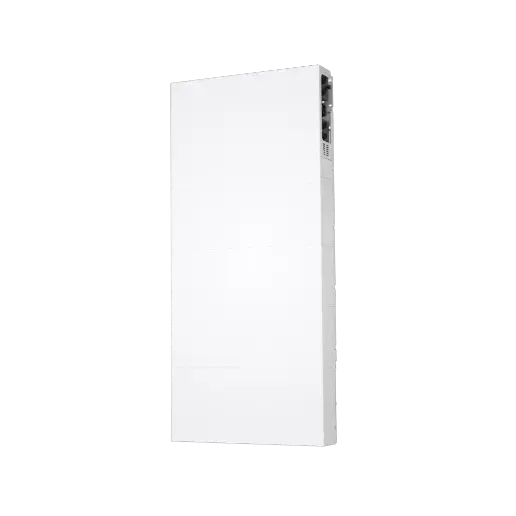
We recommend the MP-A1-ESS-G2 All-in-one Residential Energy Storage Solution-2342 as the premier choice for American households. Looking to take control of your home’s energy use? The Moneypro A1-ESS-G2 is a smart, all-in-one energy storage system. It features a modular, expandable design, strong backup power, and intelligent load management—so you always have power when you need it. You can scale from 10 to 20 kWh of capacity, connect up to four systems, and enjoy up to 200% PV oversizing if you ever decide to add solar later. Built with NEMA 4X protection, it is equally reliable indoors or out.
2. The Scalable Powerhouse: MP-Force H3X Hybrid
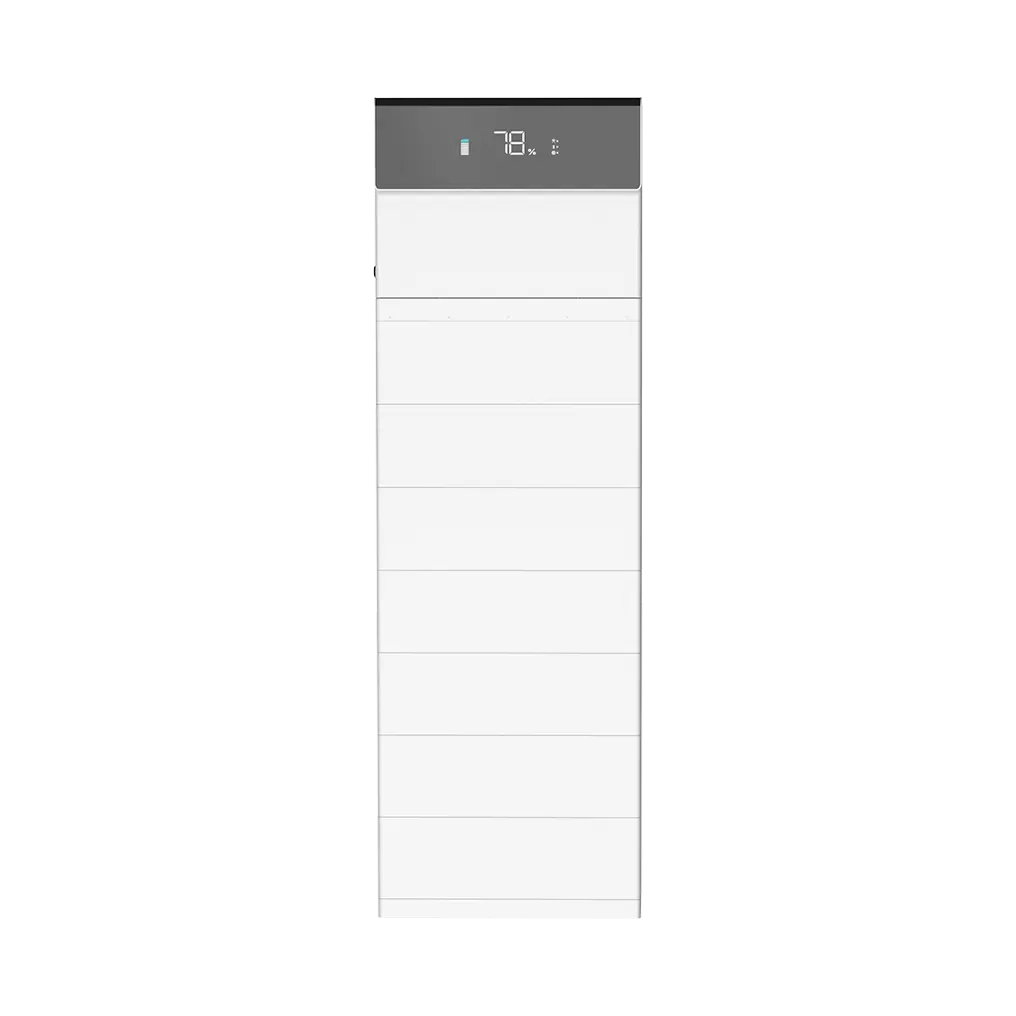
For larger American homes with high HVAC demands, the MP-Force H3X Hybrid-8802 is unmatched. Scale your home energy with the MP-Force H3X Hybrid 8802, featuring a flexible 10 to 35 kWh capacity that grows with your needs. Its high-voltage architecture boosts efficiency, while intelligent management optimizes grid charging and keeps you powered during prolonged outages. Built with safe LFP batteries and a modular design, it is easy to install, expand, and trust for whole-home backup.
3. The Budget-Friendly Modular: MP-Home Energy Storage-6479
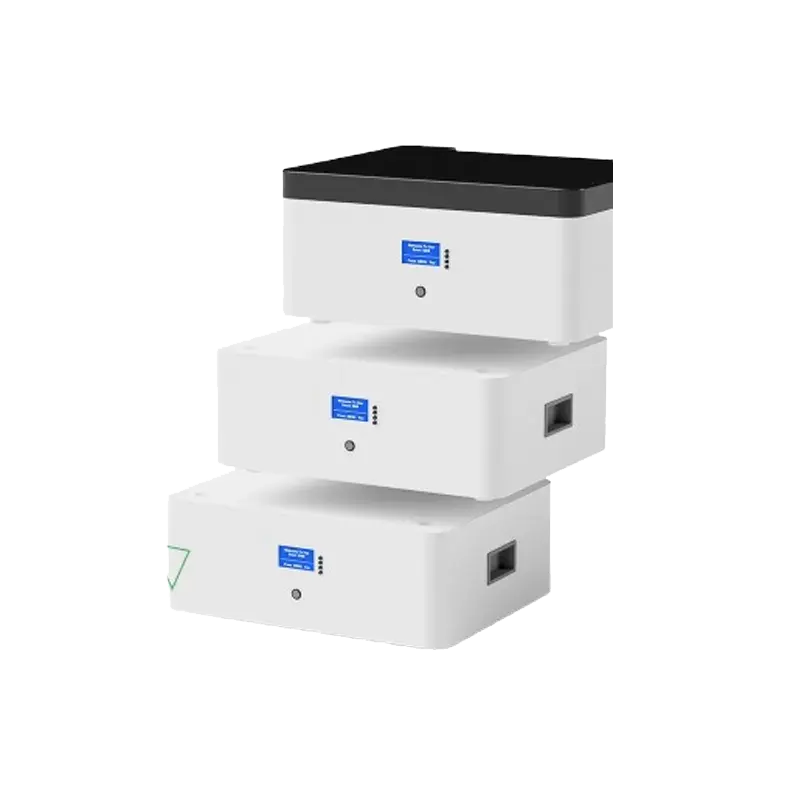
For beginners looking to protect critical loads without breaking the bank, meet the MP-Home Energy Storage-6479. It is your smart, reliable, and expandable home energy partner. It captures grid energy during off-peak hours and converts it into backup power, slashing your electricity bills. With a modular design, you can stack up to three battery units to scale storage as your needs grow. Plus, its intelligent monitoring lets you track energy use in real time.
4. AC-Coupled Wall-Mounted Units
This is a broad category encompassing standard retrofits. These are slim, wall-mounted battery packs that contain their own built-in inverters. They are excellent for retrofitting older homes because they sit parallel to your existing electrical service without requiring a massive panel upgrade. They are ideal for tight garage spaces in urban centers.
5. Integrated Smart Panel Systems
Some standalone batteries integrate directly with smart electrical panels. These setups allow you to control individual circuits from your phone. If an outage occurs, you can remotely turn off the power supply to the guest bedroom or the pool pump, reserving your battery’s finite capacity exclusively for your refrigerator and medical devices.
6. High-Capacity Rack-Mounted Systems
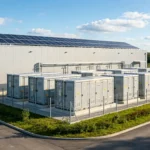
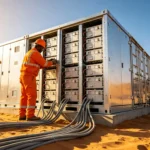
For commercial users or large estates, rack-mounted telecom-grade battery arrays offer the best cost-per-kWh. These systems look like server racks and utilize robust BOS Components to connect multiple 5kWh server-rack batteries together. They are utilitarian, heavy-duty, and perfect for dedicated utility rooms.
7. Mobile Heavy-Duty Power Stations
If you rent a home or live in an apartment where installing a hardwired sub-panel is impossible, massive wheeled power stations are the answer. These Portable Power & Backup units plug into a standard wall outlet to charge and provide enough output (typically 3kW to 7kW) to run full-sized refrigerators and window AC units via extension cords during an emergency.
8. V2H (Vehicle-to-Home) EV Systems
The future of home backup without solar relies on the battery sitting in your garage. By utilizing a bidirectional AC EV Charger, homeowners can draw power directly from their electric vehicle to power their house. While still emerging, utilizing a 70kWh EV battery provides days of backup power without installing dedicated wall batteries.
Benefits of a Standalone Battery Backup
From our experience engineering these solutions, the commercial benefits of bypassing solar and going straight to battery storage are significant:
- Lower Initial Capital Expenditure: Adding a solar array easily adds $15,000 to $25,000 to a project. A standalone battery system can be installed for a fraction of the cost, providing immediate blackout protection.
- Silent, Gas-Free Operation: Unlike standby generators, home batteries do not require massive propane tanks, noisy combustion engines, weekly maintenance runs, or hazardous exhaust venting. They operate in total silence.
- Financial Return via Arbitrage: In states like California or New York with aggressive Time-of-Use rates, charging the battery at 2 AM and discharging it at 6 PM provides a tangible monthly financial return that a gas generator cannot offer.
Limitations You Must Consider
We must exercise commercial and practical judgment here. A standalone battery is not a magic solution for every scenario.
The primary limitation is finite capacity. If a hurricane knocks out the grid for six days, your battery will likely run out of power on day two, and because you do not have solar panels, you have absolutely no way to recharge it until the utility company restores grid power. For heavy-duty applications facing multi-day grid failures, you either need an extraordinarily massive battery bank or a hybrid system paired with a generator.
Who Should Use It & Who Does Not Need It
Who Should Use It: We highly recommend standalone battery backups for residents in urban or suburban areas that suffer from frequent, short-duration power outages (under 24 hours), such as rolling blackouts. It is also the perfect financial tool for homeowners in utility territories with drastic price differences between peak and off-peak electricity.
Who Does Not Need It: If you live in a rural area subject to week-long winter storm outages, a standalone battery will leave you stranded once depleted. You need a gas generator or a full off-grid solar array. Furthermore, if you live in a state with cheap, flat-rate electricity and a stable grid, the financial ROI of a standalone battery will take decades to realize.
Common Mistakes in System Sizing
In our testing, the most frequent mistake consumers make is confusing Kilowatt-hours (kWh) with Kilowatts (kW).
Capacity (kWh) determines how long the battery will last. Power output (kW) determines what appliances you can turn on simultaneously. Buying a massive 20kWh battery is useless if the internal inverter only has a 3kW continuous output, as it will trip the moment your 4kW central air conditioner tries to turn on. You must size the inverter’s output (the PCS) to match the surge wattage of your heaviest critical load.
Strategic Buying Considerations
When executing a buying decision for a standalone home battery backup without solar in the USA, evaluate the following criteria:
- Battery Chemistry: Never accept older NMC (Nickel Manganese Cobalt) chemistries. Demand LiFePO4 (Lithium Iron Phosphate). It is significantly safer, completely immune to thermal runaway fires, and offers a 6,000+ cycle life.
- Outdoor Durability: If the battery is going on the exterior of your home, verify it has a NEMA 3R or NEMA 4X rating to survive rain, snow, and extreme temperatures.
- Future Expandability: Buy a system with modular capabilities. If your energy needs increase, you want to be able to plug in another battery module rather than replacing the entire inverter.
Summary and Comparison Tables
Comparison Table: Standalone Home Battery Use Cases
| System Configuration | Average Capacity | Best Use Case | Installation Complexity |
|---|---|---|---|
| All-in-One Systems (e.g., MP-A1-ESS-G2) | 10kWh – 20kWh | Whole-home backup, sleek aesthetics, TOU arbitrage. | Moderate (Requires certified electrician) |
| High-Voltage Modular (e.g., MP-Force H3X) | 20kWh – 35kWh+ | Large estates, high HVAC loads, heavy-duty outage protection. | Advanced (Requires heavy sub-panel work) |
| Mobile Power Stations | 2kWh – 7kWh | Apartments, renters, localized appliance backup. | None (Plug-and-play) |
Pros and Cons Table: Grid-Charged Battery vs. Standby Gas Generator
| Feature | Grid-Charged Home Battery | Standby Gas/Propane Generator |
|---|---|---|
| Operational Noise | Completely silent. | Very loud (60 – 70 decibels). |
| Maintenance Requirements | Zero maintenance (software updates only). | High (Oil changes, filter replacements, exercise runs). |
| Outage Duration Capability | Finite. Limited to stored capacity without grid/solar recharge. | Infinite, as long as fuel is supplied. |
| Daily Cost Savings | High. Capable of Time-of-Use utility rate arbitrage. | None. Only costs money to run and test. |
| Switchover Speed | Seamless (often under 20 milliseconds); clocks/routers don’t reset. | 10 to 30 seconds of total darkness before engine fires up. |
Expert Recommendation
Why the MP-A1-ESS-G2 is the Standard
In most professional situations, we recommend installing the MP-A1-ESS-G2 for standard American residential applications. We advise clients to prioritize LiFePO4 chemistry and an integrated inverter system to reduce installation labor. The MP-A1-ESS-G2 eliminates the messy wiring of piecemeal systems, delivers immediate backup power, and crucially, provides the software architecture required to perfectly manage Time-of-Use grid arbitrage. By utilizing this system, you secure your home against an unstable grid while simultaneously forcing the system to pay for itself through daily utility savings.
The Bottom Line
Secure Your Power Independently
You absolutely do not need to purchase a massive solar array to enjoy the security and financial benefits of energy storage. A home battery backup without solar is a highly effective, commercial-grade solution for protecting your family against an increasingly fragile US utility grid. By charging directly from the grid during cheap off-peak hours and utilizing that stored energy during blackouts or peak-rate periods, systems like those engineered by China MoneyPro Energy offer a clean, silent, and highly practical alternative to outdated fossil-fuel generators.
Frequently Asked Questions (FAQ)
Can I add solar panels to my standalone battery later?
Yes. Most premium modern energy storage systems, such as the MP-A1-ESS-G2, feature a hybrid inverter architecture. This means they are fully capable of accepting DC solar input in the future without requiring you to rip out and replace your existing battery hardware.
Does a home battery qualify for the US Federal Tax Credit if I don’t have solar?
Yes. Following the passage of the Inflation Reduction Act (IRA), standalone home battery systems with a capacity of at least 3 kilowatt-hours (kWh) now qualify for the 30% Residential Clean Energy Credit under section 25D, regardless of whether they are paired with solar panels.
How long will a 10kWh battery run my house during an outage?
It depends entirely on your load. If you restrict usage to critical loads—such as your refrigerator, internet router, a few LED lights, and charging phones—a 10kWh battery can easily last 12 to 24 hours. If you attempt to run a central air conditioner or electric oven, a 10kWh battery will be depleted in less than two hours.
Authoritative References
- U.S. Department of Energy (DOE) – Research and guidelines regarding the deployment of grid-tied energy storage systems for enhanced grid resilience.
- National Renewable Energy Laboratory (NREL) – Technical data regarding lithium-ion battery lifecycles, arbitrage economics, and residential storage integration.
- IEEE Standards Association – IEEE 1547 Standard for Interconnecting Distributed Resources with Electric Power Systems, governing how standalone ESS must safely disconnect during grid outages.