The 500 kw Energy Storage System Cost in 2026
In 2026, the global energy transition has moved resolutely past theoretical discussions into the realm of hard, bottom-line economics. For commercial and industrial (C&I) facilities, microgrid operators, and massive electric vehicle (EV) charging hubs, energy storage is no longer viewed as a corporate sustainability luxury—it is an absolute operational necessity for mitigating skyrocketing peak demand charges and defending against grid volatility. From our experience interacting with facility managers and procurement directors globally, their primary and most urgent concern invariably centers on capital expenditure. Specifically, they need a clear, unvarnished breakdown of the true 500 kw energy storage system cost in today’s mature market.
However, quoting a flat, singular price for commercial energy storage is akin to quoting the cost of a skyscraper based solely on the raw price of steel. The actual budget is dictated by a deeply complex ecosystem of cell chemistry, advanced power electronics, balance-of-system (BOS) hardware, and intricate integration engineering. We have witnessed immense price corrections in 2026 due to stabilized raw material supply chains and the massive scaling of global manufacturing, making the 500 kw energy storage system cost more economically attractive than ever before. Yet, severe financial pitfalls remain for those who fail to meticulously account for “soft costs” such as rigorous site permitting, specialized heavy-voltage labor, and stringent grid interconnection studies.
China MoneyPro Energy is a technology-driven developer of advanced energy storage systems and intelligent power solutions, built upon a strong heritage of national-level research institutes and decades of engineering experience in high-reliability systems. Originating from China’s aerospace and defense technology ecosystem, China MoneyPro Energy integrates advanced research, system engineering, and industrial manufacturing capabilities to develop next-generation energy storage solutions for the global energy infrastructure.
We recommend that commercial buyers look far beyond the raw battery cell price and critically evaluate the complete turnkey lifecycle costs. In this comprehensive, expert-led guide, we will systematically dissect the specific hardware and software components that dictate the 500 kw energy storage system cost in 2026, explore how system architecture directly impacts your Return on Investment (ROI), and provide a definitive framework for budgeting your next large-scale commercial power project.
Table of Contents
- 1. Decoding Power vs. Capacity: What Does “500 kW” Actually Mean?
- 2. The Core Hardware Components and Their True Costs
- 3. The Hidden Reality of Installation and Soft Costs
- 4. Market Dynamics Shaping the 500 kw Energy Storage System Cost in 2026
- 5. Maximizing ROI for Commercial and Industrial Applications
- 6. Why Choose China MoneyPro Energy?
- 7. Summary Table: 500 kW BESS Cost Breakdown
- 8. Frequently Asked Questions (FAQs)
- 9. Industry References
1. Decoding Power vs. Capacity: What Does “500 kW” Actually Mean?
To accurately analyze and forecast the 500 kw energy storage system cost, we must first aggressively clarify the fundamental physical difference between power (measured in kW) and energy capacity (measured in kWh). In the context of energy storage, 500 kW refers strictly to the system’s power rating—this is the maximum rate at which the battery can charge from the grid or discharge electricity into your facility’s electrical panel. This metric is primarily governed by the size and capability of the Power Conversion System (PCS). However, the total duration for which the system can sustain that 500 kW continuous output depends entirely on its volumetric energy capacity, which is measured in kilowatt-hours (kWh).
For example, a 500 kW / 1000 kWh system (a 2-hour duration system) will inherently possess a vastly different capital expenditure profile than a 500 kW / 2000 kWh system (a 4-hour duration system). From our experience engineering solutions for the C&I sector in 2026, the vast majority of applications—such as aggressive peak shaving or solar time-shifting—require a standard 2-hour duration. Therefore, when evaluating the overall 500 kw energy storage system cost, you are typically pricing out a massive industrial Lithium Battery Pack scaled to roughly 1000 kWh, paired symbiotically with a 500 kW bi-directional inverter. Acknowledging this kW vs. kWh dynamic is an absolute prerequisite for accurate financial modeling.
2. The Core Hardware Components and Their True Costs
In the current 2026 market, the fully installed, turnkey 500 kw energy storage system cost for commercial installations typically ranges from $250 to $450 per kWh of installed capacity. Assuming the industry standard 500 kW / 1000 kWh configuration, businesses should anticipate a total project capital expenditure ranging from $250,000 to $450,000. Let us dissect exactly where this capital is being allocated across the hardware architecture.
Battery Modules and Cell Chemistry (40% – 50% of total cost)
The chemical cells are the undeniable heart of the system. In 2026, Lithium Iron Phosphate (LFP) chemistry has achieved total and undisputed market dominance in the stationary energy storage sector. It has effectively rendered Nickel Manganese Cobalt (NMC) obsolete for commercial storage due to its dramatically superior thermal runway stability, an exceptional cycle life that routinely exceeds 6,000 to 8,000 cycles, and a significantly lower production price point. While the raw cost of LFP cells at the factory gate has plummeted to historic lows, integrating these cells into a robust, liquid-cooled, and fire-suppressed commercial enclosure brings the finalized hardware module cost to approximately $140 to $180 per kWh. Ultimately, the physical scale of your required energy capacity will heavily skew your final 500 kw energy storage system cost.
The Power Conversion System (15% – 20% of total cost)
The Power Conversion System (PCS) is the heavy-duty industrial engine responsible for managing the bidirectional flow of lethal electrical currents. It converts incoming AC grid power into DC power to charge the battery racks, and flawlessly inverts DC back into synchronized AC to power your facility’s heavy machinery. Depending on the chosen electrical topology, this highly sophisticated equipment commands a substantial portion of the 500 kw energy storage system cost. Furthermore, if your energy strategy integrates directly with a massive rooftop commercial solar array, you may require a specialized Grid-Tied Inverter or a highly versatile Hybrid Inverter to seamlessly manage both solar generation harvest and battery dispatch simultaneously.
Intelligent Management: BMS and EMS (10% of total cost)
Industrial hardware devoid of intelligent software is merely an expensive, dormant liability. The Battery Management System (BMS) acts as the crucial safety nervous system, meticulously monitoring voltage, current flow, and temperatures at the granular cell level, ensuring that catastrophic failures like thermal runaway are an impossibility. Sitting hierarchically above the BMS is the Energy Management System (EMS). The EMS executes the complex economic logic—algorithmically deciding exactly when to charge from the grid (when utility tariffs are cheapest) and when to forcefully discharge (during punitive peak pricing hours). Developing and licensing these sophisticated algorithms represents a vital, non-negotiable segment of the 500 kw energy storage system cost.
3. The Hidden Reality of Installation and Soft Costs
We frequently witness project developers secure phenomenal procurement pricing on containerized battery hardware, only to suffer severe, project-killing budget blowouts during physical deployment. This occurs universally because they failed to rigorously account for soft costs. When calculating the true, operational 500 kw energy storage system cost, you must realistically factor in the following external variables:
- Interconnection and Grid Engineering Studies: Utilities impose uncompromising regulations on high-capacity assets connecting to their distribution grids. Exhaustive engineering studies required to mathematically prove that your 500 kW discharge will not overload or destabilize local transformers can be expensive and frustratingly unpredictable.
- Permitting and Civil Infrastructure: Pouring reinforced concrete structural pads, executing deep trenching for heavy-gauge AC/DC cabling runs, and navigating the incredibly stringent 2026 fire safety codes (such as NFPA 855 in North America) demand specialized, highly compensated engineering and legal labor.
- Logistics and Professional Commissioning: Transporting a 15,000-pound battery container across the country requires specialized heavy freight logistics and precision crane rigging on site. Furthermore, deploying manufacturer-certified technicians to officially commission and energize the site adds significantly to the labor component of the 500 kw energy storage system cost.
From our extensive deployment experience, soft costs and comprehensive EPC (Engineering, Procurement, and Construction) services can effortlessly add an additional $50 to $100 per kWh to your final capitalized budget.
4. Market Dynamics Shaping the 500 kw Energy Storage System Cost in 2026
The 2026 pricing environment for commercial energy storage is defined heavily by what industry analysts call the “Efficiency Wave.” The massive, globally recognized reduction in the 500 kw energy storage system cost is no longer driven solely by plummeting lithium carbonate commodity prices—it is heavily driven by advanced factory-level pre-integration methodologies.
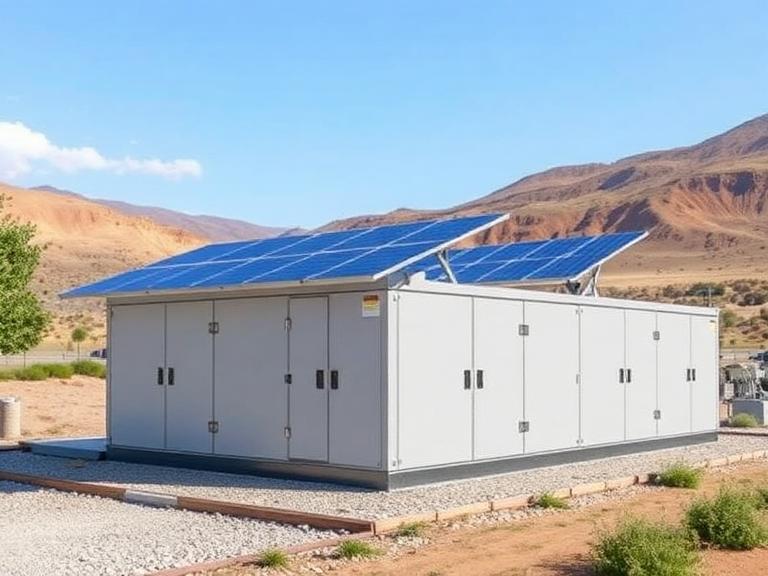
Tier-1 manufacturers are currently shipping fully integrated, containerized solutions where the battery modules, BMS, PCS, advanced liquid cooling HVAC systems, and aerosol fire suppression units are all meticulously wired, calibrated, and stress-tested before they ever leave the factory floor. This modular, “plug-and-play” deployment architecture drastically slashes on-site EPC labor hours and mitigates installation risk, which subsequently compresses the total turnkey 500 kw energy storage system cost. Furthermore, robust localized supply chains and streamlined global safety certifications (such as UL9540A and CE) have successfully eradicated massive friction points that previously bottlenecked the commercial deployment timeline.
5. Maximizing ROI for Commercial and Industrial Applications
Evaluating the 500 kw energy storage system cost in a vacuum, without intricately modeling the recurring revenue streams and utility savings it generates, is a fundamentally flawed business approach. In the C&I sector, these systems are not passive backup batteries; they are fierce, active profit-generating assets. We recommend deploying a 500 kW system to execute two highly lucrative primary strategies:
Aggressive Peak Demand Shaving
Commercial utility bills are routinely penalized by punitive “demand charges”—exorbitant fees based on the single highest 15-minute spike in power usage over an entire billing cycle. A 500 kW battery system, guided by predictive AI within the EMS, can actively monitor your building’s load profile and instantly discharge power to “shave” these costly peaks, keeping your measurable grid draw artificially low. Depending on the hostility of your local utility territory’s rate structure, demand charge mitigation alone can generate enough pure capital savings to achieve a full financial payback on the 500 kw energy storage system cost within a highly aggressive 3 to 5 year timeline.
Energy Arbitrage and Solar Integration
With a robust EMS, the battery can be programmed to charge automatically in the dead of night when wholesale electricity costs as little as 4 cents per kWh, and discharge at 4:00 PM when electricity costs soar to 25 cents per kWh. If your industrial facility possesses a commercial solar array, the system becomes exponentially more lucrative. The ability to warehouse excess solar energy rather than exporting it back to the grid at terrible net-metering rates radically alters your facility’s financial equation. In highly complex solar architectures, integrating advanced Microinverter & MLPE technology with centralized DC-coupled storage can maximize your harvest yields, decisively accelerating the payback period of your initial 500 kw energy storage system cost.
6. Why Choose China MoneyPro Energy?
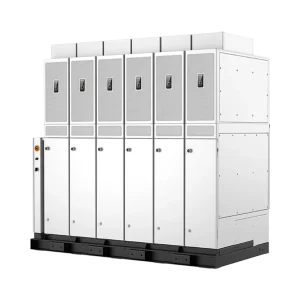
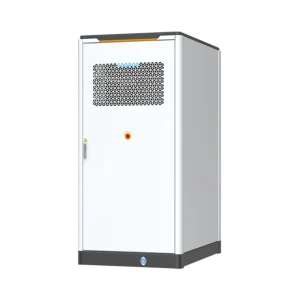
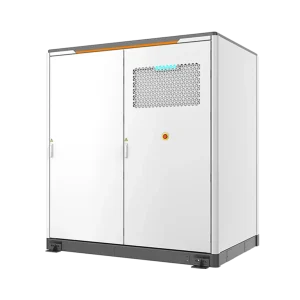
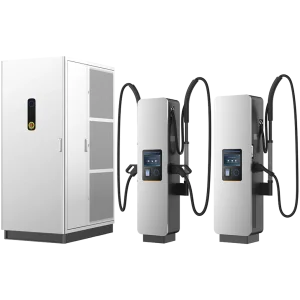
When you are investing heavily in critical, multi-decade energy infrastructure, the engineering pedigree and financial reliability of your manufacturing partner are paramount. The initial 500 kw energy storage system cost is merely your entry ticket; the system must perform flawlessly, day in and day out, for 15 to 20 years to realize its modeled economic value. Originating from China’s highly disciplined aerospace and defense technology ecosystem, China MoneyPro Energy applies uncompromising military-grade quality assurance protocols to our commercial BESS product lines.
Our proprietary liquid-cooled enclosures, highly advanced BMS architectures, and precision cell balancing algorithms ensure that chemical degradation is aggressively minimized, operational safety is absolute, and your total cost of ownership remains the lowest in the global industry. We do not simply supply raw hardware; we engineer comprehensive, intelligent power solutions specifically designed to secure and optimize your commercial energy future.
7. Summary Table: 500 kW BESS Cost Breakdown
| System Component / Cost Category | Percentage of Total Cost | Estimated 2026 Cost per kWh (Installed) | Primary Function & Impact |
|---|---|---|---|
| Battery Modules (LFP Cells & Racks) | 40% – 50% | $140 – $180 / kWh | The core energy reservoir; dictates the cycle life and capacity limits of the system. |
| Power Electronics (PCS & Inverters) | 15% – 20% | $45 – $65 / kWh | Manages heavy bidirectional AC/DC power flows and critical grid synchronization. |
| Control Systems (BMS, EMS & HVAC) | 10% – 15% | $30 – $45 / kWh | Provides thermal regulation, fire suppression, and intelligent algorithmic dispatch logic. |
| Soft Costs (EPC, Permitting, Logistics) | 20% – 30% | $50 – $100 / kWh | Covers essential labor, utility interconnection studies, heavy freight, and commissioning. |
| Total Turnkey Estimate (500kW/1000kWh) | 100% | $250 – $400 / kWh | Estimated Total Project CapEx: $250,000 – $400,000. |
8. Frequently Asked Questions (FAQs)
What is the expected lifespan of a 500 kW commercial energy storage system?
In 2026, premium systems utilizing Grade-A Lithium Iron Phosphate (LFP) cells combined with advanced liquid thermal management are engineered to deliver between 6,000 and 8,000 cycles. Depending on your daily depth of discharge (DoD) and usage patterns, this translates to an operational lifespan of 12 to 15 years before the battery degrades to 70% of its original nameplate capacity.
Can a 500 kW system operate entirely off-grid during a blackout?
Yes, but this requires specialized hardware. The system must be equipped with grid-forming inverters and an automatic transfer switch (ATS) to physically island your facility from the dead utility grid. While this adds slightly to the 500 kw energy storage system cost, the resilience it provides during catastrophic grid failures is often invaluable for manufacturing and cold-storage facilities.
Are there tax incentives available to lower the 500 kw energy storage system cost?
Absolutely. In the United States, for example, the Inflation Reduction Act (IRA) provides a base 30% Investment Tax Credit (ITC) for standalone commercial energy storage systems. When properly leveraged, these massive federal incentives radically reduce your net capital expenditure and drastically shorten your project’s payback period.
9. Industry References
To ensure our economic analysis and pricing data maintain the highest standards of industry authoritativeness and accuracy, we base our projections on robust global energy market intelligence. For further advanced reading on utility-scale and C&I energy storage economic trends, we strongly recommend reviewing the following authoritative resources: