How Many Solar Panels Are Needed to Fully Charge a 200Ah Battery in 5 Hours?
In industrial, commercial, and residential solar engineering, few tasks are as fundamental—yet as frequently botched—as battery-to-array matching. When clients ask exactly how many solar panels are needed to fully charge a 200Ah battery in 5 hours, they are often looking for a quick, single-number answer. However, giving an isolated number without assessing the system’s baseline operating voltage, depth of discharge (DoD), and thermodynamic inefficiencies is irresponsible. A 200Ah battery is not a fixed unit of energy capacity; it is a measure of electric charge that scales dramatically based on nominal voltage configurations.
From our experience at China MoneyPro Energy, under-sizing an array due to over-optimistic laboratory calculations is the leading cause of premature battery degradation, sudden system brownouts, and failed return-on-investment projections. To construct a truly reliable off-grid system, engineering teams must dissect the raw physics governing energy conversion. This guide provides the definitive, no-nonsense calculations, real-world adjustment parameters, and strategic recommendations required to engineer a rock-solid photovoltaic charging setup within a strict 5-hour peak sun window.
China MoneyPro Energy is a technology-driven developer of advanced energy storage systems and intelligent power solutions, built upon a strong heritage of national-level research institutes and decades of engineering experience in high-reliability systems.
Table of Contents
- 1. The Crucial Voltage Factor: Deconstructing the 200Ah Myth
- 2. The Core Mathematical Formulas for 5-Hour Charging
- 3. Factoring In Real-World Thermodynamic and System Inefficiencies
- 4. Concrete Panel Count Breakdown by Wattage (100W, 200W, 400W)
- 5. Essential Balance of System (BoS) Infrastructure Integration
- 6. System Design Summary Table
- 7. Frequently Asked Questions (FAQs)
- 8. Technical References
1. The Crucial Voltage Factor: Deconstructing the 200Ah Myth
To determine how many solar panels are needed, we must first translate Ampere-hours (Ah) into Watt-hours (Wh), which represents the actual work potential of the storage medium. An Ampere-hour simply dictates how long a battery can deliver a specific current. It completely ignores voltage. A 12V 200Ah battery stores exactly half the energy of a 24V 200Ah battery, and a quarter of the energy of an industrial-grade 48V configuration.
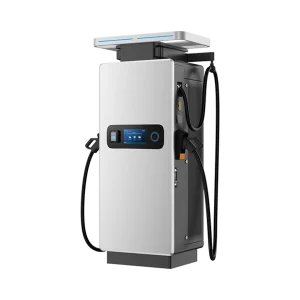
We recommend starting every system design by establishing the nominal voltage of your DC bus. For instance, when constructing a light residential backup using a standard Residential Energy Storage System, you may operate at 24V or 48V to reduce current draw and minimize cabling costs. Conversely, specialized commercial installations using a heavy-duty C&I Energy Storage System scale up to hundreds of volts. For the purposes of this guide, we will analyze the two most common configurations encountered in mid-tier off-grid setups: 12V and 24V battery banks.
2. The Core Mathematical Formulas for 5-Hour Charging
To establish the theoretical baseline of how many solar panels are needed to fully charge a 200Ah battery in 5 hours, we utilize standard electrical engineering equations. First, compute the total capacity in Watt-hours ($E_{wh}$):
$$E_{wh} = V_{nominal} \times C_{ah}$$
Where $V_{nominal}$ represents the system voltage and $C_{ah}$ represents the 200Ah capacity. Next, we determine the continuous theoretical power output ($P_{theoretical}$) required from the solar array to fulfill this demand across a 5-hour interval of Peak Sun Hours (PSH):
$$P_{theoretical} = \frac{E_{wh}}{t_{hours}}$$
Let us look at how these calculations split based on the nominal operating voltage:
- 12V System Baseline: $$12\text{ V} \times 200\text{ Ah} = 2400\text{ Wh}\text{ (2.4 kWh)}$$To replenish this in 5 hours:$$\frac{2400\text{ Wh}}{5\text{ h}} = 480\text{ W}$$
- 24V System Baseline: $$24\text{ V} \times 200\text{ Ah} = 4800\text{ Wh}\text{ (4.8 kWh)}$$To replenish this in 5 hours:$$\frac{4800\text{ Wh}}{5\text{ h}} = 960\text{ W}$$
These numbers represent an idealized universe with zero thermal resistance, flawless angular light capture, and perfect conversion metrics. In practice, building an array based solely on these values will guarantee an undercharged battery bank.
3. Factoring In Real-World Thermodynamic and System Inefficiencies
From our experience, no solar installation operates at 100% efficiency. Environmental variables, line drops, and chemistry limitations aggressively degrade performance. To offset this, we must introduce a comprehensive system efficiency factor ($\eta$). For a highly optimized system utilizing an efficient MPPT controller and clean cabling, a realistic efficiency factor ranges from 75% to 80% ($\eta = 0.75 \text{ to } 0.80$).
The core variables driving these losses include:
- Battery Chemistry Charge Efficiency: Traditional Lead-Acid or AGM variants exhibit poor coulombic efficiency, often wasting 15% to 20% of incoming energy as heat. Modern Lithium Iron Phosphate (LiFePO4) chemistries are vastly superior, yielding up to 95-98% efficiency.
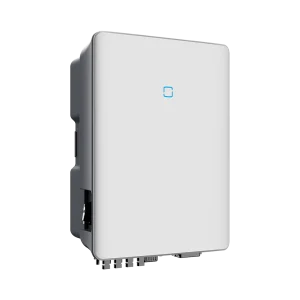
- Inverter and Controller Losses: Converting DC to AC or transforming high-voltage PV inputs down to battery charging levels incurs an automatic 5% to 10% penalty, even when deploying a premium String Inverter.
- Environmental Thermal Derating: Solar panels are rated at a standard laboratory temperature of 25°C. In real-world environments, roof temperatures can easily surpass 60°C, inducing a voltage drop that slashes panel output by 10% to 15%.
Adjusting our formula to account for a standard 80% real-world efficiency factor ($\eta = 0.80$), the actual required array sizes ($P_{actual}$) become:
$$P_{actual} = \frac{P_{theoretical}}{\eta}$$
- Real-world 12V 200Ah Requirement: $$\frac{480\text{ W}}{0.80} = 600\text{ W}$$
- Real-world 24V 200Ah Requirement: $$\frac{960\text{ W}}{0.80} = 1200\text{ W}$$
4. Concrete Panel Count Breakdown by Wattage (100W, 200W, 400W)
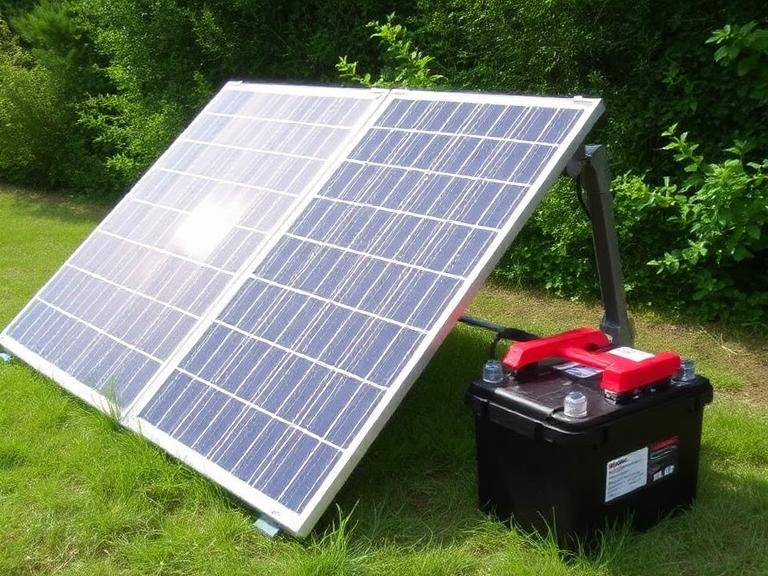
Now that we have established the true target outputs—600 Watts for a 12V bank and 1,200 Watts for a 24V bank—we can translate these capacity figures into tangible hardware counts. Choosing the individual panel wattage changes the physical footprint and structural mapping of your roof or ground mount.
Using 100W Rigid Monocrystalline Panels
Deploying 100W panels is typically reserved for small RV configurations or constrained spatial layouts due to the massive wiring overhead required. To hit 600W for a 12V system, you will need exactly six 100W panels wired in a series-parallel matrix. For a 24V system requiring 1200W, you would need twelve 100W modules. We generally discourage this approach for large-scale implementations due to the compounding risks of terminal corrosion across so many separate connections.
Using 200W High-Efficiency Panels
The 200W module format strikes a functional balance between manual handling ease and wiring simplicity. To meet the requirements for a 12V 200Ah battery system, three 200W panels wired in parallel (or series-parallel, depending on your controller input thresholds) provide exactly the 600W needed. For the larger 24V configuration, six 200W panels are required to consistently achieve the 1200W benchmark.
Using 400W Commercial-Grade Modules
For modern, clean architectural execution, we highly recommend utilizing large-format 400W or 500W residential/commercial panels. To service a 12V 200Ah storage system, installing two 400W panels yields 800W of potential power. While this technically over-sizes the array, it provides an invaluable safety margin during overcast or sub-optimal winter months. For a 24V 200Ah system, deploying exactly three 400W panels delivers precisely 1200W, offering a beautifully streamlined footprint with minimal framing requirements.
5. Essential Balance of System (BoS) Infrastructure Integration
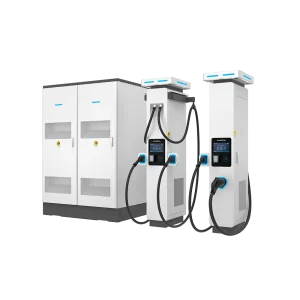
An array of solar panels is useless without the auxiliary computing and distribution hardware needed to regulate the power safely into the battery cells. You cannot simply attach a 600W array directly to a 200Ah battery pack without causing catastrophic thermal runaway or immediate cell destruction.
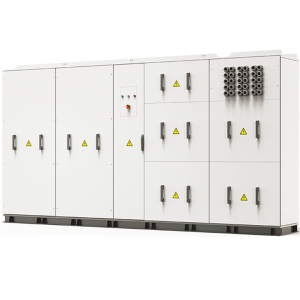
First, an MPPT (Maximum Power Point Tracking) Charge Controller is mandatory. Unlike cheaper PWM controllers that clip excess panel voltage, an MPPT controller dynamically tracks the peak power point and steps the voltage down while boosting current into the battery bank. When scaling to vast, mega-watt systems such as a Utility Scale Energy Storage Solution or a high-capacity Utility Scale Energy Storage System, these conversion dynamics are managed by highly sophisticated, multi-string centralized controllers to avoid localized line loss.
Secondly, wire gauge calculations must be rigorously executed. Carrying 600W at 12V translates to a continuous current flow of 50 Amperes. Running this level of current over a standard thin copper wire will cause severe voltage drop and dangerous heat accumulation. We recommend utilizing a minimum of 6 AWG or 4 AWG photovoltaic cabling for runs exceeding 10 feet to preserve every milliwatt generated by your solar array.
6. System Design Summary Table
The following standardized reference data outlines the exact array requirements, configuration strategies, and hardware metrics required to charge your 200Ah bank inside a 5-hour solar window.
| Battery Profile | Total Energy (Wh) | Net Target Output (80% Efficiency) | 100W Panel Option | 200W Panel Option | 400W Panel Option | Recommended Controller Rating |
|---|---|---|---|---|---|---|
| 12V 200Ah (LiFePO4/Lead-Acid) | 2,400 Wh | 600 Watts | 6 Panels | 3 Panels | 2 Panels (Oversized safety buffer) | 50A MPPT |
| 24V 200Ah (LiFePO4/Lead-Acid) | 4,800 Wh | 1,200 Watts | 12 Panels | 6 Panels | 3 Panels | 60A MPPT |
When engineering customized layouts, you can easily adapt this template across diverse real-world installations. For example, implementing a holistic Solar + Energy Storage Solution on an off-grid property requires cross-referencing this charging table against the property’s baseline idle consumption to ensure the battery actually receives its dedicated charging quota without being drained by active loads during the day.
7. Frequently Asked Questions (FAQs)
Can I charge a 200Ah lead-acid battery in 5 hours with these same panel counts?
Theoretically yes, but practically it is highly discouraged due to the inherent chemical limitations of lead-acid variants (AGM/Gel). Lead-acid cells require a multi-stage charging profile where the final absorption stage slows down current intake significantly. Trying to force a full charge into a lead-acid battery within 5 hours requires an dangerously high C-rate that can distort plates and cause venting. This 5-hour target is best suited for Lithium Iron Phosphate (LiFePO4) systems.
What happens if my location receives less than 5 peak sun hours?
If your geographical region only averages 3 or 4 peak sun hours per day, you must scale up your solar panel array proportionally to compress the required energy generation into a shorter window. For instance, charging a 12V 200Ah battery in 3 hours would shift your net target output requirement from 600W up to approximately 1,000W.
Why shouldn’t I use a cheap PWM controller for a 600W+ solar array?
PWM controllers do not transform high panel voltages into extra charging current; they simply pull the panel’s operating voltage down to match the battery’s voltage level. This results in an immediate loss of roughly 20% to 30% of your array’s potential power. For any array over 200W, the cost premium of an MPPT controller is rapidly offset by the savings realized from needing fewer panels.
8. Technical References
- National Renewable Energy Laboratory (NREL). “Photovoltaic Solar Resource Calculations and Peak Sun Hour Mapping Standards.” Available at: NREL Official Portal
- International Electrotechnical Commission (IEC). “IEC 62257: Recommendations for Renewable Energy and Hybrid Systems for Rural Electrification.” Available at: IEC Standards Library